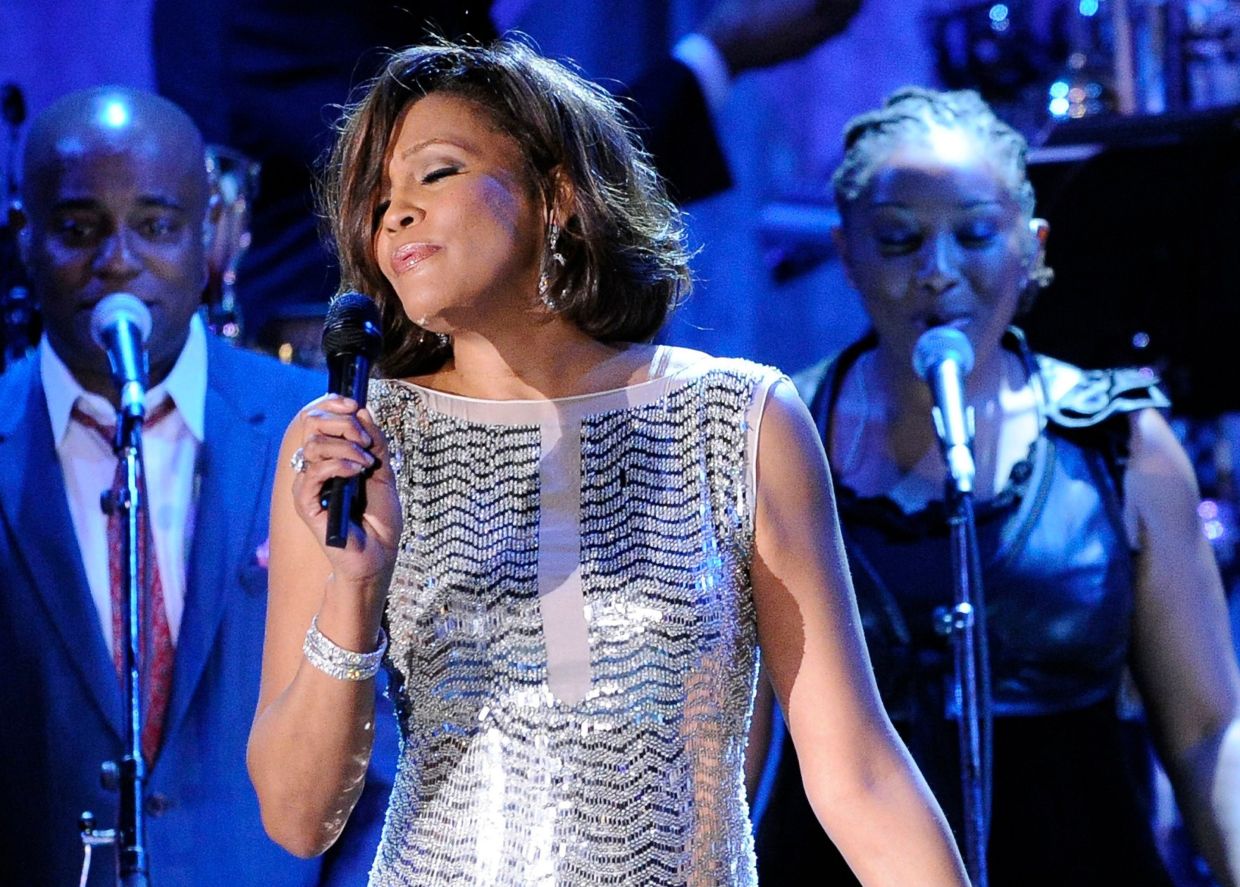
Nearly four decades since Whitney Houston released "I Will Always Love You," the legendary singer's estate continues to celebrate her extraordinary commercial and artistic achievements, with estate executor Pat Houston confirming plans for an expanding portfolio of tributes and new releases. The milestone 40th anniversary, coming next year, coincides with a series of major announcements that underscore the enduring commercial and cultural value of Houston's catalogue, even two decades after her death.
A new compilation album assembling all 11 of Houston's Billboard Hot 100 number-one singles represents the latest major release tied to what would have been her 63rd birthday on August 9. This comprehensive collection, according to Pat Houston, fulfils what the singer herself envisioned as the definitive representation of her career's pinnacle moments. Each of these chart-topping tracks defined different eras and demographic groups, becoming the backdrop to countless personal memories for fans across the globe. The selection underscores not merely commercial success but the cultural penetration of Houston's music, which transcended typical pop radio fare to become embedded in broader popular memory.
Paralleling the music release, Mattel unveiled the first Whitney Houston Barbie doll, arriving on the singer's birthday and representing a significant milestone in the evolution of the iconic toy line's tribute series. Pat Houston described the creation as emotionally resonant, revealing that she and Whitney had discussed such a collaboration more than two decades ago. The delayed realisation of this vision, according to Houston, speaks to her belief that meaningful projects require patience and purposeful development rather than rushed execution for commercial gain.
The relationship between Pat Houston and Mattel's creative team proved crucial to translating Whitney's legacy into the Barbie format. Houston emphasised the company's genuine commitment to authenticity and reverence, noting that the development process involved extensive collaboration to ensure the doll captured not merely Houston's appearance but her cultural significance. This hands-on stewardship reflects the estate's broader strategy: allowing substantial time between conception and execution to maintain quality and meaning rather than pursuing rapid monetisation.
Central to understanding Whitney Houston's trajectory and the estate's current strategy is the influence of Clive Davis, the legendary music executive who discovered and nurtured her career from its inception. Pat Houston underscored Davis's role as extending far beyond typical artist-manager relations, describing a relationship rooted in genuine affection and mutual respect. Until his death, Davis remained an advocate and explicator of Houston's importance to music history, weaving her legacy into virtually every conversation he had about the industry. This relationship between artist and mentor shaped not only Houston's recording decisions but also her artistic identity during crucial developmental periods.
When asked directly whether a biographical film treatment similar to the Michael Jackson project might materialise, Pat Houston employed careful language designed to preserve optionality without committing to specific timelines or projects. She acknowledged that various proposals regularly arrive at the estate's offices but indicated that the decision-making process prioritises strategic purpose over capitalising on momentary market interest. This measured approach reflects concerns about over-saturation and the dilution of Houston's legacy through hasty or poorly conceived projects.
The estate's broader philosophy, as articulated by Houston, resists the trap of endless licensing and tribute projects merely because opportunities exist. Instead, she emphasised that any new release or project must serve a genuine artistic or commemorative purpose capable of introducing Houston's work to new audiences or offering existing fans substantive new material rather than recycled content. This restraint stands in contrast to how some entertainment estates have pursued aggressive catalogue monetisation strategies, flooding the market with compilations and derivative products.
Beyond the immediate releases, Pat Houston revealed aspirations to unearth and present live performances that have never circulated in North America despite being documented and previously screened elsewhere globally. These unreleased concert films and recordings represent a vast repository of material that could illuminate Houston's artistry in ways studio recordings alone cannot convey. The explosive power of Houston's vocal delivery in live settings, combined with her physical presence and command of an audience, constitutes a crucial dimension of her legacy that remains largely inaccessible to contemporary audiences.
The prospect of releasing these archived performances internationally reflects a sophisticated understanding of how legacy projects can serve multiple constituencies simultaneously. For longtime fans, such releases provide unprecedented access to definitive performances; for newer audiences discovering Houston's work, live recordings offer visceral evidence of why her influence persisted across multiple musical generations. The estate's emphasis on materials that have already been produced and documented, rather than creating elaborate new productions, also allows for managed implementation without requiring the extensive investment that a major biopic would demand.
Pat Houston's repeated emphasis on purpose, love, and authenticity suggests that the estate will resist approaches that subordinate Whitney Houston's memory to commercial formulas, however lucrative those formulas might prove in the short term. This philosophical stance contrasts sharply with entertainment industry norms, where catalogue ownership frequently translates into maximised revenue extraction. The underlying logic appears rooted in the belief that Houston's legacy possesses sufficient inherent value that it does not require aggressive marketing or manufactured relevance.
The decision to release previously unseen live performances internationally before making them available in North America also reflects pragmatic market strategy, testing audience reception and generating anticipation before major domestic release. This sequencing allows the estate to manage release cycles, maintain cultural relevance across multiple markets, and sustain ongoing interest in Houston's work without overwhelming audiences with simultaneous announcements.
For Southeast Asian audiences, Whitney Houston's music maintained particular resonance, with her recordings dominating regional radio formats throughout the 1980s and 1990s. The current celebration of her legacy resonates beyond nostalgic appreciation, connecting to broader questions about how artistic legacies are preserved, commercialised, and transmitted across generations in an era of infinite digital availability. The Houston estate's approach offers a model for legacy management that balances commercial viability with artistic integrity—a template increasingly relevant as entertainment catalogues become contested assets in the digital economy.

