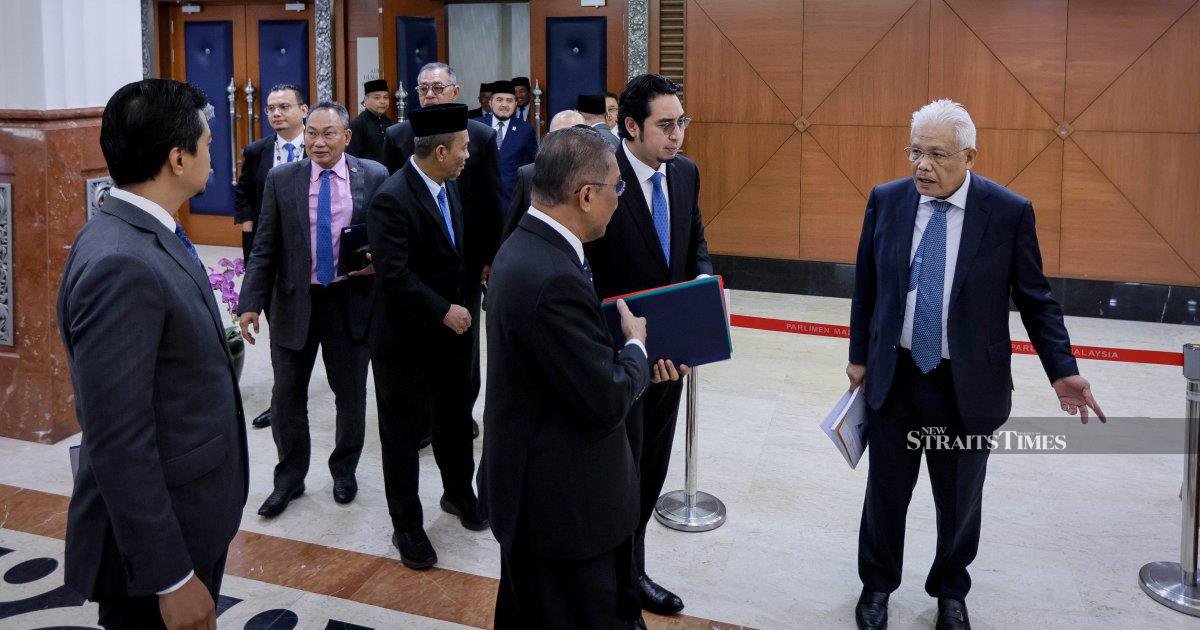
The opposition's departure from Parliament this week, triggered by disagreements over the Tabung Haji Royal Commission of Inquiry findings, once again brings into sharp focus a fundamental paradox in Malaysian legislative politics. When lawmakers abandon the chamber in protest, the interpretation of their actions hinges almost entirely on which side of the political divide observers occupy. What one faction celebrates as principled resistance becomes, for their opponents, merely a calculated performance designed to capture media attention and outrage sympathetic constituencies.
This recurring pattern exposes deeper truths about how Malaysia's Parliament functions as both a deliberative forum and a stage for political messaging. The institution must simultaneously serve its formal constitutional purpose—debating legislation, scrutinising executive action, and representing constituent interests—while acknowledging that modern parliamentary politics invariably involves positioning for public consumption. Walkouts occupy an uneasy space between these two realities. They represent a withdrawal from the negotiating table and the mechanisms of persuasion that theoretically define legislative chambers, yet they generate precisely the kind of narrative momentum that shapes voter perception and party fortunes in an increasingly media-saturated political environment.
The Tabung Haji matter exemplifies why parliamentary walkouts have become a go-to tactic for Malaysian opposition groups. The Royal Commission of Inquiry into the pilgrimage fund touched on governance issues touching the welfare of ordinary Malaysians preparing for one of Islam's five pillars. When opposition members chose to leave the chamber rather than participate in proceedings surrounding the RCI report, they signalled that they viewed the government's handling of the matter as fundamentally illegitimate or inadequate. Yet from the government's perspective, such departures represent an abdication of responsibility—if opposition lawmakers genuinely believed their constituents' interests were threatened, the argument goes, they should have remained present to voice those concerns through proper parliamentary channels, amendments, and recorded votes.
The tactical calculus behind parliamentary walkouts has shifted measurably over Malaysia's recent political history. In an earlier era, when broadcast media dominated and parliamentary proceedings received selective coverage, a walkout might have received a brief mention in evening news bulletins. Today's information ecosystem multiplies the impact. Social media allows opposition figures to frame and distribute their own narrative of the walkout within minutes, reaching supporters directly without media intermediation. Opposition MPs can simultaneously broadcast clips of their departure, statement explaining their position, and calls for public support. This multimedia amplification means walkouts now function as political events that transcend Parliament itself, becoming stories about Parliament rather than stories from within it.
Malaysian political actors across the spectrum have gradually internalised this reality. Both government and opposition strategists now calculate whether a particular parliamentary moment is more valuable as a legislative engagement or as a political narrative to be deployed externally. From the opposition perspective, staying present to argue a losing position on a vote already decided by the government's majority might accomplish nothing legislative and would generate no memorable political message. Walking out, by contrast, creates a visual and symbolic record of dissent that can be replayed, discussed, and contextualised in ways that serve party branding and voter mobilisation. Government MPs view such departures as validating their criticism that opposition figures are more interested in stunts than substance.
The Tabung Haji situation carries particular weight because the fund affects millions of ordinary Malaysians from diverse educational and socioeconomic backgrounds. Questions about its governance and financial health translate directly into concerns about whether people's life savings and aspirations for religious pilgrimage are secure. When opposition lawmakers walked out over RCI proceedings, they were not merely disputing bureaucratic procedures or administrative details—they were signalling that they believed the government's approach to a matter affecting ordinary citizens' welfare warranted dramatic protest. This elevates the stakes beyond typical parliamentary disagreement and potentially resonates more powerfully with voters than walkouts over more technical or abstract matters.
Yet persistent reliance on parliamentary walkouts as a protest vehicle raises questions about democratic efficacy and legislative culture. If opposition members regularly abandon the chamber rather than engage, they forfeit the ability to shape outcomes through amendments, questioning, or negotiations. They concede the physical and procedural space to their opponents, which can imply weakness or marginalisation even if the gesture itself is intended as a statement of principle. Over time, normalising walkouts as protest might erode the Parliament's capacity to function as a forum where different perspectives genuinely encounter one another and where the work of democratic deliberation actually occurs.
From a Southeast Asian perspective, Malaysia's parliamentary dynamics warrant attention precisely because they reflect broader challenges facing legislatures across the region. As political polarisation increases and media fragmentation accelerates, legislatures everywhere struggle to maintain their identity as deliberative institutions while acknowledging that they inevitably function as platforms for political communication. Thailand's volatile parliamentary history, the Philippines' contentious legislative sessions, and Singapore's more constrained but still competitive political environment all demonstrate how modern parliaments navigate these tensions differently, but none has found a stable equilibrium.
The distinction between legitimate protest and empty theatrical performance ultimately cannot be resolved objectively. It depends on whether one believes the underlying cause justifies the tactic and whether one judges the message more important than the procedural violation. Malaysian voters, particularly those invested in Tabung Haji's security, will interpret the opposition's walkout through their own lens regarding whether the RCI report adequately addressed their concerns and whether dramatic exit represented appropriate escalation or counterproductive grandstanding. The same action carries opposite meanings depending on one's position.
Moving forward, Malaysian Parliament might benefit from clearer norms around protest tactics that distinguish between principled withdrawal on matters of genuine constitutional significance and routine departures over partisan disagreement. Some legislatures in other democracies have experimented with formalising procedures that allow for recorded dissent while maintaining quorum and participation. Whether Malaysia's political culture might embrace such innovations remains uncertain. For now, walkouts will likely continue to serve as the default opposition protest tool—visible, dramatic, and capable of generating the external narrative momentum that increasingly determines how Malaysian politics is understood and remembered.

