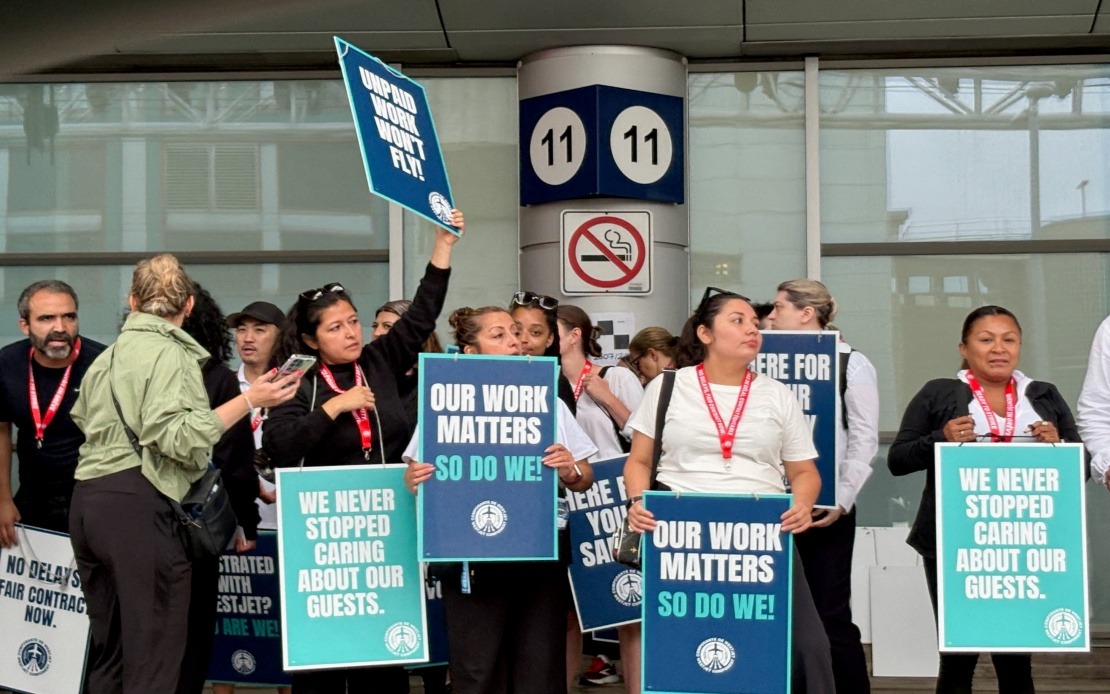
The industrial action at WestJet commenced on Sunday, affecting one of North America's major carriers at what is traditionally one of the busiest travel periods of the year. With more than 4,000 flight attendants belonging to the Canadian Union of Public Employees walking off the job, the airline has been forced to ground approximately 600 daily flights. The timing proved particularly disruptive, as the strike occurred just before Monday's civic holiday in Canada, a period when travel demand peaks significantly across the nation's airline network.
The estimated 250,000 passengers caught in the disruption face considerable uncertainty regarding their travel arrangements, with ripple effects extending beyond individual travellers to businesses and communities reliant on the airline's operations. WestJet, which holds the position of Canada's second-largest airline by market share, faced an immediate challenge in managing the scale of cancellations and rebooking requirements. The company announced it would process refunds for affected passengers, though such measures offer limited consolation to those whose immediate travel plans have been derailed.
The financial implications for WestJet are substantial. Industry analysts suggest the strike could cost the airline millions of dollars when accounting for lost revenue from cancelled flights, rebooking expenses, staff overtime payments, and potential compensation claims. The financial burden extends to the broader travel ecosystem, affecting hotels, rental car agencies, and tourism operators across Canada who benefit from the movement of leisure and business travellers.
Compensation for ground work stands at the heart of this labour dispute. Flight attendants are pushing for recognition and payment for the work they perform before aircraft departure and following landing, activities that currently go uncompensated despite consuming considerable time and effort. This demand reflects a broader global trend within the aviation industry where workers seek fairer recognition of their total working hours.
The precedent for such compensation has already been established by major competitors. Delta Air Lines pioneered this benefit in 2022, becoming the first airline to introduce systematic pay for ground work. Air Canada, Canada's largest carrier, subsequently adopted similar protections under a new contract agreed in February, providing flight attendants with compensation of up to 70 per cent of their hourly rate for the hour immediately preceding takeoff. These developments have clearly influenced expectations at WestJet, where flight attendants now demand equivalent consideration.
Current compensation levels at WestJet range from $28.88 to $53.61 per credit hour, figures that union representatives argue do not adequately reflect the full scope of attendant responsibilities. The union's position gains strength from the contractual achievements secured by Air Canada workers, establishing that major Canadian carriers possess the financial capacity to provide such benefits. Union representative Alia Hussain attributed the strike to WestJet's unwillingness to engage seriously with worker concerns, noting that nearly 11 months of negotiation had failed to produce movement on this central issue.
The Canadian government registered its disappointment with the impasse. Federal Jobs Minister Patty Hajdu publicly stated through social media that she was dismayed by the failure of both parties to reach agreement following protracted negotiations over a new contract. Her intervention underscores the political sensitivity surrounding airline labour disputes, particularly when they disrupt travel during peak seasons and affect hundreds of thousands of citizens.
WestJet's leadership acknowledged the disruption while defending the company's position. CEO Alexis von Hoensbroech expressed regret regarding the strike's impact on passenger travel plans, company employees, and the communities and businesses dependent on the airline's services. However, the company's public stance stops short of indicating flexibility on the core compensation issue, suggesting a hardening of positions on both sides.
For Malaysian and Southeast Asian observers, this dispute illustrates the evolving dynamics of airline labour relations in developed markets. As the region's own aviation industry expands and workers become increasingly aware of international labour standards and practices, similar disputes may emerge locally. The WestJet situation demonstrates how ground work compensation—a concept relatively novel in the global airline industry just two years ago—has rapidly become a standard expectation among unionised flight crews at major carriers.
The strike also reflects broader economic pressures within the airline industry following the pandemic recovery. While carriers have reported strong bookings and revenue as travel demand rebounded, workers argue they deserve equitable sharing of these gains. This tension between airline profitability and worker compensation will likely define labour negotiations across North America and potentially influence discussions in Asia-Pacific markets as carriers in this region modernise their labour practices.
Looking ahead, resolution of the WestJet dispute will depend on whether management demonstrates willingness to adopt the compensation models already accepted by major competitors. The precedents set by Delta and Air Canada significantly constrain WestJet's negotiating position, as any final settlement will inevitably be compared against these benchmarks. For the travelling public and businesses affected by the current disruption, the hope remains that both parties recognise the mutual costs of prolonged conflict and move toward the negotiating table with fresh urgency and flexibility.

