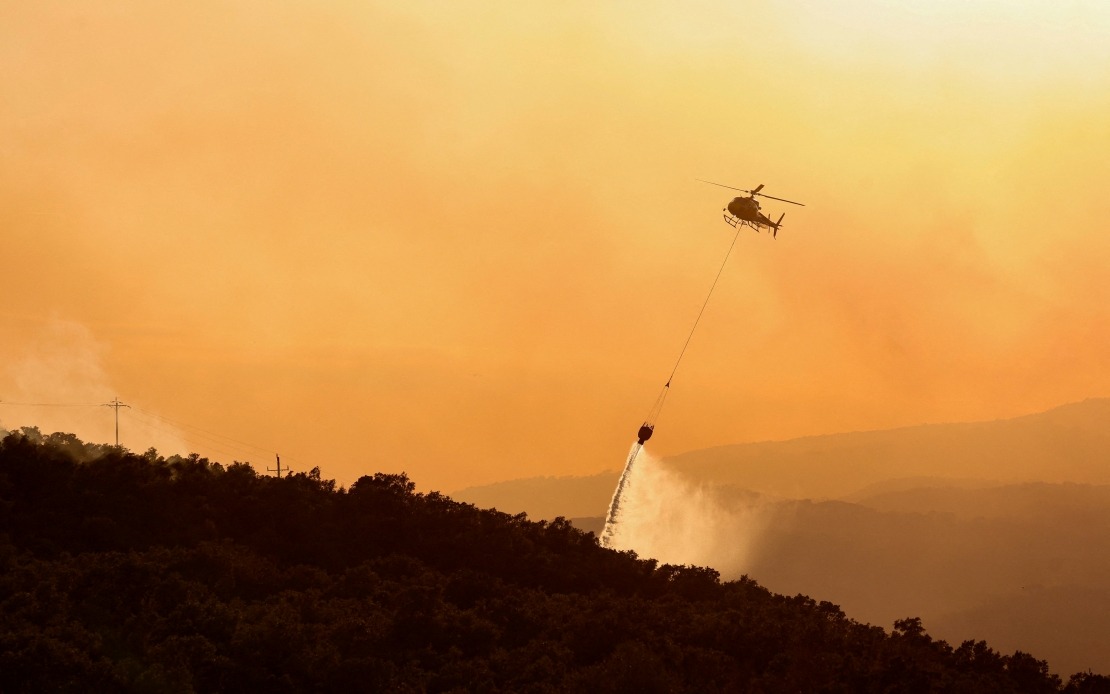
Communities throughout the western United States have been forced to abandon their Independence Day fireworks celebrations as an unprecedented convergence of drought, active wildfires, and volatile fire-weather patterns threatens the region. The cancellations and restrictions represent a significant disruption to Fourth of July traditions as the country commemorates its 250th anniversary this year. National incident management data revealed that 41 large fires remain uncontained across the country, placing the nation at its second-highest wildfire preparedness alert level as of early July.
Utah has emerged as one of the hardest-hit states, prompting Governor Spencer Cox to issue a statewide temporary restriction on firework usage. The executive order, which took effect through July 5, permits local authorities to establish limited zones where fireworks may still be discharged, though the overall approach represents a dramatic curtailment of typical celebrations. The severity of the situation becomes clear when examining statewide drought metrics: approximately 94 per cent of Utah territory is currently experiencing severe or extreme drought conditions, creating an environment where any ignition source poses extraordinary risk.
Utah State Forester Jamie Barnes characterised the current wildfire behaviour as fundamentally different from historical patterns, noting that blazes are spreading at accelerated rates compared to previous years. The statistical picture underscores this alarming trend—Utah has already consumed more land area through wildfire this calendar year than during the entire preceding four-year period combined. This acceleration reflects broader climatic patterns affecting the western region and raises serious questions about whether communities can sustain their traditional summer celebrations in coming years.
Colorado presents a similarly concerning picture, with the state's Division of Fire Prevention and Control documenting more than a dozen active wildfires across different regions during the first week of July alone. Multiple municipalities responded by cancelling their scheduled fireworks events, including Durango, Vail, and Pueblo. Notably, Vail has now cancelled its Independence Day fireworks display six times since 1998, with 2021 being the most recent cancellation—indicating that such disruptions have become increasingly common occurrences rather than isolated incidents.
Colorado Springs, the state's second-largest city, took the extraordinary step of cancelling all Fourth of July fireworks programming for the week, citing extreme fire danger conditions. Fire department officials characterised the risk landscape as comparable to circumstances preceding the devastating 2012 wildfire that destroyed over 300 residences across the metropolitan area and surrounding regions. Mayor Yemi Mobolade acknowledged the disappointment inherent in the decision, particularly given the historical significance of the 250th anniversary year, but emphasised that public safety considerations superseded celebration traditions.
The geographical scope of restrictions extends well beyond Colorado and Utah, with neighbouring states implementing their own protective measures. Wyoming, Nebraska, and New Mexico have all imposed limitations on fireworks usage in response to documented drought conditions or active wildfire threats. Despite these widespread state-level restrictions, most professional fireworks displays conducted by licensed operators are anticipated to proceed as scheduled, since such events typically employ controlled conditions and specialized safety protocols distinct from consumer-grade fireworks.
Meteorological forecasts issued on Friday amplified concerns about the immediate risk environment. The National Weather Service warned that strong wind patterns combined with exceptionally low humidity levels would substantially elevate fire danger across southwestern territories. Simultaneously, much of the eastern and central United States experienced dangerously elevated temperatures, with some regions recording heat index values exceeding 46 degrees Celsius. This continental pattern of extreme heat creates additional fuel for wildfire ignition and accelerated propagation.
Academic research illuminates the connection between fireworks usage and wildfire initiation. Philip Higuera, a fire ecology specialist at the University of Montana, emphasised that Fourth of July fireworks contribute substantially to wildfire incidence on that particular calendar date through multiple ignition sources dispersed simultaneously across the landscape. Lauren Lowman, an associate professor at Wake Forest University, has documented that nearly half of all western United States land area burned since 2001 occurred during heat wave periods or in their immediate aftermath, suggesting that weather patterns amplify the consequences of any ignition source.
Historical wildfire records compiled by Lowman demonstrate that approximately 15,000 fires were officially recorded on July 4 dates between 1992 and 2020, an average of nearly 600 fires per July 4 occurrence. Beyond fireworks-specific incidents, consumer fireworks generated an estimated 32,000 fires nationwide during 2023 alone. This data suggests that cancelled fireworks displays represent not merely ceremonial restrictions but potentially significant reductions in actual wildfire initiation risk during an extraordinarily vulnerable period.
For Malaysian and regional readers monitoring global climate and natural disaster patterns, the western United States wildfire situation offers instructive lessons about escalating environmental pressures on community traditions and governmental capacity to manage public gatherings. Southeast Asia faces its own seasonal fire challenges, particularly during dry periods affecting Indonesia, Malaysia, and neighbouring territories. The American experience demonstrates how drought intensification, climate variability, and accumulated fuel loads can force rapid policy reversals that affect fundamental cultural practices, suggesting that similar pressures may increasingly constrain traditional activities throughout the Asia-Pacific region as climate patterns shift.

