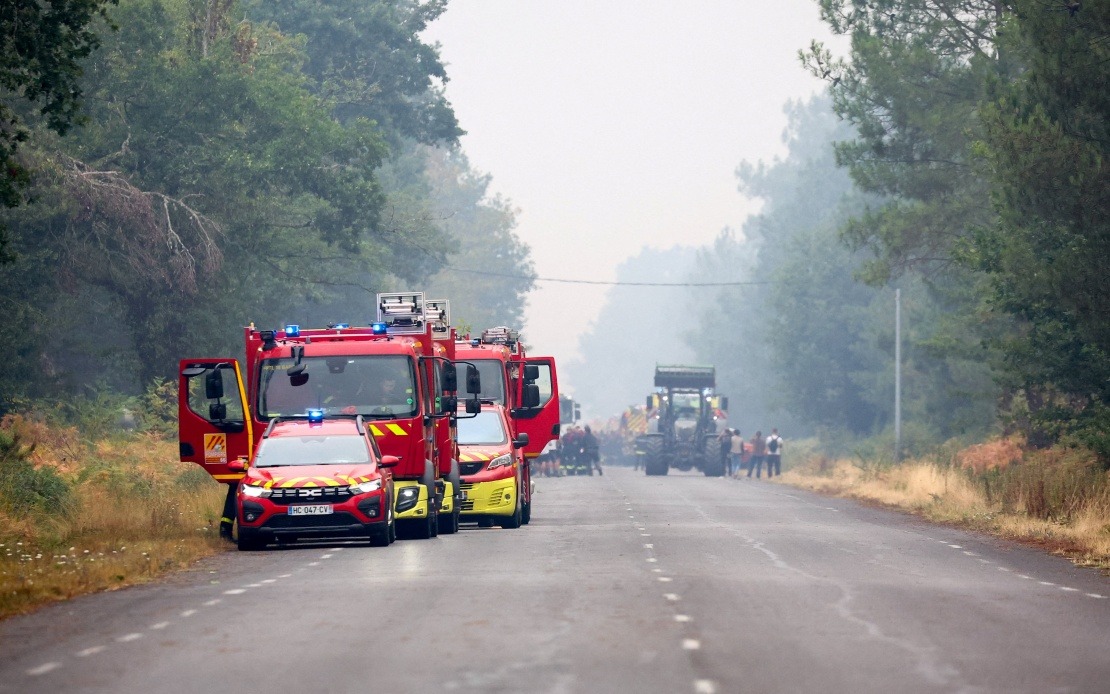
The wildfire emergency gripping southwestern France and eastern Spain entered a more manageable phase by midweek, though authorities remain on high alert as meteorological forecasts predict another intense heatwave will sweep across the region. The dual crisis—simultaneous fires across multiple countries combined with extreme weather patterns—has tested emergency response systems and exposed the vulnerability of Mediterranean regions to cascading climate disasters.
In France's Gironde department, the prefecture confirmed on Wednesday morning that the major fire had stabilised after consuming vast tracts of forest and displacing thousands of residents. Despite this positive development, the overnight period witnessed several smaller flare-ups that threatened to reignite contained areas, prompting rapid intervention from the assembled firefighting contingent. The situation remains precarious, with over 2,000 firefighters maintaining a continuous presence to patrol the active perimeter, extinguish remaining hotspots, and prevent the fire from spreading into previously unaffected zones. The human cost has been substantial: 126 firefighters have sustained injuries since the Gironde fire began, underscoring the physical dangers inherent in battling wildfires of this magnitude.
The broader French crisis extends across multiple departments, each facing distinct challenges based on geography and wind patterns. In the southeastern Var department, firefighting efforts succeeded in containing a separate blaze on Tuesday after it had ravaged nearly 4,800 hectares of woodland. The southwestern Landes department presents a different scenario, where approximately 350 firefighters continue deployment despite the fire being contained on Monday following destruction of 3,600 hectares. These varying timelines and resource requirements illustrate how wildfire management demands flexible, adaptive response strategies tailored to each location's specific conditions.
Meteo-France's alert system reflects the ongoing risk calculus facing authorities. Sixty-five French departments have been placed under orange alert status for Wednesday, indicating a heightened risk of forest fire ignition and spread. More alarmingly, the national weather service issued orange alerts specifically targeting 16 departments in anticipation of the approaching heatwave. This layering of warnings—current fire containment overlapping with predicted extreme heat—creates a precarious scenario where gains made in fire suppression could be quickly reversed if atmospheric conditions shift toward favouring rapid fire propagation.
Spain's wildfire situation demonstrates similar patterns of temporary stabilisation shadowed by ongoing danger. The Sierra Oeste fire in Madrid's periphery remained stable overnight without recorded flare-ups on Wednesday, allowing firefighting commanders to consolidate their positions and strengthen defensive perimeters around threatened communities. However, active fire suppression operations continue across multiple Spanish regions including the Madrid region proper, Avila, Toledo, Castellon and Almeria provinces. This geographical spread indicates that Spain's fire emergency, like France's, is not a single isolated incident but rather a coordinated crisis affecting numerous provinces simultaneously.
The evacuation and return of residents has proceeded in phases as local conditions improve, though thousands remain displaced. Residents from 15 municipalities across Madrid and Avila returned home late Tuesday after authorities determined their areas were no longer under immediate threat. Larger population movements occurred in Castellon and Toledo provinces, where 9,000 and 6,000 residents respectively were permitted to return to their homes from 11 municipalities. These returns, while symbolically important for affected communities, remain conditional on fire behaviour and weather patterns, with authorities maintaining the capacity to order new evacuations if conditions deteriorate.
The Vall d'Uixo wildfire in Castellon represents Spain's most intractable fire challenge. Burning continuously since Saturday, this fire has consumed 10,000 hectares of forest and scrubland while forcing 10,000 residents to evacuate. Critically, this fire remains officially classified as out of control, meaning firefighting efforts have not yet succeeded in containing its spread. The persistence of this particular fire, combined with its significant human displacement impact, underscores how individual blazes within a regional fire crisis can vary dramatically in severity and responsiveness to suppression efforts.
Infrastructure damage extends beyond burned vegetation and homes. A total of 30 roads remain closed across Avila, Castellon, Madrid, Toledo and Leon provinces, disrupting commercial transport, emergency vehicle access, and civilian movement. These closures represent both immediate safety measures—preventing public entry into hazardous zones—and practical necessities where fire has damaged road surfaces or surrounding vegetation presents ongoing danger. The extended road closures indicate that fire suppression is only one component of the broader recovery process, which includes infrastructure assessment and restoration.
For Malaysian and Southeast Asian observers, these European wildfires carry significant implications. While climatic and geographical conditions differ fundamentally from tropical Southeast Asia, the management principles and resource allocation strategies employed by European authorities offer instructive lessons. The coordination between multiple French departments, the integration of weather forecasting with emergency response, and Spain's systematic evacuation and return protocols demonstrate sophisticated disaster management frameworks. As Malaysia and regional neighbours face their own wildfire challenges—particularly during the extended dry seasons affecting Borneo and Sumatra—studying these European operational models could enhance preparedness and response effectiveness.
The looming heatwave presents the most immediate threat to firefighting progress. When atmospheric temperatures rise significantly, relative humidity drops, vegetation moisture content decreases, and fire behaviour becomes increasingly erratic and difficult to predict. Historical patterns demonstrate that heatwaves following major wildfires frequently trigger renewed outbreak and rapid spread, potentially undoing weeks of suppression work. European meteorological services' advance warning of this heatwave provides a critical window for authorities to pre-position resources, reinforce vulnerable perimeters, and prepare civilian populations for possible renewed emergency orders.
The interconnection between climate change, heatwaves, and wildfire frequency has become impossible to ignore across Europe. These are not isolated weather events but manifestations of broader climatic patterns. Scientists and policy analysts increasingly recognise that traditional fire suppression tactics, while necessary, cannot alone address the fundamental driver: escalating atmospheric temperatures and changing precipitation patterns. This recognition is gradually shifting policy focus toward landscape-level adaptation strategies, including controlled burns during safer periods, modification of forest composition toward fire-resistant species, and urban planning that creates defensible space around communities. For Southeast Asia, where deforestation and land-use change already create vulnerability to wildfires, these European experiences underscore the urgent need for comprehensive, forward-looking fire management strategies rather than reactive crisis response alone.

