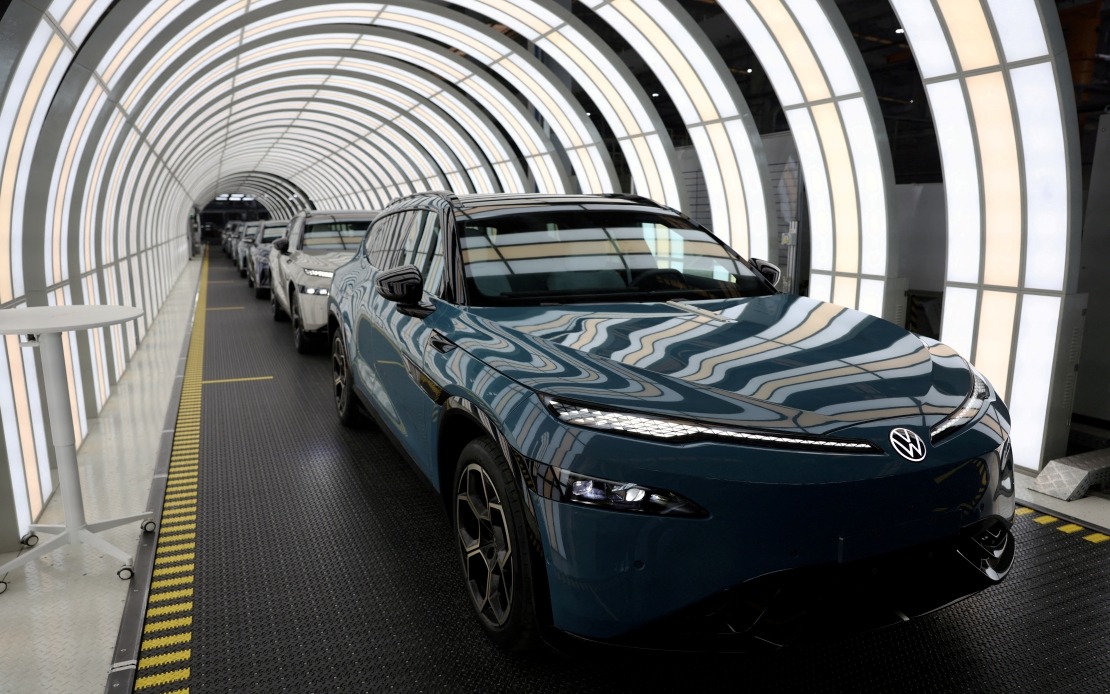
The European Union's trade barriers against Chinese electric vehicles are achieving a measurable reshuffling of production geography, with Western manufacturers increasingly opting to assemble and build their EVs within the continent rather than importing finished vehicles from Asia. A comprehensive analysis by transport research group T&E reveals that the strategic shift accelerated notably during the first quarter of 2025, presenting a starkly different picture from the supply chains operating merely months before the tariffs took effect.
The data demonstrates a sharp contraction in Chinese-sourced EV imports destined for European consumers through Western brands. Where Chinese-manufactured battery electric vehicles accounted for 38 per cent of total EV sales from Western companies in 2024, that proportion dropped to 23 per cent in the opening three months of 2025. This transformation encompasses analysis of major manufacturers including BMW, Dacia, Volvo, Smart and Tesla, whose collective sales patterns reveal the tariff regime's practical impact on supply chain decisions. The research draws upon production and sales information compiled by GlobalData, lending substantive weight to the findings across an otherwise fragmented automotive sector.
Tesla's experience exemplifies this broader trend among established Western players. The American electric vehicle manufacturer's proportion of China-made vehicles within Europe's overall EV marketplace declined from 23 per cent to 19 per cent across the same timeframe. While this represents a more modest adjustment compared to the aggregate Western brand figures, it nonetheless underscores how even industry leaders are reconsidering their reliance on Chinese production facilities when serving the European market. For Tesla specifically, this shift has compelled operational and logistical recalibrations as the company navigates between maintaining manufacturing efficiency and managing tariff exposure.
However, the tariff regime has not uniformly deterred Chinese automotive companies from pursuing European sales. Manufacturers such as BYD and Geely have actually expanded their market presence despite facing import duties, capitalizing on substantial excess production capacity within China that remains available for export. These companies have demonstrated considerable flexibility in absorbing or offsetting tariff costs, leveraging scale advantages accumulated through years of domestic production investment. Their persistence reflects confidence in European demand dynamics and suggests that tariff levels, while consequential, may not necessarily prove prohibitive for larger, better-capitalized Chinese producers.
SAIC represents a notable counterpoint within this narrative. The Chinese manufacturer has experienced marked European sales deterioration since tariffs commenced in 2024, a divergence traceable to exceptionally punitive duty rates. The EU imposed tariffs on SAIC that approximate double those assigned to competitors like BYD and Geely, following detailed subsidy investigations that concluded SAIC benefited disproportionately from state-backed financial support embedded throughout its supply chain architecture. This differential treatment illustrates how the EU has wielded tariff policy as a precision instrument, calibrating duties to reflect underlying subsidy dependencies rather than applying blanket rates across all Chinese competitors.
The tariff environment has simultaneously catalyzed a strategic response from Chinese manufacturers seeking to preserve European market access while circumventing import duties altogether. Since the EU initiated its subsidy investigation framework in 2023, Chinese automakers have announced plans for no fewer than ten production facilities across the European continent. These investments represent a fundamental repositioning of manufacturing capacity, shifting labour-intensive assembly and component sourcing from coastal Chinese provinces toward European locations. For Malaysia and other Southeast Asian nations, this European manufacturing expansion carries indirect implications, potentially reducing demand for regional supply chain integration while creating new competitive pressures in automotive parts export markets.
The tariff architecture has additionally prompted Chinese manufacturers to recalibrate their product mix strategy aimed at European customers. Plug-in hybrid vehicles, which occupy a regulatory and tariff space distinct from pure battery electric vehicles, have emerged as an appealing alternative export pathway. Chinese producers have dramatically accelerated PHEV exports to the EU, with market share rising from 3 per cent in 2024 to 13 per cent in the current period. This product diversification reflects sophisticated supply chain optimization, allowing Chinese manufacturers to sidestep some tariff exposure while maintaining revenue growth within the increasingly competitive European automotive marketplace.
The implications extend beyond bilateral trade dynamics between the EU and China. For Malaysian automotive stakeholders, including components manufacturers and assembly operations, these developments signal shifting patterns in global supply chain architecture that could redirect procurement decisions. European automakers relocating production internally may seek different supplier relationships or regional sourcing strategies. Simultaneously, Chinese manufacturers expanding European production capacity may reduce reliance on Malaysian suppliers who previously supported Chinese domestic production destined for export.
The study underscores how trade policy instruments, particularly tariffs calibrated to subsidy levels, can meaningfully alter corporate investment geography within constrained timeframes. Western automakers demonstrated capacity to rapidly reconfigure supply chains when cost structures shifted, suggesting that tariff measures do impose genuine constraints on import-dependent business models. Yet the Chinese response—accelerating local European production while simultaneously maintaining and growing hybrid vehicle exports—indicates that tariff regimes alone cannot completely reverse decades of manufacturing specialization without complementary policy measures addressing underlying competitive advantages and cost structures.
For regional observers, the evolving EU-China automotive trade relationship illustrates the broader dynamic of strategic decoupling occurring across critical industries. As major economies increasingly weaponize trade policy to reshape supply chains aligned with geopolitical objectives, companies operating across multiple jurisdictions must develop enhanced agility in production planning and sourcing strategies. Malaysia's position as an intermediate manufacturing hub and components supplier makes these global rebalancing trends directly relevant to domestic economic interests and industrial planning horizons.

