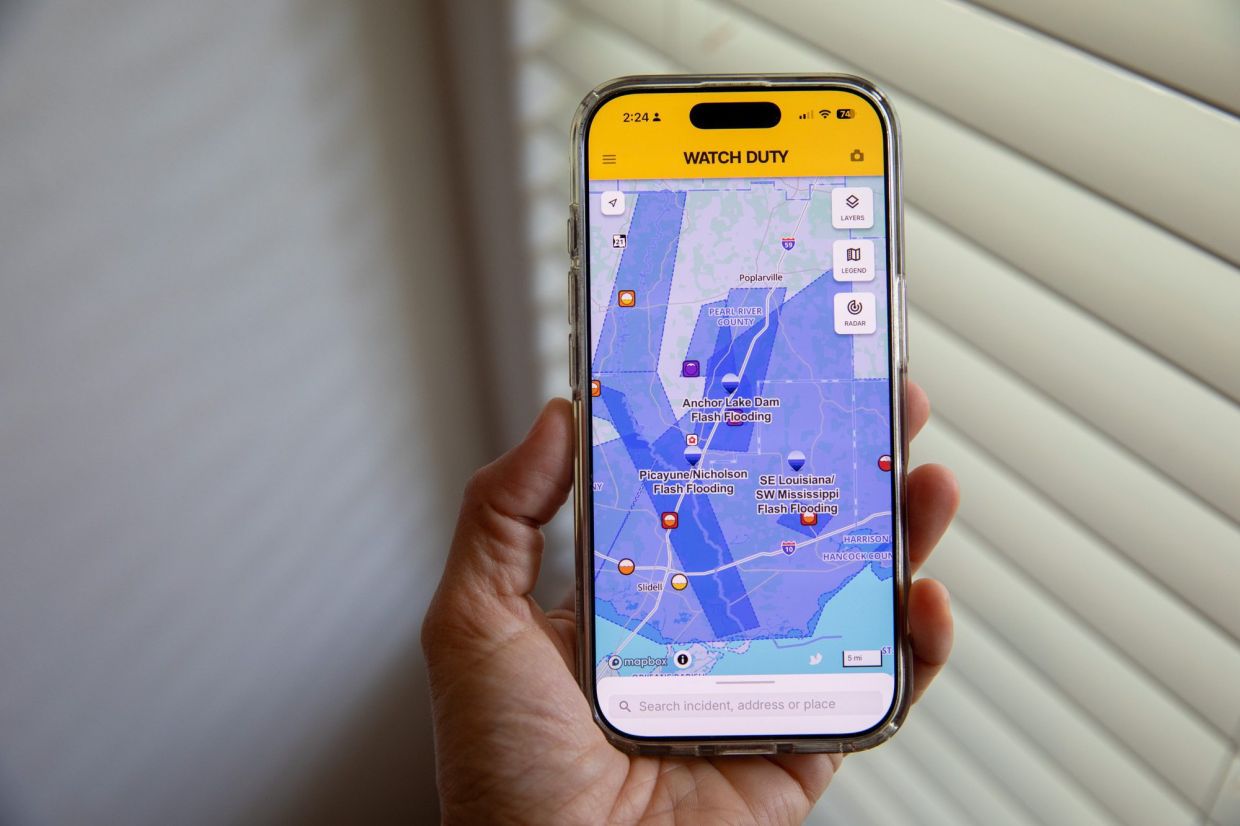
Matt Blea faced an agonising choice when flames approached his Altadena home on a January evening in 2025. A friend's recommendation to download Watch Duty, a free emergency tracking application, gave his family crucial real-time information about the fire's location and evacuation orders. That decision proved prescient: Blea evacuated that night, and the Eaton Fire subsequently destroyed his property. His experience mirrors that of 2.5 million others in Los Angeles County who turned to Watch Duty during one of California's most destructive fire seasons in recent years.
The app's meteoric rise reflects a fundamental problem in disaster response: official warning systems often fail to reach people fast enough or clearly enough when minutes matter. Watch Duty operates as a democratised information clearinghouse, assembling data from emergency radio traffic, aircraft reports and agency communications through roughly two dozen staff members and over 100 volunteers. David Hertz, a Malibu fire brigade captain, describes the system as a democratisation of data, particularly vital when the Eaton and Palisades fires killed 31 people despite inadequate warnings reaching some communities.
John Mills founded Watch Duty in 2021 after his own brush with fire left him without official alerts or evacuation guidance. What began as a personal frustration evolved into a nonprofit infrastructure serving more than 20 million users nationwide. The organisation received nearly US$6 million in grants and donations during 2025, demonstrating substantial confidence from donors in its mission. Mills witnessed firsthand how volunteer radio operators manually monitoring emergency scanners and posting updates on social media could save lives, yet recognised that approach's limitations—misinformation and irrelevant content frequently drowned out critical safety information on social platforms.
The fundamental challenge Watch Duty addresses transcends any single region. Emergency alert systems across the United States rely on bureaucratic processes that often struggle under real-time pressure. While multiple channels exist for sending alerts through text, radio and other means, translating raw danger into specific warnings and evacuation orders requires coordinated human decision-making that frequently stalls when seconds count. Mills characterises the core problem as information accessibility: crucial data exists but remains scattered across incompatible systems, difficult for average citizens to find and interpret under stress.
In June 2024, Watch Duty pivoted to address flooding, another climate hazard causing devastating casualty rates. This expansion carries particular urgency given peak flash flood season's approach in the United States and the preceding year's deadly Texas floods that killed over 130 people, sparking public outrage about failed communication. The tragedy exposed how Hill Country residents and tourists remained dangerously uninformed despite the danger's severity. Mills describes the situation with palpable frustration: widespread failures to disseminate information across sufficient channels at adequate speed.
Watch Duty's operational structure separates it fundamentally from government agencies. Approximately 300 volunteer reporters collate and vet information from radio scanners, cameras, satellites, user-generated content and official announcements, operating with a singular focus: observe and listen. As retired firefighter and Watch Duty meteorologist Pete Curran explains, this streamlined responsibility means the organisation can push information faster than local agencies whose personnel simultaneously manage complex incident response. The app presents data across five languages through maps, text feeds and push notifications designed to penetrate even silenced phones.
The flood monitoring expansion taps into a critical gap exposed by recent disasters. Dr Lori Moore-Merrell, who served as US Fire Administrator and now sits on Watch Duty's board, emphasises how climate patterns are producing unprecedented rainfall in traditionally dry regions. Residents and authorities in these areas often lack experience recognising danger signals. Watch Duty's flood component integrates weather modelling and data from the National Weather Service, National Oceanic and Atmospheric Administration and US Geological Survey, allowing users to visualise river gauge levels, FEMA flood designations and early warning signs of dam or levee failures. Users can customise notifications based on specific gauge heights, effectively personalising their warning system.
Yet Watch Duty's expansion cannot address every challenge inherent in emergency communication. Chad Berginnis, executive director of the Association of State Floodplain Managers, emphasises that warnings prove useless without knowledge of appropriate response. The organisation advocates for residents to identify evacuation routes beforehand and actually practise emergency procedures rather than merely maintaining theoretical plans. Texas flooding failures revealed this gap starkly: communities received insufficient notice, but even adequate warnings cannot help people who lack clear evacuation strategies or community transportation.
Understanding risk requires infrastructure investment that remains politically uncertain. Federal and local emergency systems face proposed funding cuts that jeopardise the monitoring capacity Berginnis describes as essential—if citizens want reliable observation and communication, institutions must allocate resources to maintain it. Mills emphasises that Watch Duty deliberately functions as a complement to, not replacement for, professional meteorologists and emergency services. Users should simultaneously maintain enrolment in official local alert systems and recognise technological solutions' inherent limitations.
Phones themselves present an obvious constraint: Watch Duty benefits only those who download the application and maintain cellular coverage during emergencies. Berginnis advocates for redundancy, noting that inexpensive NOAA weather radios provide backup when technological systems fail. This perspective challenges emergency response's modern tendency to concentrate on sophisticated digital tools while overlooking simpler reliable alternatives. Communities prepared for actual disasters employ multiple communication channels, understand evacuation procedures through rehearsal, and maintain diverse warning technologies rather than depending exclusively on mobile apps.
The expansion into flood monitoring positions Watch Duty as an increasingly significant actor in American disaster response, yet it also illuminates the fragmented nature of current systems. Mills stresses that professional weather and fire services remain irreplaceable; the app fills gaps rather than supplanting expertise. Southeast Asian readers, particularly in Malaysia and surrounding nations increasingly affected by monsoon flooding and urban fire incidents, might recognise similar vulnerabilities in their own emergency communication infrastructure. As climate change produces more frequent and unpredictable disasters, Watch Duty's model of volunteer-powered information clearinghouses suggests one approach to compensating for official system limitations—though ultimately, comprehensive public safety requires sustained institutional investment rather than reliance on charitable technological solutions.

