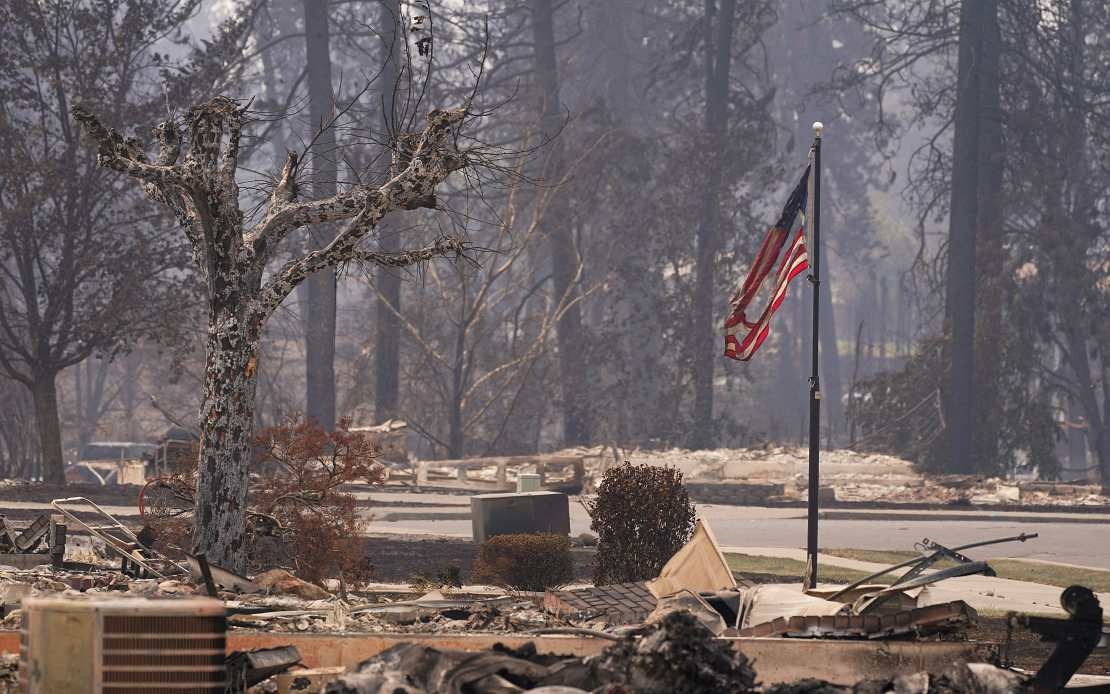
Multiple wildfires sweeping through Washington state have triggered one of the largest evacuation operations in the region, with the American Red Cross confirming that over 65,000 residents have been forced to abandon their homes as uncontrolled blazes consume vast stretches of forest and residential areas. The crisis, which intensified during the opening days of August, underscores the growing threat that seasonal wildfire patterns pose to communities across the Pacific Northwest, a region increasingly vulnerable to extreme weather conditions and prolonged drought cycles.
The scale of residential destruction has proven particularly severe in Spokane County, where preliminary damage assessments indicate that more than 700 homes have been consumed by the flames. This concentration of structural losses reflects the speed with which wildfires can overwhelm suburban and semi-rural areas, leaving little time for property owners to salvage belongings or implement protective measures. The loss extends beyond physical structures to encompass the psychological toll on displaced families, many of whom remain uncertain about whether their properties will survive ongoing fire operations or whether they will be permitted to return home in the coming weeks.
Law enforcement officials have made significant progress in determining the cause of at least one major fire. Spokane County Sheriff John Nowels announced that a 37-year-old suspect named Aaron F. Farinacci was apprehended on Monday afternoon and charged with first-degree arson. The arrest came swiftly as investigators connected Farinacci to the Old Trails Fire, one of several destructive blazes currently active across the region. Nowels stated that Farinacci is being held on a $1 million bond pending further proceedings, establishing a criminal investigation dimension to what otherwise appeared to be a natural disaster driven by summer weather conditions.
The geographical scope of the fire emergency extends across multiple counties and encompasses several distinct fire complexes. Data from InciWeb, the interagency incident information system, documented that the fires ravaging the Spokane and Stevens counties areas have charred approximately 8,026 acres since Saturday, yet crews have achieved zero percent containment of these blazes despite deployment of available firefighting resources. The lack of containment progress reflects both the intensity of the fires and the challenging terrain that firefighting personnel must navigate while attempting to establish defensible perimeters around threatened communities and infrastructure.
The Sinlahekin fire represents an even more alarming threat, having expanded to 85,000 acres since it was ignited by lightning strikes on July 26. This significantly larger conflagration has mobilised more than 820 personnel in suppression efforts, yet it too remains entirely uncontained. The scale of this fire demonstrates how natural ignition sources, combined with dry vegetation and high temperatures, can rapidly overwhelm firefighting capacity. In a separate sector, the Little Giant Fire northwest of Leavenworth has consumed 51,298 acres within the Okanogan-Wenatchee National Forest, adding to the cumulative burden on state and federal fire management agencies struggling to allocate resources across multiple simultaneous emergencies.
Weather conditions present both challenges and potential relief for fire suppression operations. The Spokane Complex Fire Incident Management Team indicated that more favourable meteorological patterns emerging during early August are permitting ground and aerial crews to make incremental progress along established fire lines. However, such improvements remain fragile, as sudden shifts in wind patterns or temperature spikes could rapidly reverse tactical gains and create new threats to communities positioned downwind of active fire zones. Wildfire management in the Pacific Northwest increasingly depends on narrow windows of advantageous weather that allow crews to work without life-threatening conditions.
Governor Bob Ferguson has overseen the emergency response coordination, focusing particular attention on ensuring that all residents requiring evacuation have been safely removed from danger zones. Ferguson reported that officials have successfully accounted for nearly all persons who called for emergency assistance, though authorities continue attempting to locate fourteen individuals to verify their wellbeing. The governor emphasised that these fourteen people are not classified as missing and may have evacuated independently or chosen to shelter in place, but officials seek to confirm their safety through direct contact. Notably, no deaths have been confirmed in connection with the fires as of Ferguson's latest public statement, a positive indicator given the evacuation scale and fire intensity.
The Washington wildfire emergency carries broader significance for understanding climate vulnerability across the Pacific Northwest and comparable North American regions. Seasonal fire patterns have intensified over recent decades, driven by warming temperatures that extend fire seasons and reduce moisture in forests and grasslands. The 2024 Washington fires demonstrate how rapidly disaster can overwhelm local and state response infrastructure, requiring interstate coordination and deployment of specialised personnel from federal agencies. For Malaysian readers, these events illustrate the escalating climate risks affecting developed nations, with implications for understanding how warming trends may similarly amplify wildfire risks across Southeast Asia's ecosystems.
The recovery phase following this emergency will extend far beyond initial containment and evacuation completion. Thousands of families will face prolonged displacement while properties are assessed for fire damage and rebuilding decisions are made. Insurance claims will strain regional and national systems, while forestland recovery will require years of ecosystem restoration. The arson arrest adds a human element to what might otherwise be viewed as a purely natural disaster, raising questions about community safety and the role of criminal activity in exacerbating wildfire threats. As suppression efforts continue and evacuation orders potentially lift in coming days or weeks, the focus will gradually shift toward understanding what caused these fires, how communities can better prepare for future emergencies, and what broader climate adaptation strategies Washington and neighbouring states must implement to reduce catastrophic wildfire risk in subsequent seasons.

