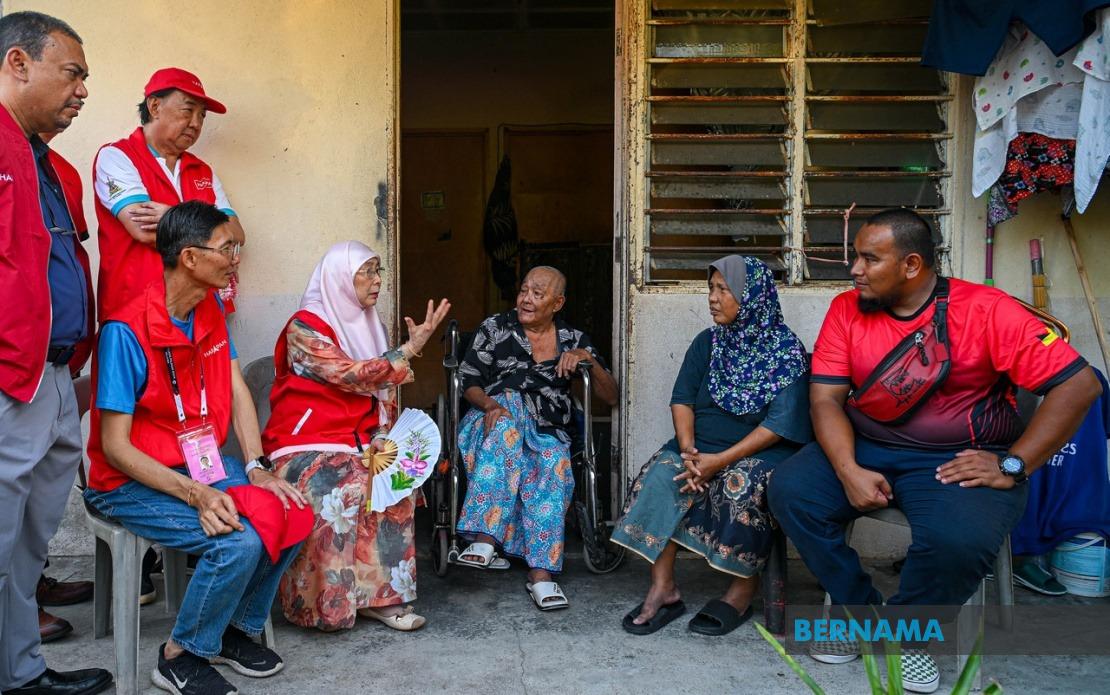
Pakatan Harapan's campaign efforts in the Negeri Sembilan State Election received a human-interest dimension when party deputy president Wan Azizah Wan Ismail undertook a grassroots visit to the home of an elderly couple grappling with serious health challenges and limited financial resources. The visit to the residence of Zaiton Hasan and her husband Paimin Sapari in the Chuah constituency underscores the coalition's outreach strategy as it contests the August 1 state polls across the central Malaysian state.
Wan Azizah was accompanied during the visit by Datuk Yew Boon Lye, the Pakatan Harapan candidate contesting the Chuah State Legislative Assembly seat in a direct fight against Pau Jeou Ching from Perikatan Nasional. The delegation spent approximately 20 minutes at the couple's home, during which time Wan Azizah inquired into their circumstances and directly heard the specific challenges they face. The interaction reflected a broader campaign emphasis on connecting senior coalition figures with ordinary Malaysians affected by economic pressures and health burdens.
The elderly residents, Zaiton at 60 years old and Paimin at 71, have been managing chronic conditions that further strain their household resources. Zaiton has been living with high blood pressure, while Paimin contends with diabetes—both conditions requiring ongoing medical management and pharmaceutical costs that can accumulate significantly over time. Such health challenges, particularly among retirees or those in informal employment, often translate directly into financial strain, as medical expenses compete with basic household needs and living costs that have risen markedly across Malaysia in recent years.
The emotional impact of the visit extended beyond the immediate engagement. Speaking to media representatives after Wan Azizah and Yew had left, Zaiton expressed genuine gratitude and astonishment that a figure of such prominence would visit their modest home. She described the moment as surreal, noting that this represented the first occasion a major political leader had crossed their threshold. Her comments reveal how significant such personal outreach can be for voters in peripheral areas who may feel disconnected from national politics and policy discussions. The visit appeared to register meaningfully with both residents, who appreciated what they characterized as the genuine warmth and attentiveness demonstrated by both Wan Azizah and Yew.
A tangible manifestation of support emerged during the visit when the Port Dickson People's Spirit Welfare Association presented Paimin with a wheelchair donation. For an elderly individual managing diabetes, which commonly contributes to mobility limitations and complications affecting the legs, such assistance carries substantial practical value. The provision of mobility equipment addresses a real accessibility challenge and potentially enhances his independence and quality of life, while also signalling that assistance mechanisms exist within civil society organizations and political networks.
The Chuah constituency contest itself reflects the competitive dynamics shaping Malaysia's state-level politics. Yew's candidacy faces a direct challenge from Pau Jeou Ching representing the Perikatan Nasional coalition, creating a binary choice for voters in this district. The positioning of Pakatan Harapan in Negeri Sembilan follows the coalition's mixed results in recent state elections, where it has maintained presence but faced significant competition from both Perikatan Nasional and local dynamics favouring Barisan Nasional components. Understanding voter concerns through direct engagement, as exemplified by Wan Azizah's visit, forms part of the coalition's broader strategy to rebuild support and demonstrate responsiveness to constituent needs.
Negeri Sembilan's 16th state election carries broader significance for Malaysian politics beyond the state's boundaries. The timing and results may influence calculations about state-level coalition configurations and provide early indicators for sentiment ahead of potential future national elections. Negeri Sembilan has historically served as a bellwether state, with its electoral results often reflecting broader shifts in voter preferences. For Pakatan Harapan, demonstrating active engagement with voters facing genuine hardship becomes particularly important in building narratives about responsiveness and genuine concern for ordinary Malaysians' welfare.
The Election Commission's schedule for the Negeri Sembilan contest provides a compressed campaign window compared to earlier state elections. Early voting commenced on July 28, with polling day set for August 1, meaning campaigns must efficiently communicate their messages and mobilize supporters within this relatively narrow timeframe. Personal visits by senior figures like Wan Azizah serve dual purposes: they generate local media coverage and sentiment while simultaneously demonstrating party commitment to direct constituent engagement rather than relying solely on mass communications or town halls.
For elderly Malaysians navigating concurrent health challenges and economic pressures, the support systems available often prove inadequate. Public healthcare, while subsidized, frequently operates with extended waiting periods and limited coverage for certain medications or treatments. Private healthcare remains financially inaccessible for most pensioners living on modest incomes. Civil society organizations and welfare associations partially fill this gap, but their reach remains limited and often dependent on political connections or serendipitous discovery. Visits such as Wan Azizah's may catalyze awareness of available assistance programs or create informal networks connecting struggling households with potential support mechanisms.
The broader context of Negeri Sembilan's electoral competition cannot be separated from nationwide debates about healthcare accessibility, social safety nets for seniors, and economic mobility. The state, while traditionally associated with commerce and industry, contains pockets of rural and semi-urban areas where residents face genuine economic constraints. Political parties' ability to articulate credible responses to these challenges—whether through specific policy proposals or demonstrated understanding of constituent struggles—influences electoral outcomes. Pakatan Harapan's emphasis on direct engagement with affected households represents one tactical approach to building electoral credibility on socioeconomic issues that resonate powerfully with voters across Malaysia's socioeconomic spectrum.

