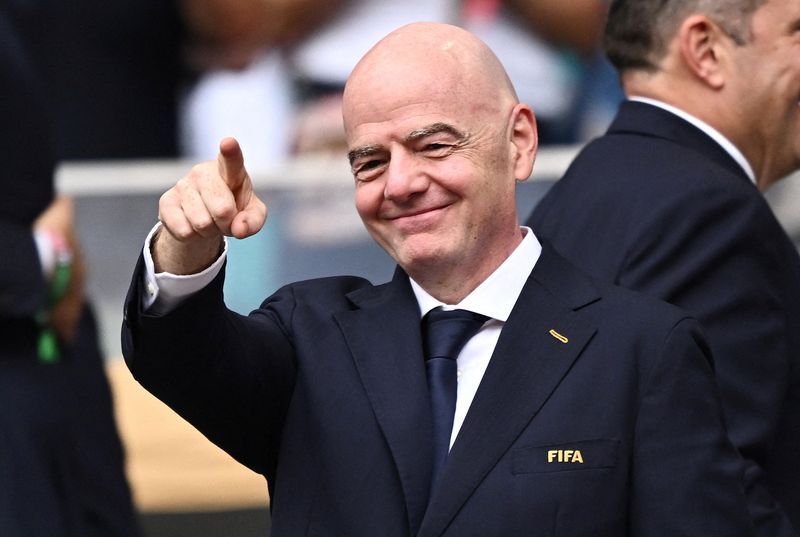
The Football Association of Wales has formally withdrawn its endorsement of FIFA President Gianni Infantino's candidacy for the 2027-2031 term, marking the first significant crack in his political coalition following the dramatic abandonment of an ambitious privatisation scheme. The Welsh decision, announced in an official statement, reflects escalating dissatisfaction among football's governing bodies over Infantino's stewardship and his handling of a proposal that ultimately proved untenable.
The contested scheme sought to generate up to $4.2 billion in revenue by transferring approximately 20% ownership of a newly created entity responsible for administering major competitions, including the World Cup, to private investors. The plan represented an unprecedented attempt to commercialise FIFA's most valuable asset and was championed by Infantino as a way to increase financial resources flowing into global and regional football development. However, the initiative encountered determined opposition from multiple stakeholders across the football establishment, and FIFA formally abandoned it on Friday after the mounting pressure became impossible to sustain.
Wales' withdrawal of support carries considerable symbolic weight, even if the Welsh federation's voting strength remains modest within FIFA's broader membership. The FAW's statement emphasised that Infantino's leadership had fallen short of acceptable standards in governance, institutional processes, stakeholder communication, and strategic decision-making. The federation stressed that prioritising the interests of football itself must remain paramount, and that Infantino's recent track record had fundamentally undermined their confidence in his continued direction of world football.
Infantino now faces an unprecedented level of organised opposition at a critical juncture in his political career. The UEFA confederation, which coordinated much of the resistance to the commercial stake proposal and publicly celebrated its withdrawal, has moved beyond rhetoric by issuing a document preservation order—a formal legal instrument that prevents FIFA from destroying relevant communications, files, and data. This step indicates UEFA is preparing potential legal proceedings against FIFA, though the European body has not yet confirmed whether such action will materialise. UEFA's assertive posture reflects the depth of the continental governing body's concern about FIFA's institutional direction.
CONCACAF, which represents North and Central American football, similarly declared on Saturday that it had lost confidence in Infantino's leadership. The coordinated statements from these two powerful confederations constitute a dramatic reversal from the apparent unity that characterised Infantino's previous terms. Since replacing Sepp Blatter in 2016, Infantino had enjoyed substantial political backing and was elected unopposed to a second term, suggesting his dominance over FIFA appeared settled. The trajectory had all pointed toward smooth re-election for a fourth consecutive term when he announced his candidacy in April.
Expert observers interviewed by Reuters cautioned that although the re-election appeared routine on paper, the fierce backlash against the failed privatisation proposal has exposed deeper fractures within FIFA's membership. These tensions could substantially complicate Infantino's path forward, particularly as the football world approaches the FIFA Congress scheduled for March in Morocco. A competitive election, previously thought virtually impossible, is now within the realm of possibility if opposition federations coalesce around an alternative candidate.
The commercial stake proposal itself illustrated a fundamental disconnect between Infantino's vision for FIFA's future and the priorities of major confederations and member federations. While the scheme promised substantial funding for football development globally, it also risked transferring significant control over the sport's commercial interests to private equity investors with their own profit-maximising incentives. This tension between FIFA's traditional governance model and the potential injection of private capital created an unbridgeable divide that ultimately proved fatal to the initiative.
The governance dimensions of the controversy extend beyond the specific proposal. Wales' statement referenced failures in institutional processes, communications, and sound judgment—criticisms that suggest broader concern about how Infantino manages FIFA as an international organisation. For regional federations like the FAW, the manner in which such a consequential proposal was pursued, and the apparent surprise with which major stakeholders encountered serious resistance, raised questions about whether FIFA maintains adequate mechanisms for consultation and consensus-building among its constituent members.
The implications for Southeast Asian football are worth considering. Organisations like the Asian Football Confederation (AFC), which represent more than half of FIFA's voting membership, have largely remained quiet on the Infantino controversy. However, the precedent established by Wales, UEFA, and CONCACAF demonstrates that regional federations can exercise genuine power within FIFA's structure, particularly when unified around governance concerns. Whether the AFC will take a public position could significantly influence the eventual outcome of Infantino's re-election campaign and may shape FIFA's institutional direction more broadly in the coming years.

