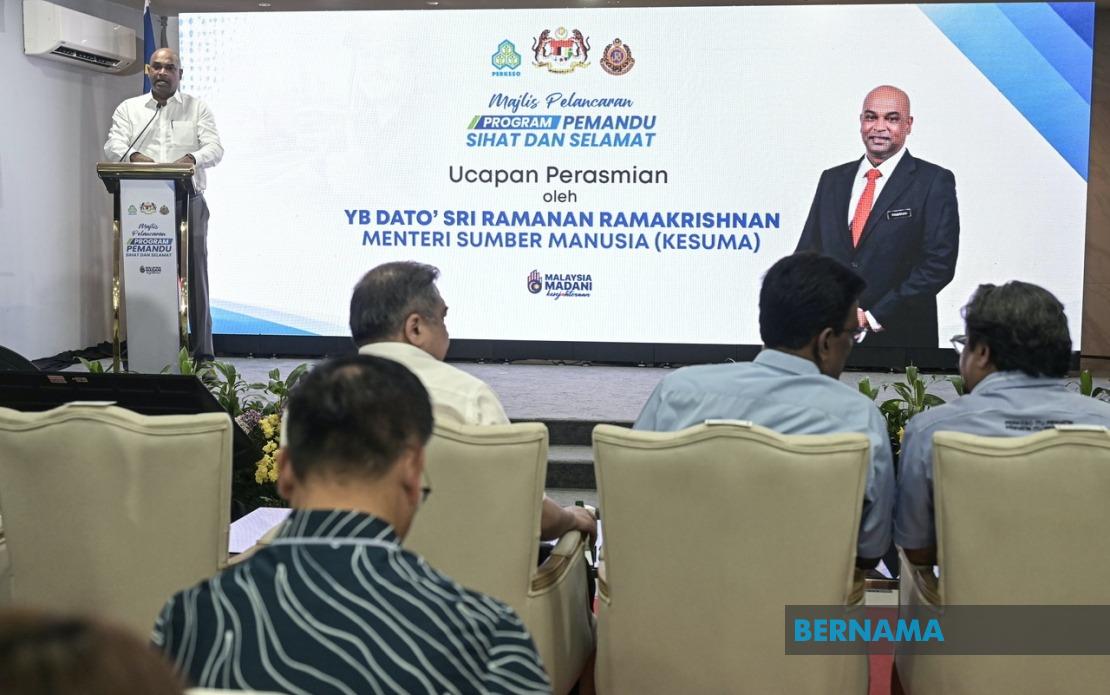
Professional drivers seeking to renew their vocational licences will now face a mandatory health screening requirement as part of a new nationwide initiative launched to strengthen road safety standards in Malaysia. Human Resources Minister Datuk Seri R. Ramanan unveiled the Healthy and Safe Driver Programme (PSS) in Kuala Lumpur on June 30, establishing a comprehensive medical examination framework designed to identify health conditions that could impair driving ability before they result in accidents.
The screening process represents a substantial expansion of health requirements for Malaysia's professional driving workforce, who operate critical transport infrastructure across the country. The comprehensive nature of the evaluations reflects growing international recognition that driver health directly correlates with accident prevention and public safety outcomes. Rather than limiting checks to basic vision and hearing assessments, the programme takes a holistic approach to driver wellness by examining multiple physiological systems simultaneously.
The medical examinations include physical assessments alongside specialised testing for vision and hearing capability, critical components of safe driving performance. Additionally, the screening incorporates assessments for sleep disorders, particularly obstructive sleep apnea, a condition affecting millions globally that can cause sudden fatigue and impaired alertness at the wheel. Healthcare providers at participating clinics will evaluate cardiovascular, respiratory, and neurological functions to detect anomalies that might compromise driver safety. Blood tests measuring glycated haemoglobin levels will be administered to drivers requiring such assessments, helping identify metabolic conditions like diabetes that demand ongoing management.
The rollout involves 500 panel clinics distributed nationwide, providing geographic accessibility for the country's dispersed professional driver population. Ramanan indicated that the government intends substantial expansion, with plans to increase participating clinics to 3,000 locations to accommodate greater numbers of drivers requiring renewal. This phased expansion approach acknowledges the logistical complexity of implementing screening for a large occupational group while ensuring quality control and consistent standard application across different healthcare facilities.
Financial accessibility has been engineered into the programme design to prevent cost from becoming a barrier to compliance. Drivers contribute RM30 toward their screening examination, while the government absorbs RM55 of the RM85 total cost through the Social Security Organisation (Socso), resulting in a 65 percent government subsidy. This generous financial arrangement underscores official recognition that mandatory health requirements should not impose disproportionate burdens on professional workers already operating on tight profit margins in competitive transport sectors.
The initiative reflects coordinated policy direction between two ministries recognising that driver health represents a critical but previously neglected component of Malaysia's road safety strategy. The Ministry of Human Resources and Ministry of Transport have jointly identified professional drivers as essential workers whose wellbeing directly impacts national transport infrastructure reliability and public safety. This integrated approach signals recognition that improving occupational health standards for professional drivers requires coordination across government departments rather than siloed departmental initiatives.
Recent accident statistics underscore the urgency motivating this programme expansion. The figure of 115 worker fatalities in road accidents during 2025, representing a significant 22 percent increase from 94 deaths in 2024, indicates accelerating crisis conditions within professional driving populations. These statistics encompass lorry, bus, van, and car drivers, as well as motorcyclists, reflecting how road dangers affect multiple categories of transport workers. The data demonstrates that existing safety measures have proven insufficient to arrest deteriorating trends.
Lorry drivers face particularly acute danger within these aggregate figures, accounting for 62 fatalities in the most recent reporting period and representing 21 percent of all worker road deaths. This disproportionate representation suggests that heavy commercial vehicle operations present distinctive hazard profiles requiring targeted intervention. Long-haul operations, vehicle weight dynamics, fatigue from extended working hours, and the high-speed highway environments where lorries predominantly operate all contribute to elevated accident severity when health-related incidents occur at the wheel.
The screening programme addresses multiple health conditions that precipitate accidents among professional drivers. Obstructive sleep apnea represents a particularly significant occupational hazard for commercial operators, where microsleep episodes at highway speeds produce catastrophic consequences. Cardiovascular events remain a leading cause of sudden driver incapacitation, particularly among middle-aged and older professional drivers. Undiagnosed or poorly managed diabetes creates metabolic instability affecting cognitive function and reaction times. By systematically screening for these conditions before they manifest as accidents, the programme shifts emphasis from reactive tragedy management toward preventative health intervention.
The characterisation of PSS as inconvenience-minimising reflects government awareness that mandatory health requirements risk facing driver resistance and compliance challenges if positioned as bureaucratic obstacles. By framing the programme as a welfare-enhancing initiative providing early detection enabling prompt treatment, policymakers position health screening as a benefit to drivers themselves rather than an external imposition. This messaging approach proves important for public cooperation and voluntary compliance, particularly among informal sector drivers and independent operators who resist regulatory requirements perceived as punitive.
Implications for Malaysia extend beyond immediate road safety metrics to encompass productivity and healthcare efficiency. Professional drivers suffering undiagnosed health conditions experience absenteeism, reduced productivity, and eventual disability, creating economic costs far exceeding the RM55 per-driver government subsidy investment. Early detection enables interventions—medication, lifestyle modifications, specialist referrals—that prevent progression to disability or workplace death. For individual drivers, screening offers invaluable early warning systems detecting conditions treatable through medical management before catastrophic complications develop.
For Malaysia's transport sector and the broader economy dependent on reliable logistics and professional driving services, healthier professional drivers translate into more reliable supply chains, reduced accident-related disruptions, and lower insurance costs. The programme investment represents enlightened cost-benefit analysis recognising that preventative occupational health spending generates savings across healthcare, disability, and accident cost categories.
The MADANI Government's subsidisation approach demonstrates policy recognition that road safety represents a collective social responsibility rather than an individual burden borne entirely by workers. This perspective aligns with emerging international best practice emphasising employer and government responsibility for creating safe working conditions and preventing occupational injuries. As the programme expands to encompass increasing proportions of Malaysia's professional driving workforce, road safety outcomes and occupational health standards should measurably improve across the transport sector.

