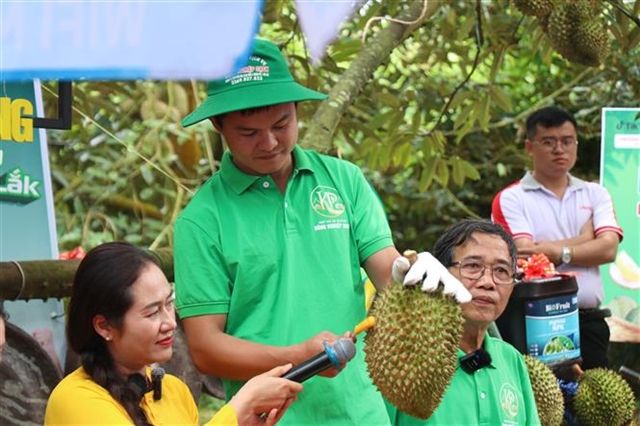
Vietnam's Ministry of Public Security has launched an expanded corruption investigation into the issuance of export certifications for durian, exposing significant vulnerabilities in the country's growing area code system at a time when Southeast Asia's largest durian exporter is experiencing record-breaking sales. The investigation centres on allegations that government officials, including a senior officer at the Ministry of Agriculture and Environment, exploited their authority to create unauthorised 'sub-licences' that bypassed proper regulatory channels, generating substantial illicit profits in the process. This systematic abuse of certification procedures threatens not only domestic producers but also Vietnam's broader reputation in international agricultural markets, where food safety and traceability have become non-negotiable requirements.
The timing of the investigation coincides with exceptional growth in Vietnam's fruit and vegetable sector. Through the first seven months of 2026, export turnover reached an estimated US$4.7 billion, representing a robust 23 per cent increase compared to the same period in the previous year. July alone marked a watershed moment, becoming the first month in which monthly exports surpassed the US$1 billion threshold. Within this expanding sector, durian has emerged as the dominant revenue driver, accounting for more than half of all fruit and vegetable exports and cementing Vietnam's position as a critical supplier to global markets, particularly China.
For durian shipments destined for China, the regulatory framework demands a specific constellation of documentation: a valid growing area code, a registered packing facility, and laboratory certificates confirming product safety. This multi-layered certification system exists to establish an auditable chain of custody and guarantee market access in an increasingly protective trading environment. When violations occur, Chinese customs authorities have demonstrated their willingness to impose severe consequences, including the revocation of growing area codes, suspension of laboratory approvals, intensified inspection protocols, and temporary or permanent export bans. Such disruptions can cascade through entire supply chains, affecting thousands of farmers and trading companies simultaneously.
Industry associations have documented widespread abuse of the certification infrastructure for several years, yet formal action has only recently accelerated. The Vietnam Fruit and Vegetables Association, known as Vinafruit, has repeatedly raised alarms about operators who manufacture forged authorisation documents and counterfeit company seals to fraudulently claim rights to growing area and packing facility codes legitimately assigned to other businesses. These forgeries do not merely represent individual acts of dishonesty; they undermine the entire system's integrity by obscuring the true origins of products and exposing ethical producers to unfair commercial disadvantages and reputational damage through association with contaminated supply chains.
Laboratory testing has proven to be another critical chokepoint in the export apparatus. Temporary suspensions of facilities authorised to test durian samples for cadmium and Auramine O residues have created recurring bottlenecks, particularly during harvest peaks when hundreds of shipping containers accumulate in storage awaiting clearance. These delays impose substantial costs on exporters and can result in product deterioration or spoilage. Responding to these persistent operational failures, the Ministry of Agriculture and Environment issued directives earlier this year instructing testing laboratories to expand their workforce, extend their operating schedules where feasible, and implement greater procedural transparency to reduce delays and discourage misconduct by personnel.
Government recognition of the threat posed by fraudulent certification has gradually intensified over the past year. In 2025, the Prime Minister explicitly ordered authorities to investigate the illicit trade in growing area and packing facility codes, counterfeit export documentation, and related violations that could tarnish the standing of Vietnamese agricultural products in international markets. That directive set the foundation for the current expanded investigation and the comprehensive administrative reforms now underway across major production regions.
The latest probe has catalysed broader institutional action. The Government Inspectorate has initiated a 60-day comprehensive inspection focusing on Dong Thap, Lam Dong, and Dak Lak provinces—three of Vietnam's premier durian-producing areas—examining the issuance and oversight mechanisms for growing area and packing facility codes. This inspection covers the period from March 2023 through June 2026, allowing investigators to identify systemic shortcomings and patterns of misconduct that may have persisted across multiple growing seasons and administrative cycles.
Local authorities have begun taking concrete remedial steps. On July 28, Lam Dong provincial officials revoked seven durian growing area codes and five packing facility codes that had been granted to two companies based in Dak Lak Province. According to provincial statements, both companies had ceased purchasing operations, severed their production relationships with local growers, and voluntarily requested cancellation to minimise their exposure to potential legal consequences. This action signals both the seriousness with which authorities now treat code management and the vulnerability of companies implicated in fraudulent practices.
Industry leaders increasingly emphasise that production expansion must be matched by equivalent advances in regulatory integrity. Nguyen Van Muoi, deputy secretary-general of Vinafruit, has argued that elevating product quality cannot be disaggregated from establishing a transparent and credible growing area code system, recognising that supply-side improvements alone cannot overcome trust deficits created by certification fraud. Le Anh Trung, chairman of the Dak Lak Durian Association, has called for accelerated digitalisation of growing area records and traceability systems, highlighting the paradox that despite robust international demand, the number of certified growing areas remains artificially constrained, likely because many operators operate outside formal regulatory channels.
Experts and international observers have identified several technical solutions that could substantially reduce fraud while protecting compliant businesses. Digitalising growing area records, integrating them with comprehensive traceability databases, and establishing independent oversight mechanisms for testing and certification would collectively eliminate many opportunities for manipulation while simultaneously creating audit trails that protect legitimate producers from unfounded accusations. Such measures would align Vietnam's agricultural certification infrastructure with international best practices increasingly demanded by major importing nations.
The strategic implications extend beyond Vietnam itself. As regional competitors—including Thailand and Indonesia—also expand their durian production and seek market access in China and other premium markets, the credibility and transparency of certification systems have become a crucial competitive variable. Countries that establish robust, digitally-enabled, and independently-monitored certification frameworks will gain structural advantages in market access and consumer confidence. Conversely, regions associated with systematic certification fraud risk facing Chinese import restrictions that could cascade across all producers within those jurisdictions, regardless of individual compliance.
Looking forward, Vietnam's durian industry faces a critical juncture. The billion-dollar export sector's long-term sustainability will depend not primarily on further expansion of cultivated area, but rather on the government's capacity to restore credibility to its certification apparatus. International markets will continue tightening food safety and traceability requirements, making the integrity of growing area codes an increasingly determinative factor in Vietnam's competitive positioning. The current investigation and reforms represent a necessary correction, but their success will ultimately be measured by whether fraudulent certification practices are genuinely eliminated or merely driven further underground.

