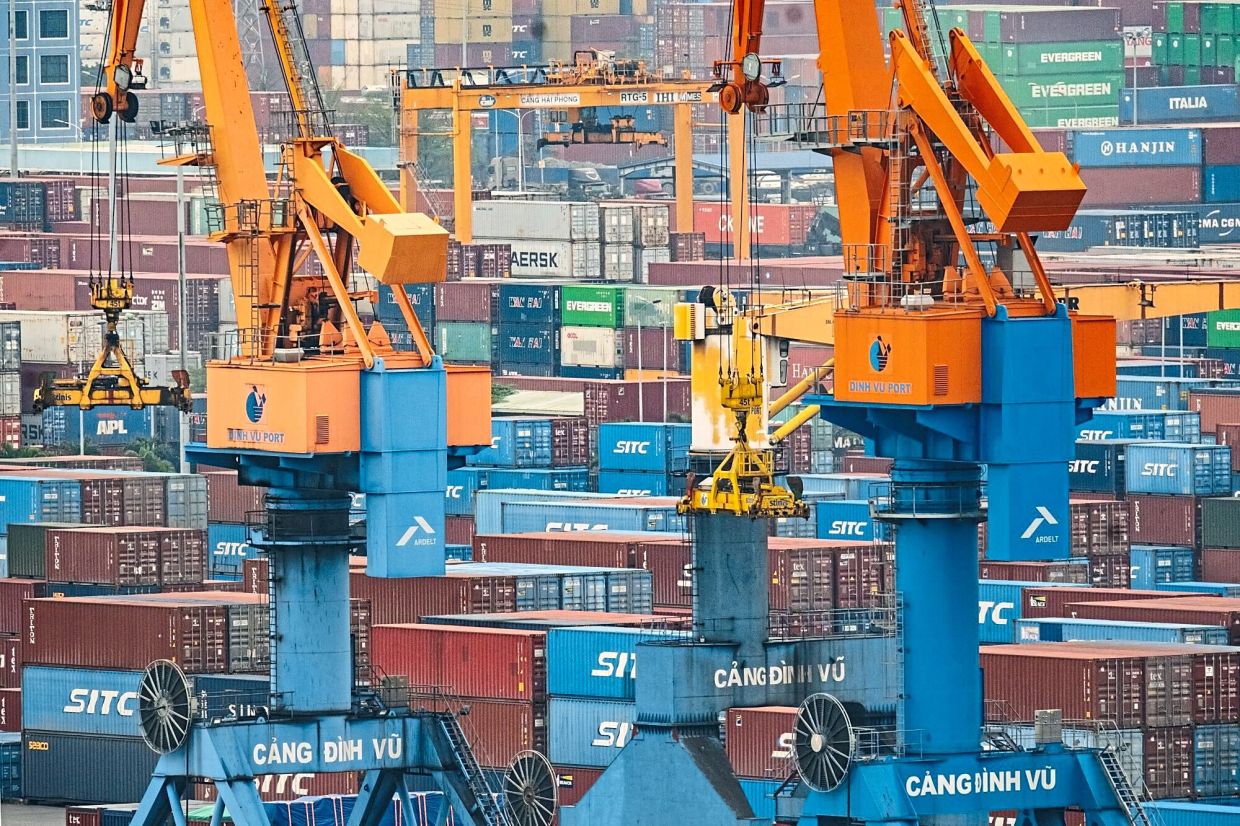
Vietnam's efforts to unlock a long-delayed trade agreement with the United States took a diplomatic turn this week when Deputy Prime Minister Nguyen Van Thang travelled to Washington to meet with US Trade Representative Jamieson Greer. The encounter represents Hanoi's latest attempt to break through months of negotiating gridlock that has threatened to derail commerce between the two nations and undermine Vietnam's position as a critical manufacturing hub for American-bound goods. Thang's visit signals a deliberate shift in tone, with Vietnam explicitly positioning itself as ready for "open, constructive" discussions to resolve the outstanding trade issues that have stalled progress since the two countries reached a framework agreement in October.
The stakes for Vietnam are substantial. The country has emerged as an increasingly vital component of supply chains serving American consumers, particularly in electronics and consumer goods. However, this rapid ascent has attracted scrutiny from US officials who worry that Vietnam's ports and borders have become conduits for Chinese goods skirting American tariffs, either through mislabelling or deliberate transshipment schemes. The Trump administration has made countering this practice a central focus of its trade strategy, viewing it as a form of evasion that undermines the entire tariff system. For Vietnam, which depends heavily on its exports to sustain economic growth and attract foreign investment, finding a way to satisfy American concerns while maintaining its competitiveness has become a delicate balancing act.
The numbers underscore Vietnam's reliance on the US market and the concerning trajectory of its own trade relationship with China. In the first half of 2026, Vietnam recorded a trade surplus with the United States of US$114 billion, the largest bilateral gap Washington faces globally—exceeding deficits with China, Mexico, and Taiwan. This figure, while advantageous for Vietnam's economy, has made the country a target for US trade officials seeking to rebalance commerce. Paradoxically, much of Vietnam's export capacity depends on imports from China, where manufacturers source components and materials for goods destined for the American market. This dependency creates a structural vulnerability that the Trump administration has identified and is now leveraging in negotiations.
The path to a final deal has been complicated by three concurrent Section 301 investigations into Vietnamese trade practices, initiated by US officials after initial negotiations faltered. These investigations focus on transshipment schemes, non-tariff barriers, and the flow of counterfeit and pirated goods through Vietnamese territory. In April, the office of the US Trade Representative formally designated Vietnam a "priority foreign country" in an intellectual property enforcement report, citing inadequate measures against online piracy, insufficient controls on counterfeit merchandise, and weak border security protocols. The investigations are scheduled to conclude in November, and their findings could trigger significantly higher tariffs on Vietnamese products—a outcome both sides are working to prevent through renewed dialogue.
Thang's Washington visit went beyond diplomatic messaging to include concrete outreach to major American corporations. The Deputy Prime Minister met with executives from technology giants Qualcomm Inc. and Visa Inc., defence contractor Axon Enterprise Inc., and heavy equipment manufacturer Caterpillar Inc. These engagements reflect Vietnam's dual strategy: securing tariff relief by demonstrating willingness to address US concerns while simultaneously pitching Vietnam as an attractive destination for increased American investment and manufacturing operations. By showing that foreign companies view Vietnam as essential to their business operations, Hanoi hopes to create powerful constituencies within the US business community that would advocate for favorable trade terms.
The framework agreement reached in October provided an opening for deeper negotiations, but progress has been glacially slow. Greer reportedly told Thang that the United States wants to conclude the reciprocal trade agreement rapidly, signalling that the Trump administration views an extended negotiation period as undesirable. This timeline pressure could work in Vietnam's favor if Hanoi can move quickly to demonstrate concrete action on the issues raised by US officials. Vietnam's apparent willingness to address American concerns over trade fraud and illegal export routing suggests that Hanoi may be prepared to implement stricter customs procedures, enhanced border controls, and greater transparency in monitoring goods passing through its territory.
For Malaysian readers and Southeast Asian observers, Vietnam's negotiating position carries broader regional implications. Vietnam's success or failure in this negotiation will likely set a template for how the Trump administration engages with other Asian exporters. Thailand, Malaysia, and other countries that also run trade surpluses with the United States and face accusations of serving as transshipment hubs for Chinese goods are watching closely. A Vietnamese resolution that involves significant tariff concessions or onerous compliance requirements could be demanded of other regional partners. Conversely, if Vietnam secures favorable terms by implementing limited measures, it might establish a more lenient precedent for negotiations elsewhere in Southeast Asia.
The intersection of Vietnam's China dependency and US trade concerns also highlights a structural challenge facing the entire region. Many Southeast Asian nations have become reliant on Chinese inputs for their export industries, creating vulnerability to US pressure tactics that target the China-Asia-US trade corridor. Vietnam's challenge is to demonstrate that it can control the flow of illicit Chinese goods without dismantling the legitimate supply chains that sustain its manufacturing sector and employment. This requires sophisticated policy implementation that distinguishes between illegal transshipment and lawful commerce, a distinction that may prove difficult to maintain in practice.
The November deadline for the Section 301 investigations looms as a critical inflection point. If Vietnam can show meaningful progress in implementing stricter border controls and combating counterfeit goods before that date, it may be able to forestall tariff increases. Alternatively, if the investigations reveal continued problems, the Trump administration may have legal grounds to impose unilateral tariffs regardless of ongoing negotiations. This creates an incentive for Vietnam to move swiftly on implementation, suggesting that Thang's Washington visit was not merely ceremonial but part of a carefully sequenced effort to demonstrate Vietnamese commitment before the November findings are announced.
Thang's efforts also reflect broader Vietnamese strategic interests in maintaining strong economic ties with the United States as a counterbalance to growing Chinese economic dominance in the region. Vietnam has historically sought to balance its relationships with both powers, and trade relations with Washington serve important political and economic purposes beyond mere commercial transactions. A successful resolution of current trade disputes would reinforce Vietnam's position as a reliable partner for American businesses and investors while preserving market access that is essential to its development strategy. The Deputy Prime Minister's diplomatic engagement this week represents Vietnam's recognition that achieving this balance requires sustained dialogue and concrete action on the concerns that have prompted American scrutiny.

