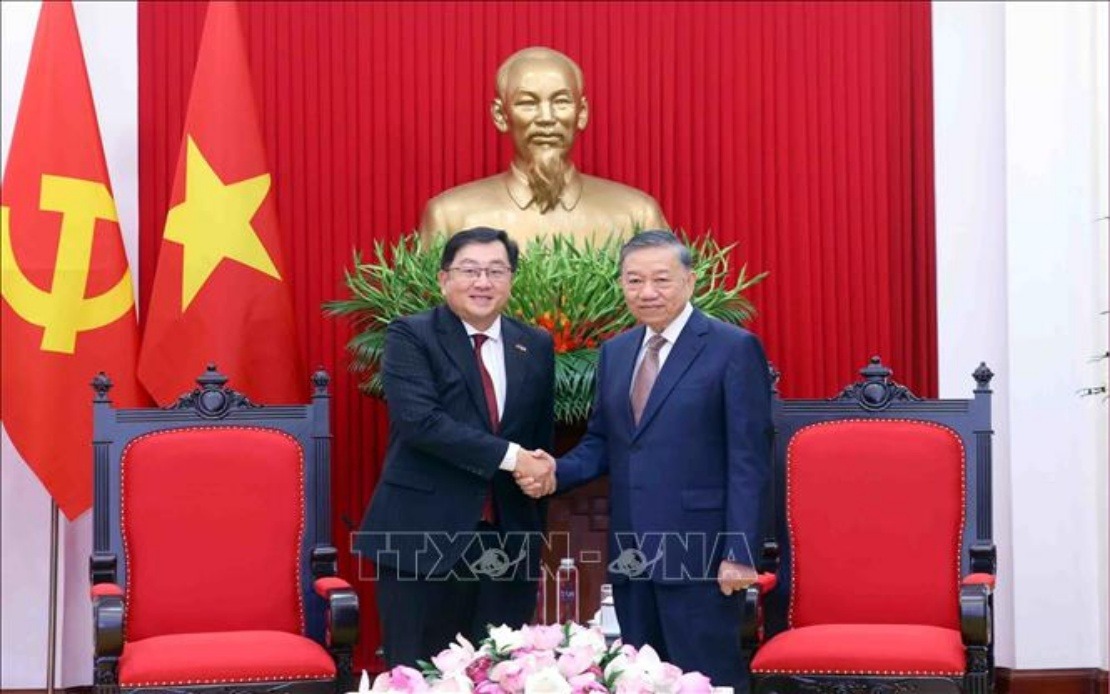
Vietnamese President To Lam has underscored the strengthening bilateral relationship between Vietnam and Malaysia, characterizing it as an increasingly vibrant partnership grounded in mutual political confidence and expanding commercial ties. The remarks came during his formal reception of outgoing Malaysian Ambassador Datuk Tan Yang Thai on Wednesday, marking a significant moment in the diplomatic calendar as the envoy concludes his tenure in Hanoi. The timing of this engagement reflects the priority both nations place on continuity and momentum in their relationship, even as diplomatic personnel change.
The Vietnamese leader's assessment points to a relationship that has matured considerably beyond ceremonial exchanges. Political engagement between the two countries has become notably more frequent and substantive, with regular visits by high-ranking officials traversing party, state, government and parliamentary channels. This multi-layered engagement structure ensures that Vietnam-Malaysia ties are not dependent on any single institutional pathway, creating resilience and breadth in the diplomatic relationship. The existence of effective bilateral cooperation mechanisms provides a formal framework within which both nations can address emerging issues and capitalize on new opportunities.
Economically, the partnership has demonstrated remarkable momentum. Two-way trade between the nations reached US$10.8 billion during the opening six months of 2026, representing a striking 40 per cent increase compared to the corresponding period in the previous year. This trajectory indicates genuine complementarity in the two economies and a robust appetite for commercial engagement on both sides. Malaysia's position as the third-largest investor within ASEAN and the tenth-largest among all 154 foreign investor countries and territories in Vietnam underscores the depth of capital flows and business confidence underlying these statistics.
President Lam's explicit emphasis on Malaysia's strategic importance within Vietnam's broader foreign policy framework carries particular significance for regional observers. By describing Malaysia as occupying a special place in Vietnamese diplomacy, Lam signaled that the relationship transcends routine bilateral affairs and touches on Vietnam's fundamental orientation within Southeast Asia. This positioning reflects both nations' shared membership in ASEAN and their complementary interests in maintaining regional stability and economic integration. For Malaysian policymakers, such recognition validates the country's diplomatic investment in the relationship and underscores mutual expectations of continued engagement.
The two leaders identified digital and green economic development as areas of mutual priority, alongside energy and electricity connectivity projects and expanded maritime cooperation. These thematic focuses reflect global economic trends and the particular vulnerabilities of Southeast Asian nations to climate change and energy security challenges. Digital economy collaboration is particularly significant given Malaysia's aspirations to enhance its technology sector and Vietnam's rapid digital transformation. Energy cooperation carries immediate relevance for both nations, which face increasing electricity demand as their economies expand and industrialize further. Maritime cooperation touches on the intricate geography of Southeast Asian waterways and the importance of ensuring freedom of navigation and peaceful resolution of maritime disputes.
President Lam extended formal invitations to His Majesty Sultan Ibrahim and Prime Minister Datuk Seri Anwar Ibrahim to visit Vietnam, a gesture that signals Vietnam's desire to elevate the relationship further through face-to-face summitry at the highest levels. Such visits carry symbolic weight in Southeast Asian diplomacy and provide opportunities for leaders to communicate directly on sensitive matters and forge personal relationships that can facilitate problem-solving during crises. The reciprocal invitation extended by Ambassador Tan on behalf of the Malaysian king demonstrates that both countries view such high-level engagement as mutually desirable and beneficial.
Ambassador Tan's observations about Vietnam's remarkable development trajectory reflect the broader regional perception of Vietnam as an economic success story. His confidence in ongoing Vietnam-Malaysia contributions to ASEAN cohesion speaks to both nations' commitment to the regional organization and their interest in collective approaches to shared challenges. The ambassador's emphasis on the digital economy, green economy and renewable energy as priority areas for future cooperation aligns with Vietnam's strategic positioning and demonstrates Malaysia's understanding of contemporary Vietnamese development priorities. His pledge to leverage his professional experience and personal affection for Vietnam in promoting bilateral relations suggests that diplomatic relationships, while structured by institutional frameworks, are ultimately advanced by individuals who carry genuine commitment to their missions.
The Comprehensive Strategic Partnership framework referenced by President Lam represents the formal architecture within which both nations structure their relationship. This designation indicates that Vietnam and Malaysia have moved beyond basic diplomatic relations to a more intensive form of cooperation that encompasses defense, security, economic, cultural and people-to-people dimensions. The decision to deepen this partnership reflects confidence on both sides that the relationship can withstand disagreements and evolve through changing regional circumstances. For Malaysia, this deepening strategic engagement with Vietnam provides important counterweight and diversification of its regional relationships.
Regional analysts note that Vietnam-Malaysia cooperation occurs within the broader context of ASEAN centrality and the evolving regional architecture that includes mechanisms such as ASEAN Plus Three, the East Asia Summit, and the emerging Indo-Pacific frameworks. Both nations have stakes in ensuring that ASEAN remains united and relevant as geopolitical competition intensifies in the region. Their cooperation on maritime issues carries particular significance given the contested nature of several regional waterways and the importance of establishing peaceful mechanisms for resolving disputes. The emphasis on people-to-people exchanges creates a foundation for long-term relationship stability by fostering grassroots understanding and cultural familiarity.
Looking forward, the trajectory of Vietnam-Malaysia relations appears poised for continued expansion across multiple domains. The 40 per cent growth in bilateral trade, while impressive, likely reflects only the beginning of potential deepening as both economies become more integrated and as investment flows increase. The identified priority areas in digital and green economies position both nations to benefit from global trends toward technological advancement and environmental sustainability. For Malaysian companies, Vietnam represents an increasingly important market and a potential hub for regional operations. For Vietnamese entities, Malaysia offers access to technology, capital and expertise that can accelerate development initiatives.
The broader context for these developing ties includes the complex regional geopolitics of Southeast Asia, where nations balance relationships with major powers while maintaining ASEAN solidarity and pursuing economic development. Vietnam and Malaysia, despite their distinct historical experiences and foreign policy traditions, have found substantial common ground. Their cooperation contributes to regional stability and demonstrates that economic interdependence, properly cultivated through effective diplomacy, can overcome historical differences and create mutual prosperity. As Ambassador Tan moves to his next posting and Vietnam-Malaysia engagement continues under new diplomatic leadership, the institutional mechanisms and political will established through such exchanges provide the foundation for sustained progress in what both nations have characterized as an increasingly dynamic partnership.

