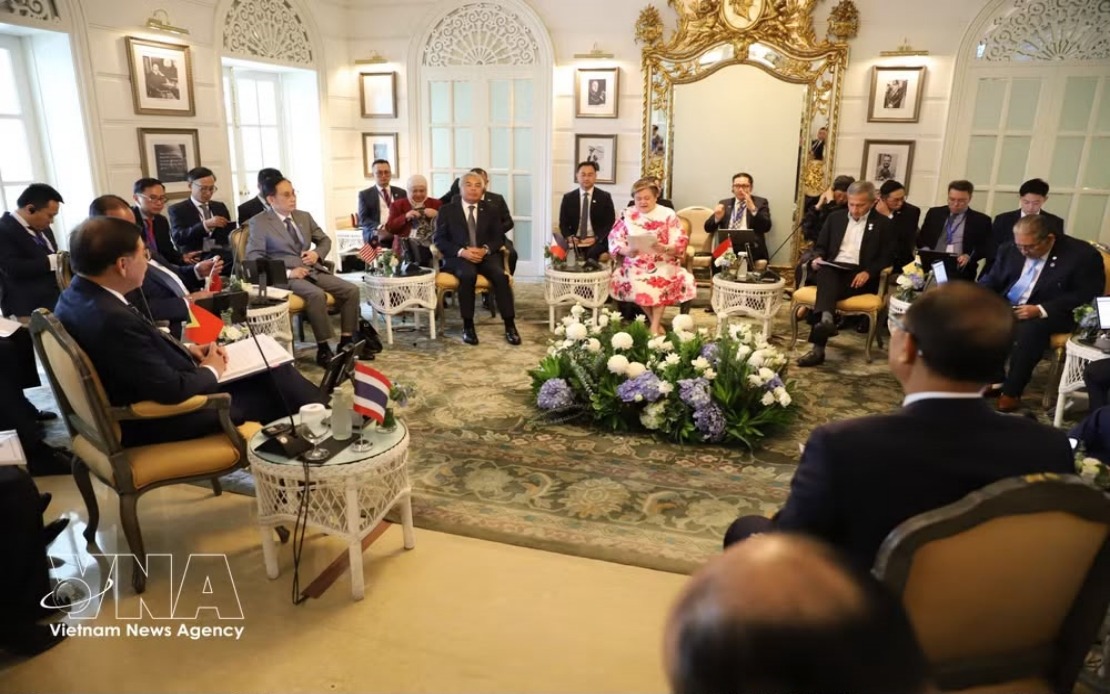
Vietnam has signalled its readiness to deepen cooperation with Myanmar through ASEAN mechanisms, with Foreign Minister Le Hoai Trung emphasising that the Southeast Asian bloc remains committed to assisting the nation despite ongoing political and security challenges. The statement came during an unprecedented high-level meeting between ASEAN foreign ministers and Myanmar's Foreign Minister Tin Maung Swe in Bangkok on July 12, convened by Philippine Foreign Secretary Maria Theresa P. Lazaro, whose country assumes the ASEAN chair for 2026.
The gathering represents a watershed moment in regional diplomacy. This was the first in-person meeting attended by numerous ASEAN foreign ministers and constitutes the highest-level direct engagement between the bloc and Myanmar's current administration since the 2021 political upheaval that dramatically fractured the nation's governance structures. The decision to hold such a prominent session underscores ASEAN's determination to maintain constructive ties with Naypyidaw despite international isolation and persistent internal instability.
Vietnamese officials demonstrated nuanced recognition of incremental progress, acknowledging measures undertaken by Myanmar authorities to address interconnected challenges spanning political stabilisation, economic revival, and institutional reform. The diplomatic language specifically highlighted Myanmar's efforts to strengthen border control mechanisms and tackle transnational criminal networks, including drug trafficking operations and cybercrime syndicates that destabilise both Myanmar and its neighbours across the region. This measured acknowledgement reflects Vietnam's pragmatic approach to engaging with regional partners, balancing principled concerns against the imperative of maintaining functional relationships.
The Five-Point Consensus, adopted by ASEAN in response to Myanmar's 2021 political crisis, serves as the organisational framework guiding all bloc engagement with Myanmar. This framework prioritises dialogue, humanitarian assistance, and Myanmar-led solutions while avoiding direct intervention in internal affairs—a stance consistent with ASEAN's longstanding principle of non-interference. Vietnam's foreign minister emphasised that advancing substantive implementation of this consensus remains essential, though he advocated for escalating beyond symbolic gestures toward tangible, practical interventions that generate measurable outcomes.
Minister Trung articulated a vision extending beyond immediate crisis management. His remarks reflected confidence that Myanmar could progress toward genuine reconciliation, improved security conditions, and enhanced living standards for its population. However, the emphasis on maintaining direct and regular engagement suggested awareness that such aspirations require continuous diplomatic investment and sustained dialogue channels between ASEAN and Naypyidaw to monitor developments and facilitate concrete advancement.
Vietnam's specific commitments encompassed multiple dimensions of national recovery. The country pledged to collaborate with the Philippine-led ASEAN chair and fellow member states in supporting Myanmar's economic reconstruction, addressing persistent social issues including humanitarian concerns, and coordinating responses to transnational security threats. These pledges reflect mutual strategic interests, as Myanmar's stability directly influences broader regional security architectures that affect Vietnamese interests in Southeast Asia and beyond.
During the Bangkok meeting, Myanmar's foreign minister presented a comprehensive briefing detailing recent domestic developments, including a 100-day remedial plan targeting peace, reconciliation, and institutional stabilisation. He detailed ongoing engagement efforts with various Myanmar stakeholders, signalling attempts to broker dialogue across fractured political and social divides. The ASEAN ministers' receptive posture toward this presentation demonstrated the bloc's preference for incremental progress over recrimination, creating space for Naypyidaw to elaborate on governance initiatives without excessive external conditionalism.
The ministers collectively reaffirmed ASEAN's commitment to dialogue with Myanmar's administrative representatives and to supporting locally-driven solutions that prioritise Myanmar ownership and leadership. This formulation deliberately avoids external prescription, respecting sovereign autonomy while maintaining ASEAN's collective involvement in regional stability. The emphasis on Myanmar-led pathways acknowledges that externally-imposed solutions have historically generated resistance and dysfunction in Myanmar's complex political ecology.
This diplomatic initiative arrives within the context of ASEAN's 48th Summit held in Cebu, where bloc leaders directed continued exploration of mechanisms to maintain cooperative relationships with Myanmar consistent with the Five-Point Consensus. The summit's decision to maintain this supportive posture reflects ASEAN's assessment that engagement remains more productive than isolation for advancing Myanmar's eventual stabilisation and recovery. Vietnam's proactive stance in implementing these directives positions the country as a key advocate for sustained regional cooperation despite external pressures.
For Malaysia and other ASEAN members, Vietnam's commitment signals broader bloc consensus on maintaining Myanmar engagement as integral to regional architecture. Myanmar's position as a bridge between South Asia, East Asia, and Southeast Asia makes its stability consequential for broader trade routes, security cooperation frameworks, and geopolitical balance across the Indo-Pacific region. Vietnam's multilayered approach—combining economic support, security cooperation, and diplomatic dialogue—offers a model for comprehensive engagement strategies that address interconnected dimensions of state fragility and regional vulnerability.
The meeting's frank and constructive tone, as described in official accounts, suggests ASEAN members retained capacity for candid assessment of Myanmar's trajectory while maintaining supportive postures. This balance between critical evaluation and collaborative engagement reflects diplomatic maturity necessary for sustaining long-term regional relationships through challenging periods. Vietnam's willingness to lead this engagement, particularly in supporting the Philippine chair's initiatives, demonstrates recognition that Southeast Asian cohesion and Myanmar's eventual recovery serve mutual interests across the bloc and the broader region.

