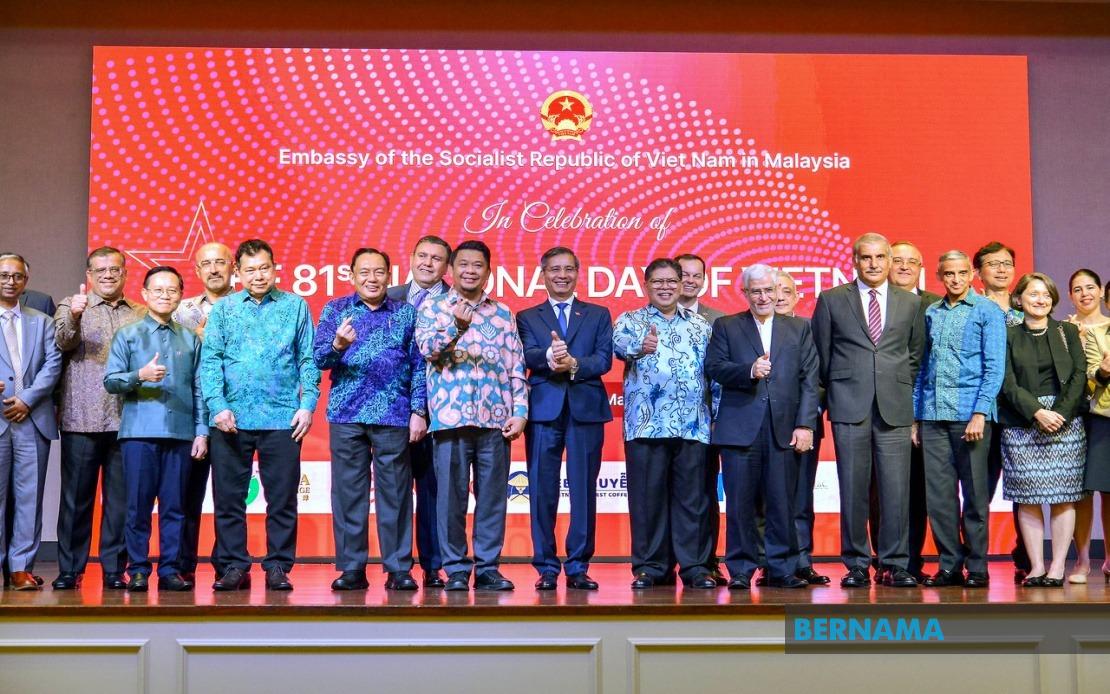
Vietnam and Malaysia are entering a new phase of diplomatic engagement, with both nations leveraging their Comprehensive Strategic Partnership to deepen collaboration across political, economic, and security dimensions. Speaking at Vietnam's 81st National Day celebration in Kuala Lumpur this week, Vietnam's Ambassador to Malaysia Dinh Ngoc Linh underscored the strategic importance of the relationship for both countries, particularly as the Indo-Pacific region navigates shifting geopolitical dynamics and increasing economic interdependence. The ambassador's remarks coincide with the two nations' commitment to elevating their partnership from a framework established decades ago to one with enhanced strategic depth and practical cooperation mechanisms.
The formal recognition of the Comprehensive Strategic Partnership in November 2024 represents a significant milestone in bilateral ties that trace back to formal diplomatic recognition in 1973. This institutional advancement reflects not merely ceremonial upgrading but rather a substantive shift in how Hanoi and Kuala Lumpur coordinate across multiple policy domains. Ambassador Dinh characterized the partnership as grounded in three foundational elements: growing political trust, mutual understanding, and convergence of strategic interests. This framing is particularly significant for Malaysian policymakers, as it positions Vietnam as a stable, predictable partner with whom long-term alignment is feasible despite differences in political systems and development trajectories.
Trade and investment represent the tangible economic foundation upon which political cooperation rests. Over the preceding twelve months, bilateral commerce has expanded substantially, demonstrating that diplomatic rhetoric translates into commercial opportunity. Beyond trade flows, cooperation has intensified in agriculture—a sector of mutual concern given both countries' significant rural populations and climatic vulnerabilities. Educational exchanges have proliferated, creating people-to-people networks that transcend official channels and cultivate generational familiarity between Vietnamese and Malaysian citizens. Cultural initiatives and tourism development serve as soft power mechanisms, humanizing diplomatic relations and generating constituencies within each nation that benefit from continued partnership.
Defence and security cooperation occupies an increasingly central position in Vietnam-Malaysia relations, a development reflecting broader regional security concerns. Both nations share maritime boundaries with contested zones and face common challenges from non-traditional security threats including transnational crime, environmental degradation, and irregular migration. The ambassador's emphasis on defence ties as contributing to "mutual trust and confidence" suggests that military-to-military engagement serves not only bilateral objectives but also reduces the possibility of miscalculation in the South China Sea and surrounding waters. For Malaysia, deepening defence relationships with Vietnam provides strategic diversification and reduces dependency on any single security guarantor.
The regional dimension of Vietnam-Malaysia relations extends beyond bilateral mechanisms into ASEAN frameworks. Ambassador Dinh articulated both nations' commitment to strengthening ASEAN unity, resilience, and centrality—language that reflects shared concern about external powers attempting to fragment or subordinate Southeast Asian agency. Both Vietnam and Malaysia, despite differing diplomatic styles and foreign policy emphases, prioritize ASEAN's role as the institutional architecture within which regional disputes are managed and cooperative initiatives are launched. This alignment on ASEAN centrality provides a stable foundation for broader regional cooperation on climate change, maritime security, economic integration, and humanitarian assistance.
Parliamentary exchanges constitute an often-underappreciated dimension of bilateral relations that the ambassador highlighted as crucial for strengthening mutual understanding. Legislative delegations, committee visits, and inter-parliamentary forums create forums for direct dialogue between elected representatives and policy experts from both nations. These exchanges facilitate discussion of contentious issues in lower-profile settings, build relationships across party lines, and expose policymakers to alternative perspectives. For Malaysia's diverse political system, such exchanges provide opportunities to demonstrate parliamentary democracy's functionality and Malaysia's institutional stability to Vietnamese counterparts.
Ambassador Dinh's imminent departure after three years of service marks a transition point in bilateral relations, though his personal commitment to the partnership suggests continuity in Vietnamese policy orientation toward Malaysia. His remarks—expressing affection for Malaysia and pledging continued investment in the relationship regardless of his future posting—reflect genuine diplomatic engagement rather than perfunctory ceremonialism. This personal dimension matters in Southeast Asian diplomacy, where individual relationships and trust networks often complement formal institutional channels. The ambassador's explicit statement that he will "follow with great interest the development of our bilateral relations" indicates Vietnam's sustained strategic attention to Malaysia.
The timing of the CSP elevation in November 2024 warrants contextual analysis. The partnership upgrade occurred during a period of intensified great power competition in Southeast Asia, with the United States, China, India, and others competing for influence and alignment. By formalizing the CSP framework, Vietnam and Malaysia signaled their commitment to autonomous regional agency and mutual reliance, reducing vulnerability to external pressure while maintaining necessary flexibility in bilateral relationships with major powers. Neither nation sought to publicly antagonize any external actor; rather, they emphasized partnership grounded in mutual interest and ASEAN principles.
For Malaysia specifically, the CSP framework offers strategic benefits beyond economic gains. Vietnam's geographic position bordering China, Cambodia, and Laos provides valuable insights into mainland Southeast Asian dynamics that affect Malaysian interests. Vietnam's experience managing complex relationships with powerful neighbours offers instructive parallels for Malaysia's own diplomatic navigation. Furthermore, Vietnam's commitment to ASEAN centrality and multilateralism aligns with Malaysia's institutional preferences and reduces the likelihood of destabilizing unilateral actions in the region.
The breadth of cooperation areas mentioned—trade, investment, agriculture, education, culture, tourism, defence, and parliamentary exchange—reflects the partnership's comprehensive character. This diversification reduces vulnerability to disruption in any single domain and creates multiple constituencies supporting the relationship. Agricultural cooperation is particularly significant for Malaysia, given the sector's employment importance and food security implications. Educational linkages, meanwhile, build human capital and cultural familiarity that sustains partnership during inevitable periods of diplomatic friction.
Looking forward, the institutional mechanisms underpinning the CSP will determine whether the partnership delivers substantive benefits or remains primarily declarative. Implementation of agreed commitments, establishment of working groups for key sectors, and regular high-level engagement will test the partnership's durability. The presence of Deputy Foreign Minister Datuk Lukanisman Awang Sauni at the celebration indicated Malaysia's governmental commitment to the partnership, extending beyond Ambassador Dinh's personal advocacy.
The Vietnam-Malaysia CSP exemplifies Southeast Asian states' strategy of deepening regional partnerships while maintaining equidistance from major powers. Both nations have demonstrated capacity to engage productively with multiple partners—China, the United States, India, and ASEAN peers—while preserving strategic autonomy. This balanced approach, reflected in formal partnership elevation, provides a model for other Southeast Asian relationships and contributes to the region's resilience amid systemic uncertainty. As Ambassador Dinh's tenure concludes, his successor will inherit institutional frameworks substantially more developed than those existing at his arrival, representing tangible progress in bilateral relations.

