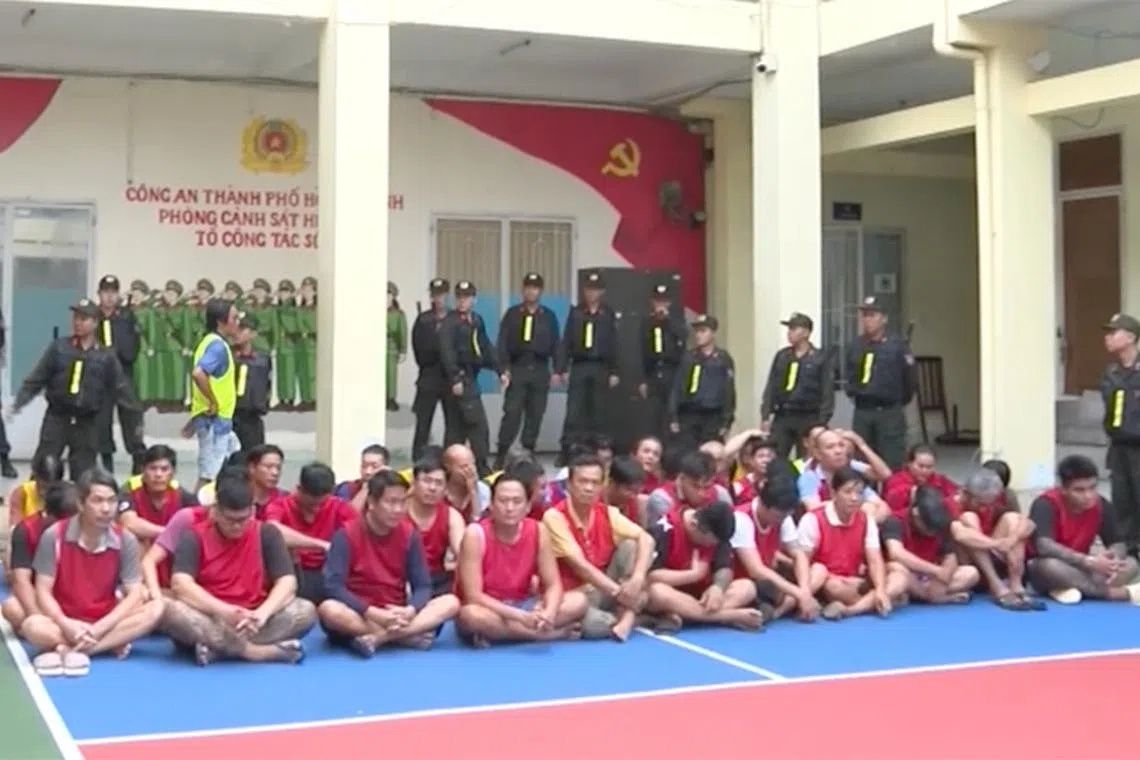
Vietnamese law enforcement has dismantled two extraordinarily sophisticated betting syndicates involved in the illegal World Cup gambling trade, with authorities announcing the arrest of 85 suspects in a coordinated operation that exposed the scale of clandestine wagering networks operating across the country. The two rings, which police characterised as "exceptionally large-scale" operations, had facilitated an estimated US$133 million in unlawful transactions since October 2025, according to statements released by Ho Chi Minh City police on Tuesday.
The raids, executed in late June, represent part of a broader nationwide enforcement surge aimed at curbing illegal gambling activities that intensify during major international sporting events. Vietnam's government maintains an absolute prohibition on online gambling, yet the financial incentives driving underground operators remain substantial enough to sustain well-organised criminal enterprises that operate with surprising sophistication. The discovery of these two networks underscores the persistent tension between regulatory intent and market realities in Southeast Asia's digital economy.
What distinguishes these operations from smaller-scale betting rings is their hierarchical structure and operational complexity. According to police statements, the networks operated with "a high level of hierarchy and tight control", suggesting professional management practices that rival legitimate financial operations. The leaders of these rings confessed to orchestrating a multilayered distribution system wherein they sourced "master-level betting accounts from individuals in Cambodia", then subdivided these accounts into numerous subordinate agent and member accounts for retail distribution to gamblers seeking online wagering opportunities.
This cross-border dimension reveals how regional networks function to circumvent individual country regulations. By sourcing master accounts from Cambodia, where gambling regulations differ substantially from Vietnam's prohibition regime, the syndicates created a buffer against domestic enforcement while maintaining plausible deniability about the ultimate origin of the gambling infrastructure. This pattern illustrates how organised crime adapts to legal boundaries, exploiting jurisdictional differences across Southeast Asia to sustain prohibited activities.
The scale of enforcement activity extends well beyond these two major cases. Vietnam's public security ministry disclosed that police had dismantled 73 separate gambling operations nationwide during the first twenty days of World Cup competition, resulting in 346 arrests connected to illegal gambling and football betting activities. Colonel Bui Tuan Anh of the public security ministry indicated that total transaction values across all these enforcement actions accumulated to "thousands of billions of dong", equating to hundreds of millions of dollars in illicit wagering volume.
The intensity of these operations reflects the particular vulnerability of major sporting events to gambling-related criminal activity. The World Cup generates unprecedented global interest and betting enthusiasm, creating temporary but significant spikes in demand for wagering opportunities. Regions with strict prohibition frameworks like Vietnam experience acute pressure during tournament periods, as the combination of widespread interest and restricted legal outlets creates ideal conditions for underground networks to flourish. Authorities recognise this pattern and strategically concentrate enforcement resources during such events.
Vietnam's gambling prohibition environment, rooted in the country's communist governance structure and social policy objectives, stands in stark contrast to more permissive regulatory regimes elsewhere in Southeast Asia. Thailand, Malaysia, and Singapore each maintain different approaches to gambling regulation, ranging from state-controlled lotteries to licensed betting operators, creating a patchwork regulatory landscape across the region. Vietnam's absolute ban, while ambitious in intent, has proven difficult to enforce in practice given the borderless nature of digital betting platforms and the economic incentives driving operators.
The specific mention of the 2026 World Cup hosting arrangement—Canada, Mexico, and the United States—suggests that Vietnamese authorities may anticipate sustained betting pressure beyond the current tournament cycle. As football's most prestigious international competition rotates through markets with varying regulatory approaches, the worldwide audience and financial stakes create persistent enforcement challenges for governments seeking to maintain strict prohibitions.
The confessions extracted from ring leaders provide insight into operational methods that likely extend across similar networks throughout the region. The account subdivision technique—converting single master accounts into hundreds of retail access points—represents a scalable business model that enables small teams to manage enormous transaction volumes while maintaining operational security. This methodology has proven remarkably resilient across different enforcement jurisdictions, suggesting that tactical police operations, while necessary, may require complementary strategies to address the underlying demand for online gambling services.
These enforcement actions carry implications for Malaysia's own gambling regulatory environment. As a nation with significant Chinese diaspora populations and proximity to other Southeast Asian markets, Malaysia faces comparable pressures from illegal betting networks that exploit online platforms to reach customers across borders. The Vietnamese experience demonstrates both the capabilities of enforcement agencies and the fundamental difficulty of eliminating demand for prohibited services through interdiction alone. Malaysian policymakers monitoring these developments may draw lessons about the effectiveness of regulatory approaches ranging from strict prohibition to licensed, taxed operation of gambling services.

