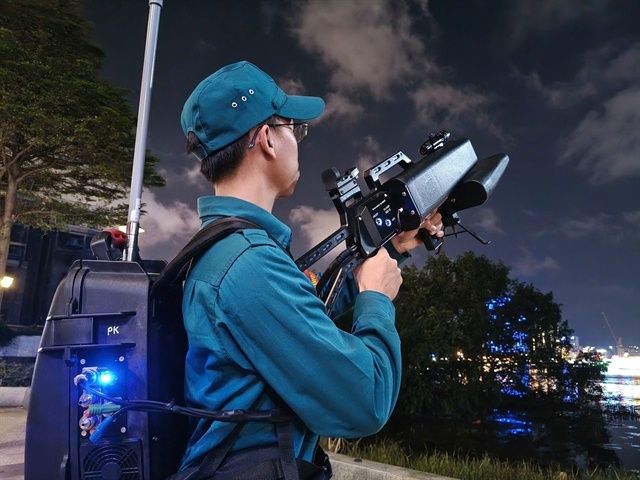
Vietnamese authorities are intensifying enforcement action against illegal drone operations near airports, responding to a sharp escalation in airspace incursions that have disrupted air traffic, inflicted mounting financial losses on carriers, and created genuine risks of catastrophic collision. The Immigration Department under the Ministry of Public Security has issued a fresh public warning, underscoring the gravity of the threat posed by unmanned aircraft entering restricted zones without official permission.
The scale of the problem has grown markedly in recent years. Vietnam recorded 34 cases of drones or other unauthorized aircraft penetrating airport restricted airspace during 2025, a troubling baseline that accelerated further into 2026, with 17 additional incidents documented in the first six months alone. Each unauthorized incursion triggers immediate emergency protocols, forcing air traffic controllers to implement costly and disruptive measures including emergency flight halts, landing suspensions, and diversions to alternative airports—all necessary precautions to prevent mid-air collisions.
The financial impact on the aviation industry has been substantial and is mounting. Vietnam Airlines quantified the damage from just a single week of drone-related disruptions between February 17 and 24, which resulted in approximately VNĐ5.6 billion (US$215,000) in direct losses and affected some 9,200 passengers through delays and schedule modifications. Danang International Airport, independently assessing its exposure, calculated direct losses exceeding VNĐ10 billion ($384,000) from drone incidents—a figure that captures only direct airport costs and excludes the cascading economic impact on airlines, cargo operators, logistics companies, and individual travelers.
Beyond the quantifiable economic damage lies a more fundamental safety concern. Officials stress that drone contact with an aircraft during the critical takeoff or landing phases could precipitate a serious accident with potentially catastrophic consequences for passenger and crew safety. Unlike minor airspace violations that might occur over sparsely populated regions, unauthorized flights near commercial airports create proximity hazards during the phases of flight when aircraft are most vulnerable and least able to maneuver.
Under Vietnamese law, comprehensive regulatory requirements govern all drone operations. Aircraft owners must complete mandatory registration and secure an explicit flight permit before any operation is permitted. Registration itself does not authorize flight; permits instead specify the geographic zone, altitude ceiling, time windows, and operational scope authorized for each device. A government decree enacted in 2025 established a graduated penalty framework beginning with administrative fines and escalating to confiscation of equipment and suspension of operating privileges for violations.
More serious breaches—particularly incidents where a drone physically obstructs air traffic or creates substantial danger to aviation safety—cross into criminal territory. Violators face potential sentences ranging from fines and non-custodial reform measures to imprisonment of up to 15 years in the most severe cases. Notably, Vietnamese law does not require an actual accident to have occurred; the mere act of flying a drone into an aircraft's approach, takeoff, or landing corridor—thereby creating genuine collision risk—constitutes a prosecutable criminal offense.
The specific criminal penalties for creating such hazards are substantial. Operators found guilty of placing drones in aircraft landing and takeoff paths face fines ranging from VNĐ10 million to VNĐ50 million (US$384 to US$1,920), coupled with potential non-custodial reform of up to two years or custodial imprisonment from three months to two years. Beyond these immediate sanctions, convicted individuals may be disqualified from holding specified employment categories or public positions for periods ranging from one to five years, creating lasting professional consequences.
The enforcement approach reflects escalating official frustration with repeat violations and appears designed to create sufficient deterrent effect through both financial penalties and reputational damage. The framework distinguishes between technical regulatory breaches—which trigger administrative consequences—and conduct that creates genuine hazards, which enters the criminal justice system. This tiered structure allows proportional responses while preserving serious penalties for the most dangerous behavior.
The regulatory environment matters significantly for Southeast Asian readers and operators. As drone technology becomes increasingly affordable and accessible across the region, similar conflicts between recreational and commercial drone use and aviation safety are emerging in Malaysia, Thailand, Singapore, Indonesia, and other ASEAN economies. Vietnam's experience demonstrates the speed with which isolated incidents can become a systemic problem requiring criminal enforcement and the substantial economic costs imposed on national aviation industries.
Vietnam's authorities have appealed to drone operators to strictly comply with permit conditions regarding time, location, and operational parameters. Simultaneously, the government is requesting public assistance, encouraging citizens and residents to report unauthorized drone activity near airports directly to police, military authorities, or airport management. The messaging frames aviation security as a societal responsibility rather than purely a government function.
The broader framing emphasizes that irresponsible drone operations carry consequences extending beyond financial loss to encompass human safety, national aviation security, and economic competitiveness. For Malaysia and other regional economies developing drone regulations, Vietnam's experience offers both a cautionary example of how quickly airspace incidents can escalate and a template for enforcement mechanisms that balance accessibility with safety imperatives.

