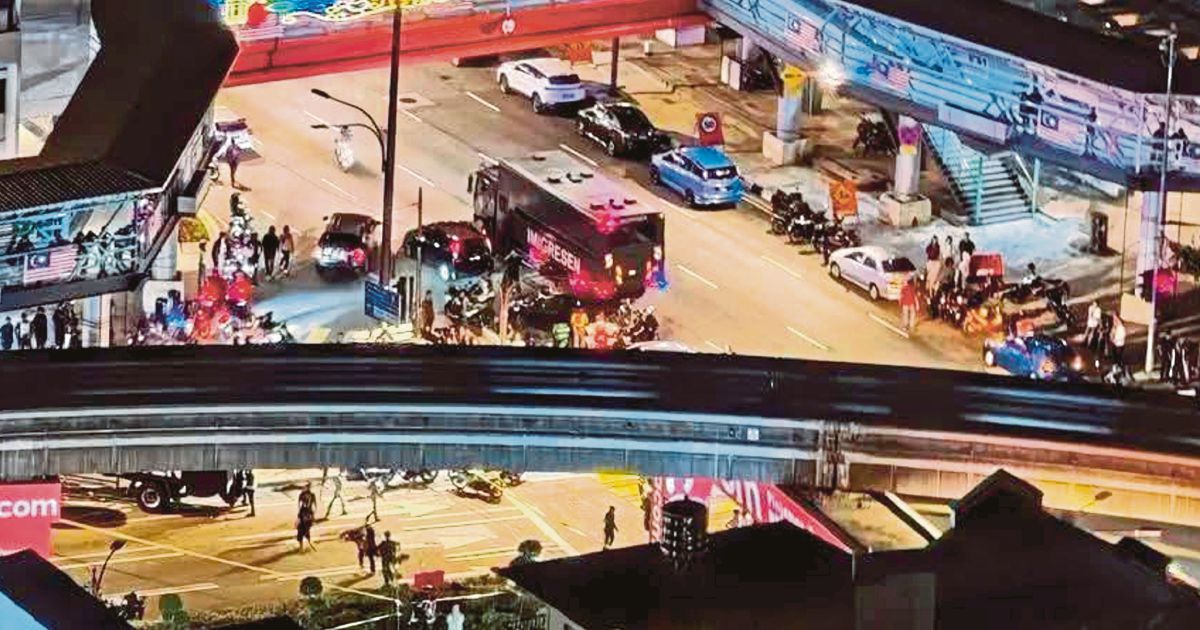
Police investigators in Kuala Lumpur are methodically reviewing dashcam and CCTV recordings as they seek to establish the sequence of events surrounding a collision that claimed three lives on Jalan Sultan Ismail in the early morning hours. The fatal accident involved a lorry operated by the Immigration Department, and the deceased were identified as a father accompanying his two daughters.
The examination of video footage forms a critical component of the ongoing investigation. Dashcam recordings from vehicles at the scene and CCTV footage captured from surrounding buildings and traffic infrastructure provide investigators with multiple visual perspectives of the collision. These materials offer potential insight into the movements of all vehicles involved, their speeds, positioning, and the precise moment of impact—details that are often difficult to determine through eyewitness accounts alone.
Accidents involving large commercial vehicles in metropolitan areas like Kuala Lumpur carry heightened investigative complexity. The size and mass of lorries mean that collision dynamics differ substantially from accidents between smaller passenger vehicles. Investigators must consider factors such as the driver's field of vision, braking capability, and the vehicle's handling characteristics when reconstructing the incident.
The location on Jalan Sultan Ismail, one of Kuala Lumpur's major thoroughfares connecting the city centre to residential and commercial districts, typically experiences significant traffic flow even during early morning hours. This setting raises questions about the conditions prevailing at the time—whether visibility was compromised, whether traffic congestion was a factor, or whether the timing placed the collision at a period when road usage patterns differ from usual daytime conditions.
The involvement of a government vehicle operated by the Immigration Department adds an institutional dimension to the investigation. Such incidents often prompt broader scrutiny of fleet maintenance standards, driver training protocols, and vehicle safety measures across government transport operations. The department may face questions regarding when the lorry was last serviced, whether the driver held appropriate commercial vehicle licensing, and what safety systems were functional at the moment of collision.
Investigations into fatal traffic accidents in Malaysia typically examine mechanical factors alongside human error. Authorities will scrutinise whether mechanical failure contributed to the incident—such as brake malfunction, tyre failure, or steering system compromise. Simultaneously, investigators consider driver conduct: whether fatigue, distraction, or impaired driving played a role, or whether the driver's reaction time proved inadequate to avoid collision.
The loss of three family members in a single incident resonates deeply within Malaysian society and communities. Such tragedies often catalyse public discussion about road safety, the standards applied to commercial vehicle operations, and whether sufficient measures exist to protect vulnerable road users. The circumstances surrounding this particular accident will likely be scrutinised by safety advocacy groups and members of the public concerned about vehicle safety standards.
Video evidence in traffic fatality investigations provides advantages that supplementary forms of evidence cannot always match. CCTV recordings offer objective documentation of events without the inconsistencies that sometimes characterise eyewitness recollection. Dashcam footage from multiple sources can establish the relative movements and speeds of vehicles involved before collision occurred. However, investigators must also account for the limitations of such footage—camera angles that miss certain details, image quality variations, and the challenge of determining exact speeds from visual data alone.
The investigation's progress will likely involve coordination between multiple agencies. The Royal Malaysia Police, as the lead investigating authority, typically work alongside the Road Transport Department and potentially the Public Prosecutor's Office, which oversees decisions regarding possible charges. The Immigration Department may also cooperate by providing details about the vehicle's maintenance history, the driver's employment records, and any prior incidents involving the same vehicle.
Families affected by fatal road accidents in Malaysia face both immediate grief and a prolonged investigative process before questions about accountability can be properly addressed. The investigation into this collision will determine whether factors under human control contributed to the fatality, and whether institutional or administrative responsibilities exist regarding fleet management or driver standards.
Public concern about large vehicle safety on Malaysian roads remains significant. Lorries involved in collisions that prove fatal often prompt renewed calls for stricter enforcement of speed limits, mandatory installation of advanced safety systems on commercial vehicles, and more rigorous driver training requirements. The findings from this investigation may influence discussions about whether existing regulatory frameworks adequately protect other road users from similarly tragic outcomes.

