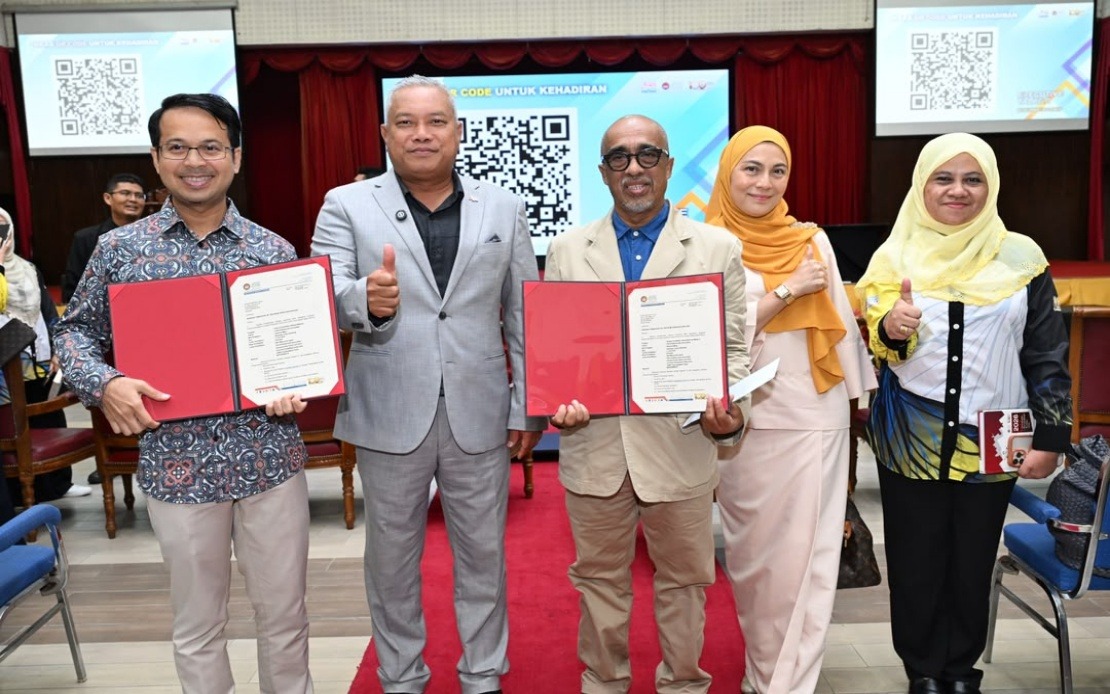
Established Malaysian actor and filmmaker Mohd Sabri Yunus has realised a long-deferred academic ambition by securing admission to Universiti Pendidikan Sultan Idris (UPSI) in Perak for postgraduate study. The 65-year-old creative professional, whose career spans decades in Malaysian entertainment and media, will pursue a Master of Education specialising in Malay Literature at the university. His acceptance comes through the Accreditation of Prior Experiential Learning for Award of Qualifications (APEL.Q) scheme, an alternative entry pathway that recognises substantial professional experience as a substitute for conventional academic prerequisites.
Joining Sabri Yunus as a fellow pioneer under the APEL.Q initiative is Ahmad Fedtri Yahya, a prominent television presenter and media personality aged 45, who will undertake a Master of Education in Malay Language. Both enrolments represent a significant development in Malaysian higher education, as they are the first cohort admitted through these newly developed postgraduate programmes offered by UPSI's Faculty of Languages and Communication. The dual admissions underscore the growing recognition within Malaysian universities that extensive professional achievement and practical expertise can constitute valid qualifications for advanced study.
For Sabri Yunus, the UPSI opportunity carries particular personal significance given his earlier thwarted attempts at university education. During the 1980s and early 1990s, while employed as an illustrator at Dewan Bahasa dan Pustaka (DBP), Malaysia's national language and literature authority, he endeavoured twice to undertake tertiary study but found such aspirations incompatible with his professional obligations. Speaking at an Executive Talk 6.0 programme on cybersecurity at UPSI's Tanjong Malim campus, the veteran filmmaker reflected that while formal university pathways remained inaccessible during those decades, his commitment to intellectual growth never diminished. He characterised his life philosophy as one of continuous learning, viewing every individual he encountered as a potential instructor capable of transmitting knowledge and insights.
The APEL.Q pathway appears particularly suited to Sabri Yunus's scholarly ambitions. Through his postgraduate research, he intends to investigate specific dimensions of pantun, the traditional Malay verse form that holds profound cultural and linguistic significance within Malaysian literary tradition. This research focus aligns naturally with his four decades of involvement in Malaysian creative industries and his demonstrated commitment to preserving and advancing understanding of national cultural heritage. His academic endeavour thus represents not merely personal intellectual fulfilment but also a potential substantive contribution to scholarship in Malaysian literature.
Ahmad Fedtri Yahya's decision to specialise in Malay Language studies reflects his conviction that linguistic patterns directly mirror and shape societal development and intellectual capacity. The television personality expressed enthusiasm about joining UPSI's academic community and indicated his commitment to the APEL.Q programme during his admission. His career trajectory in broadcast media positions him well to understand contemporary language dynamics, particularly the pressures and transformations affecting Malay usage patterns among younger Malaysians navigating increasingly digital communication environments. Fedtri's observation that younger generations experience substantial shifts in communication styles driven by social media platforms and digital technologies identifies a pressing contemporary concern within Malaysian society.
The presence of these two accomplished media personalities within UPSI's student body carries implications extending considerably beyond individual academic achievement. UPSI vice-chancellor Prof Datuk Dr Md Amin Md Taff characterised the enrolment of Sabri Yunus and Ahmad Fedtri Yahya as an enriching development for the university's campus community, emphasising that their professional experience and expertise in arts, language, and cultural domains could create meaningful exchanges with UPSI's substantial student population. With approximately 25,000 enrolled students, predominantly comprising future educators, UPSI maintains substantial influence over the formation of Malaysia's teaching profession and the intellectual development of younger generations throughout Malaysian schools.
The educational value of integrating accomplished practitioners into postgraduate cohorts potentially extends into Malaysia's broader cultural policy objectives. As noted by UPSI leadership, the experiences and insights these two celebrities can contribute directly support national efforts toward reconstructing and reinforcing Malaysian cultural identity at a critical historical moment. The interactions between media professionals of established reputation and teacher-trainees undergoing preparation for classroom instruction create indirect but potentially powerful mechanisms for transmitting cultural values and linguistic appreciation throughout Malaysia's education system.
The APEL.Q pathway itself represents an important innovation within Malaysian higher education architecture. By formally recognising and crediting substantial professional experience as qualifying preparation for advanced study, the scheme potentially opens postgraduate opportunities for accomplished practitioners and mid-career professionals who lack conventional academic credentials but possess demonstrable expertise. Within the Southeast Asian context, where many talented individuals have pursued professional careers in creative industries, entertainment, journalism, or cultural work without formal university credentials, such alternative pathways expand access to continuing education and intellectual development. The success of Sabri Yunus and Ahmad Fedtri Yahya as APEL.Q pioneers could establish precedent encouraging other Malaysian universities to develop similar mechanisms.
The admission of these two figures simultaneously addresses a particular concern affecting Malaysian cultural preservation and transmission during rapid technological and social change. Both individuals bring professional experience navigating the intersection of traditional Malaysian cultural forms and contemporary media environments. Sabri Yunus's decades in filmmaking and directing encompass numerous projects engaging with Malaysian narrative traditions and cultural themes, while Ahmad Fedtri Yahya's television career has necessarily involved decisions about language use and cultural representation in media consumed by mass audiences. Their postgraduate research and engagement thus potentially offers insights particularly valuable during an era when Malaysian youth increasingly receive cultural formation through digital channels rather than traditional community institutions.
The timing of these admissions also reflects apparent institutional recognition that Malaysia's education sector must actively engage with and involve accomplished practitioners from the country's cultural industries. UPSI's Faculty of Languages and Communication evidently recognised that attracting such professionals to postgraduate programmes strengthens the academic environment while potentially generating research and insights of particular relevance to Malaysian society. The participation of Sabri Yunus and Ahmad Fedtri Yahya as students and researchers simultaneously enhances the university's connections to Malaysia's media landscape and broader creative economy.

