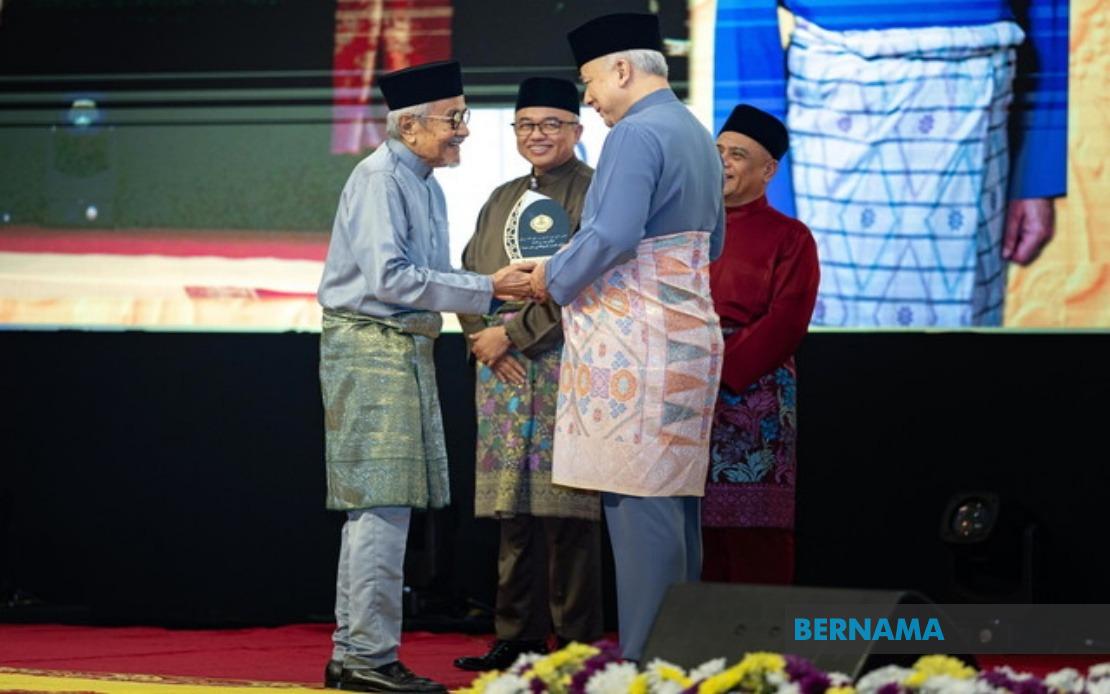
Datuk Rahim Razali, the 87-year-old veteran actor and director whose career has shaped Malaysian cinema and television, was honoured with the 'Tokoh Zaid Bin Thabit' Media and Communications Practitioner Icon Award during Perak's state-level Maulidur Rasul celebration in Ipoh on August 25. The recognition, presented by Sultan Nazrin Shah, included a monetary award of RM5,000 and a commemorative plaque, acknowledging Razali's enduring influence on the country's entertainment and broadcasting landscape.
Abdul Rahim Mohd Razali, as his full name reads, hails from Batu Gajah in Perak, a hometown that has produced a remarkably prolific creative talent. His journey into the media industry began at Radio Television Malaysia (RTM), where he worked as a broadcasting assistant before charting an independent course. In 1981, Razali established Angkatan Seniman Abad XX Sdn Bhd, a production company that would become instrumental in creating original Malaysian content during a formative period for the nation's film and television industries. This entrepreneurial move demonstrated both vision and determination to develop local storytelling capacities at a time when such ventures were far less common than they are today.
The scope of Razali's creative output is staggering by any measure. Over his decades-long career, he has produced 50 dramas for RTM, establishing himself as a prolific television producer who understood the medium's potential for reaching mass audiences across Malaysia. Beyond television work, Razali ventured into feature filmmaking, producing 15 films that have garnered international recognition. Notably, eight of these productions were selected for the Tokyo Film Festival, placing Malaysian cinema on a respected global stage and demonstrating that locally-produced work could compete in prestigious international forums. This achievement is particularly significant for a filmmaker working from a nation with a relatively modest film industry infrastructure.
Razali's filmography includes the notable works Abang and Abang 92, titles that reflect his engagement with contemporary Malaysian social themes and the evolution of the nation's cinematic concerns across different eras. His work as a sports commentator further broadened his media footprint, making him a recognisable voice across multiple broadcasting domains. This versatility—spanning directing, acting, production, and commentary—reflects the multi-talented approach often required of media professionals in smaller markets who must wear several hats to sustain creative careers.
The Maulidur Rasul awards ceremony recognised not only Razali but a broader spectrum of contributions to Malaysian society and religious life. Yang Walat, an 82-year-old single mother who has raised 15 children in Kuala Kurau, received the Exemplary Family Icon Award (Anugerah Keluarga Amar Yassir), along with RM10,000, an Umrah pilgrimage package, and a plaque. Her recognition underscores how award systems can celebrate extraordinary personal sacrifice and resilience within family structures, particularly for women navigating significant challenges with limited resources.
Other recipients of the Perak-level Maulidur Rasul honours included Radhi Kamarul Hailan, 56, who was named the 'Ibnu Abbas' or Preacher Icon Award recipient, alongside Saharuddin Hassim, 74, and Yahya Man, 83, who received the Mosque Official Award (Tokoh Siak) and the 'Tokoh Bilal' award respectively. These categories recognise the crucial roles played by religious scholars, mosque administrators, and those who lead congregational prayers—positions essential to the functioning of Malaysia's Islamic institutional framework. The inclusion of such diverse religious and community roles within a single awards programme reflects the interconnected nature of religious and civil society in Malaysian public life.
Mohd Hanafiah Idris, 56, received the Imam Award, honouring leadership in mosque communities, while Pertubuhan Wanita Prihatin Perak was recognised with the Non-Governmental Organisation Award. The presence of a women's NGO in this roster demonstrates increasing recognition of civil society organisations in state-level celebrations, particularly those addressing women's welfare and development. For Malaysian readers, such inclusive award categories signal evolving attitudes toward community contribution, extending beyond traditional religious roles to encompass civil society engagement.
The Maulidur Rasul celebration serves as an annual occasion for states to recognise exemplary individuals and organisations that have contributed to religious education, community welfare, and cultural development. By presenting these awards through the Sultan's office, Perak positions such recognition within the constitutional framework of state leadership, lending ceremonial gravitas to achievements in often underappreciated sectors. For Razali specifically, this honour during a religious celebration acknowledges that artistic and media work, when directed toward enriching national culture and preserving authentic Malaysian narratives, constitute a form of community service worthy of formal state recognition.
Razali's career trajectory illuminates broader patterns in Malaysian media development over the past half-century. As someone who transitioned from employment within state broadcasting to independent production, he exemplifies the gradual professionalisation and entrepreneurship that characterised Malaysia's creative industries from the 1980s onward. His international film festival selections suggest that Malaysian storytelling, when executed with artistic seriousness, can resonate beyond domestic audiences. For younger Malaysian filmmakers and producers, Razali's legacy provides both inspiration and a tangible example that significant creative careers are achievable within the Malaysian context, particularly when combined with the business acumen necessary to establish sustainable production enterprises.

