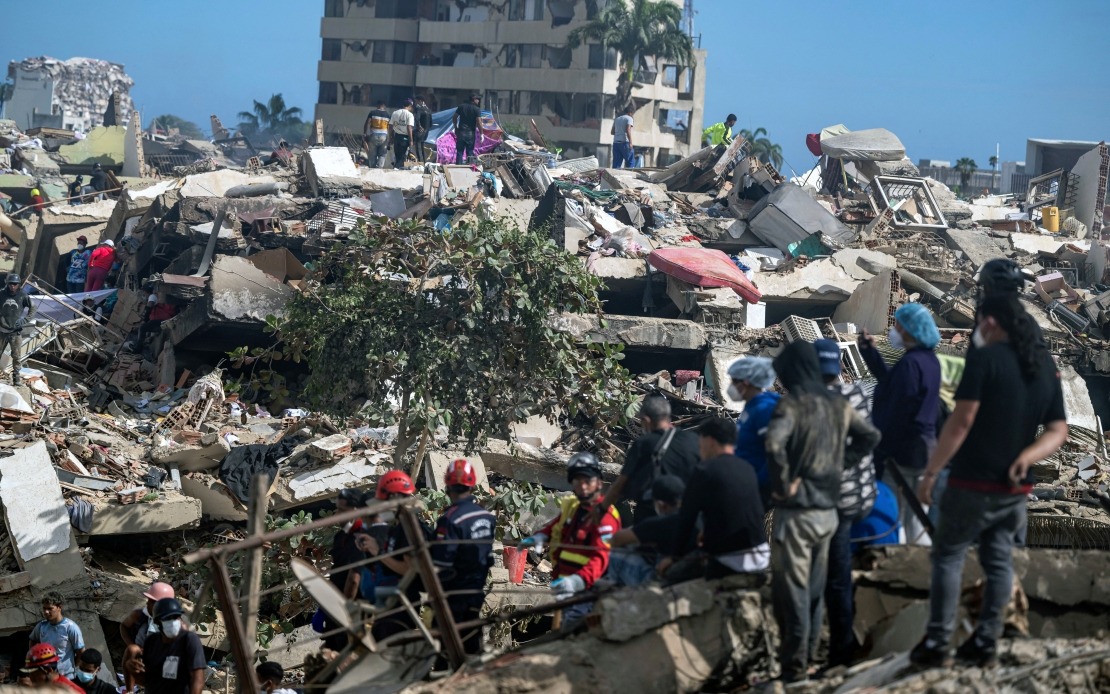
The humanitarian crisis in northern Venezuela has deepened considerably, with official authorities confirming that the pair of seismic events that struck the nation on June 24 have resulted in 2,295 confirmed deaths. National Assembly President Jorge Rodriguez disclosed these grim figures during a Wednesday address transmitted across state television networks, providing the Venezuelan public and international observers with the most comprehensive assessment of the disaster's human toll to date.
Beyond the mortality figures, the scale of suffering extends across multiple dimensions of impact. Medical facilities across the affected zones have documented 11,267 documented cases of injury ranging from minor wounds to life-threatening trauma. Simultaneously, official registers now show that approximately 12,841 individuals have been displaced from their homes, creating an immediate secondary crisis involving shelter, sanitation, and access to essential services. These numbers paint a picture of widespread devastation that demands sustained humanitarian response across multiple sectors.
The initial seismic doublet—comprising earthquakes measuring 7.2 and 7.5 in magnitude—unleashed tremendous destructive force on the northern region. Preliminary satellite analysis conducted by NASA scientists indicates that the twin shocks likely damaged or completely destroyed more than 58,000 structures across the impacted zones. This assessment suggests that infrastructure damage extends far beyond what ground-based surveys had initially estimated, with implications for long-term reconstruction and economic recovery that will burden Venezuela's already stressed government resources.
Rescue and recovery operations have mobilized an extraordinary international response. Over 4,000 emergency personnel deployed throughout the disaster area have managed to extract 6,461 individuals from collapsed buildings and debris fields. This figure underscores the critical importance of rapid response capabilities in the immediate aftermath of major seismic events. Teams from more than 30 countries have deployed personnel to assist Venezuelan authorities, demonstrating the universal humanitarian instinct that transcends geopolitical boundaries in the face of natural catastrophes.
The seismic activity has not concluded with the initial pair of earthquakes. Official records indicate that 782 aftershocks have been registered since the primary seismic events, creating continued danger for both rescue workers and survivors sheltering in damaged structures. However, seismologists have offered some reassurance, noting that both the frequency of aftershock occurrences and their underground intensity have demonstrated a consistent declining trend throughout the preceding 48-hour period. This moderation suggests the immediate acute phase of seismic hazard may be transitioning toward a longer-term recovery trajectory.
Despite these encouraging seismic trends, authorities have cautioned that the threat has not been entirely eliminated. Rodriguez emphasized the need for sustained vigilance and careful adherence to safety protocols around structures whose structural integrity has been compromised. Concrete masonry in particular presents ongoing hazards, as weakened foundations and supports may fail without warning, particularly when subjected to additional disturbances or vibration from continuing aftershocks.
The international aid apparatus has begun mobilizing resources to address the humanitarian dimensions of the catastrophe. The United Nations has initiated procurement of 10,000 body bags, a sobering metric that reflects both current mortality and the anticipated discovery of additional casualties as rescue teams penetrate deeper into collapsed urban zones. This logistical preparation indicates that international agencies anticipate the confirmed death toll may continue rising as search and recovery operations proceed through the coming weeks.
For Malaysia and Southeast Asia, this disaster carries important implications for regional disaster preparedness. Venezuela's experience demonstrates the vulnerability of developing nations to major seismic events and highlights the critical importance of establishing robust early warning systems, evacuation protocols, and international mutual aid agreements. Several Southeast Asian nations, particularly Indonesia and the Philippines, sit within active seismic zones and face similar risks. The Venezuelan response—with its reliance on international assistance from 30 nations—underscores why regional cooperation frameworks for disaster response remain essential investments in collective security.
The ongoing rescue operations represent a race against time and deteriorating conditions. Search teams must navigate unstable rubble while managing the logistical challenge of caring for survivors in a situation where basic infrastructure has been severely compromised. The continued deployment of thousands of rescuers through Wednesday indicates that international commitment remains firm, even as the immediate shock of the initial earthquakes recedes into the background of ongoing recovery work. The coming weeks will determine whether current momentum can be sustained to maximize survivor recovery and establish foundations for the longer-term reconstruction process that Venezuela faces.

