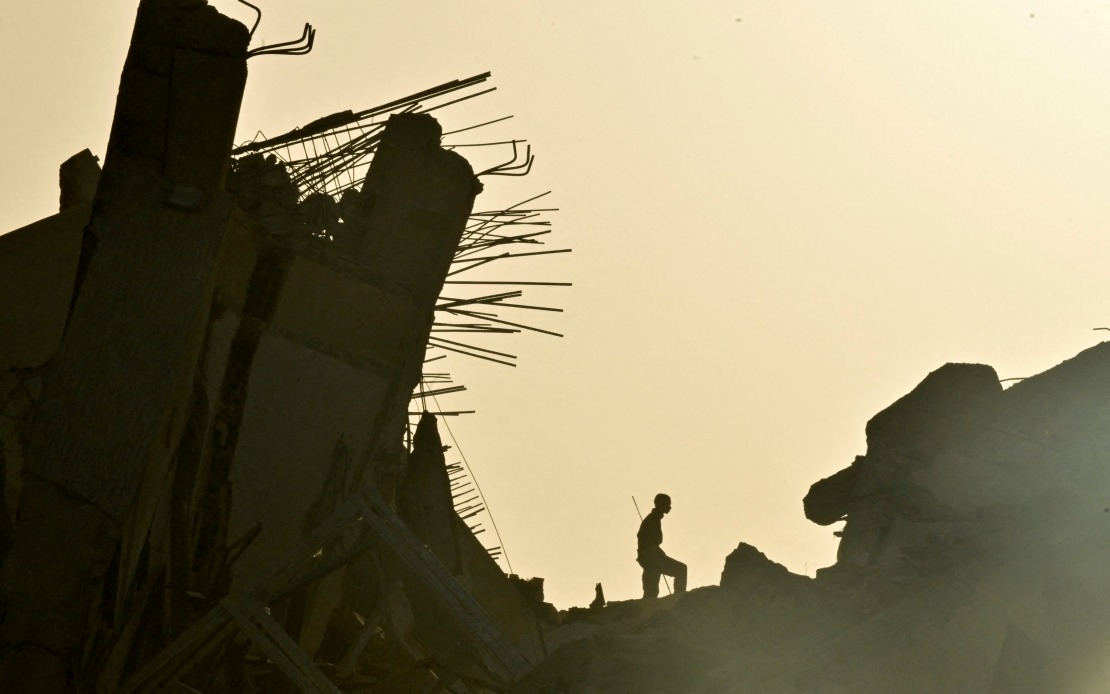
Venezuela faces a humanitarian catastrophe following twin earthquakes that struck the South American nation on Wednesday, with authorities confirming that the death toll has climbed to at least 1,450 people, while more than 3,200 others sustained injuries in the disaster. The scale of the tragedy underscores the vulnerability of densely populated urban centres in seismically active regions, a concern that resonates across Southeast Asia, where several nations including Indonesia, the Philippines, and Malaysia sit along major fault lines and regularly experience tremors.
The two consecutive quakes, registering magnitudes of 7.2 and 7.5 respectively, were particularly devastating because of their sequential nature and the powerful aftershock sequence that followed. According to National Assembly President Jorge Rodríguez, the initial pair of tremors have been trailed by 430 additional aftershocks, complicating rescue and recovery efforts and causing further structural damage to already-compromised buildings. This pattern of seismic activity creates an exceptionally hazardous environment for rescue teams attempting to extract survivors from collapsed structures.
The coastal state of La Guaira and the capital city of Caracas have experienced the worst destruction, with entire neighbourhoods of high-rise residential buildings reduced to rubble. Such urban devastation carries profound implications for housing availability and reconstruction planning in Venezuela, a nation already grappling with severe economic and political challenges. The loss of housing stock compounds an existing humanitarian crisis, displacing tens of thousands of residents who now face shelter shortages amid the immediate aftermath of the disaster.
Government assessments reveal the staggering extent of infrastructure damage across the affected regions. More than 2,500 residential buildings and other facilities have either completely collapsed or sustained severe structural damage. Particularly alarming is the destruction of medical infrastructure, with 38 hospitals destroyed or rendered inoperable, severely hampering Venezuela's ability to treat the injured population. Approximately 780 homes have been lost entirely, devastating individual families and communities that may take years to rebuild.
International coordination in the rescue operation has been remarkable, with search and rescue teams from 24 countries joining approximately 30,000 Venezuelan emergency workers to comb through debris fields. This deployment of 2,700 foreign rescue specialists represents a significant multinational response, reflecting the gravity of the situation and international solidarity in natural disasters. However, the massive scale of destruction means that even this substantial workforce confronts nearly insurmountable challenges in locating survivors buried beneath tonnes of rubble.
Thousands of people are still believed trapped beneath collapsed buildings, though authorities acknowledge that hope of finding additional survivors diminishes considerably as time passes. Rescue experts emphasise that the critical window for locating and extracting living survivors typically closes sharply after 72 hours, a threshold that has now passed since the initial quakes struck. This grim reality means that subsequent discoveries are increasingly likely to involve recovery of remains rather than rescue of living victims, adding to the psychological and emotional toll on rescue workers and affected communities.
The situation in Venezuela mirrors challenges faced by other nations in the region vulnerable to major seismic events. Malaysia, while experiencing fewer large-magnitude earthquakes compared to neighbours like Indonesia, nonetheless sits in an active tectonic zone and must maintain robust disaster preparedness infrastructure. The Venezuelan case provides instructive lessons regarding the adequacy of building codes, early warning systems, and emergency response coordination in earthquake-prone areas. Malaysian authorities and urban planners can draw valuable insights from Venezuela's experience about structural engineering standards and evacuation procedures.
The succession of aftershocks compounds survival challenges for those trapped, as additional tremors risk further building collapses and injuries. Rescue operations must proceed with extreme caution, as aggressive demolition or removal of rubble could trigger additional structural failures. This methodical but necessarily slow approach means that rescue workers often find themselves racing against time and the narrow window of survival, creating profound emotional and practical pressure on teams working exhausting shifts in hazardous conditions.
Venezuela's existing political and economic instability adds layers of complexity to disaster response and reconstruction efforts. The nation was already facing significant institutional challenges prior to the earthquakes, and the sudden demand for coordinated humanitarian response tests governmental capacity at a moment of acute weakness. International assistance becomes crucial not merely for rescue operations but for subsequent rehabilitation, medical care for survivors, and reconstruction planning that could span years.
The destruction of healthcare facilities represents a particularly acute crisis within the broader disaster, as hospitals capable of treating trauma injuries, providing emergency surgery, and managing infection in survivors are precisely the infrastructure destroyed or damaged most severely. This compounds mortality risks for injured survivors who might otherwise have survived with proper medical intervention. Establishing temporary medical facilities and coordinating international medical assistance becomes an urgent priority alongside active rescue operations.
For regional observers in Southeast Asia, Venezuela's experience underscores the critical importance of earthquake preparedness, building code enforcement, and integration of disaster response capabilities across international lines. The speed and coordination with which rescue teams from 24 nations mobilised demonstrates both the possibility and the necessity of robust international disaster response frameworks. As countries throughout the region continue developing their own seismic preparedness strategies, Venezuela's tragedy serves as a sobering reminder of the stakes involved and the potential consequences of inadequate preparation.

