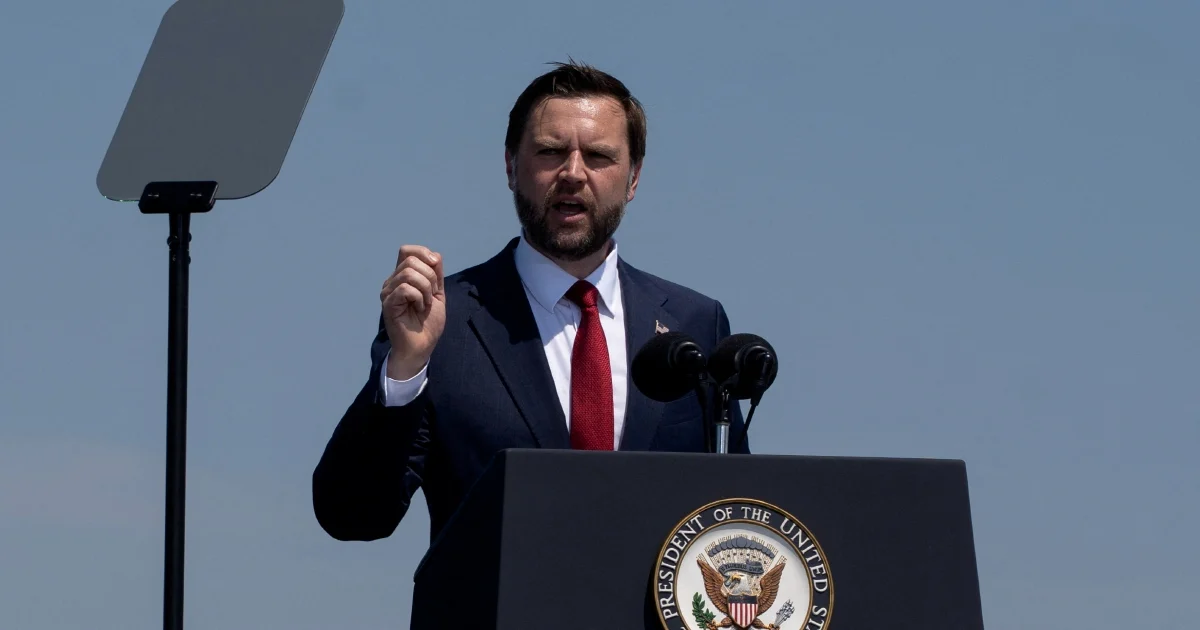
US Vice President JD Vance has delivered a blunt assessment of Britain's recent governance, declaring that the country's leadership has repeatedly disappointed its citizens over an extended period. Speaking in London, Vance suggested that years of political instability and policy missteps have left British voters hungry for meaningful change, pinning his hopes on the incoming prime minister to deliver the structural reforms the nation requires.
Vance's comments arrive at a politically significant moment for Britain, as the country prepares for a transition in its highest office. His remarks reflect growing international attention to the state of British governance and the challenges facing the new administration. The assessment carries particular weight given the transatlantic relationship and Washington's traditional interest in the direction of UK policy.
The vice president's critique appears rooted in the tumultuous political landscape Britain has experienced in recent years. Multiple prime ministerial transitions, legislative gridlock on major issues, and shifting policy directions have created an impression of institutional instability. These factors have contributed to voter frustration and a sense that the country's traditional political mechanisms are struggling to address pressing national concerns.
Vance's emphasis on structural change rather than cosmetic reforms suggests he views Britain's challenges as systemic rather than merely the product of individual leadership failures. This perspective aligns with broader international observations about modernisation pressures facing established democracies, including questions about the efficiency and responsiveness of traditional parliamentary systems.
The incoming administration's capacity to implement meaningful reform will likely shape not only Britain's domestic trajectory but also its ability to engage effectively on the international stage. For regional observers in Southeast Asia and beyond, Britain's internal stability remains relevant to trade relationships, security partnerships, and broader geopolitical alignment.
Vance's hopeful tone regarding the next prime minister suggests the US administration is prepared to work constructively with new British leadership. This presents an opportunity for the incoming government to reset relationships with key allies and demonstrate its capacity for delivering on voter mandates for change. The success of such efforts could have implications for how Britain approaches its international commitments and regional partnerships.
The political environment in Britain over the past several years has tested confidence in traditional governance institutions. Voters have expressed frustration through electoral choices and polling data, signalling demand for different approaches to longstanding policy challenges ranging from economic competitiveness to public service delivery. Recognition of this voter sentiment by international figures like Vance underscores the scale of the challenge facing British leadership.
For Malaysia and Southeast Asian nations with significant ties to Britain through historical connections, Commonwealth membership, and contemporary trade relationships, the stability and effectiveness of British governance carries indirect significance. A Britain undergoing successful structural reform could become a more engaged and reliable partner across various domains including trade negotiations, educational exchanges, and security cooperation.
The question of what structural reforms might prove most impactful remains central to the political conversation. These could encompass parliamentary procedures, regulatory frameworks, sectoral policy approaches, or broader constitutional considerations. The incoming prime minister's interpretation of the reform mandate and ability to build consensus around specific changes will determine whether Vance's optimism proves justified.
Vance's intervention in British political discourse, while relatively brief, signals that American policymakers are monitoring the transition closely. This attention reflects both traditional UK-US partnership dynamics and genuine concern about the health of one of the world's oldest democracies. How Britain responds to voter demands for change could influence broader international perceptions of democratic governance in established liberal democracies.
The incoming administration inherits not only the structural challenges Vance identified but also elevated expectations from voters, international observers, and policymakers. Meeting these expectations will require not only policy innovation but also effective communication about the rationale for changes and their anticipated benefits. The early months of the new government will likely set the tone for whether transformative reform is genuinely achievable within existing constitutional frameworks.
Ultimately, Vance's comments serve as both critique and challenge to British leadership. They acknowledge real problems while expressing confidence that the incoming administration can chart a different course. Whether that optimism proves warranted will become clear as the new prime minister's priorities and early policy initiatives take shape, with potential implications extending far beyond Britain's shores to its international relationships and the broader Western alliance.

