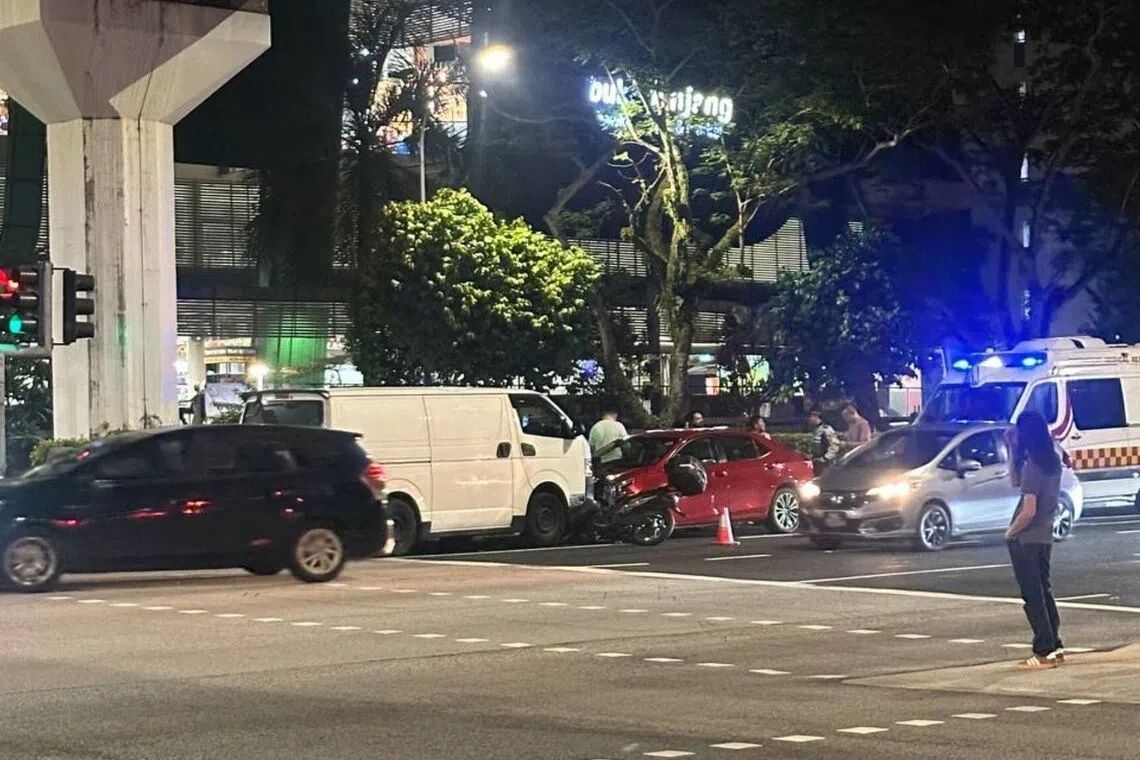
A van driver in Singapore faces drug-related charges following a serious multi-vehicle collision on Bukit Panjang Road, raising fresh concerns about impaired driving incidents in the city-state's residential areas. The incident, which unfolded on Friday evening at approximately 9pm near the intersection with Bukit Panjang Ring Road, involved five vehicles and left two people injured, though both declined hospital treatment. The 27-year-old male driver was taken into police custody on suspicion of operating the vehicle while under the influence of controlled substances, marking another case where substance impairment may have contributed to road safety failures.
Responding to media inquiries, the Singapore Police Force and Singapore Civil Defence Force jointly confirmed details of the accident, which drew emergency responders to one of the district's main thoroughfares. Initial investigations suggest the van may have been travelling against the normal direction of traffic at the moment of impact, based on eyewitness video evidence captured at the scene. This directional anomaly adds a troubling dimension to the incident, suggesting the driver's impairment may have resulted in fundamental navigation errors before or immediately preceding the collision.
Investigators recovered two vaporisers and three associated pods from inside the van, items that have become increasingly relevant to Singapore's regulatory and public health frameworks. The discovery prompted the authorities to refer the vaporiser-related charges to the Health Sciences Authority, Singapore's scientific regulator, indicating that the specific substances and devices will undergo laboratory analysis to determine their composition and legal classification. This procedural step is crucial, as it will establish whether the devices contained nicotine, cannabis, synthetic cannabinoids, or other controlled or prohibited substances.
The broader implications of this case extend beyond the immediate incident to encompass Singapore's ongoing efforts to combat substance abuse and its intersection with road safety. Vaping products, which have proliferated across Southeast Asia despite regulatory restrictions in various jurisdictions, represent a growing enforcement challenge. In Singapore, where strict drug laws are the norm, the use and possession of certain vaping products remains a contentious issue, particularly among younger demographics who may not fully understand the legal ramifications of their consumption.
Beyond the van, the accident damaged at least four other vehicles: two sedans and a motorcycle that became trapped in the collision sequence. The positioning of vehicles at the scene, as documented in social media footage, reveals the violent nature of the impact. A red sedan bore the brunt of the initial collision with the van, while a motorcycle was sandwiched between these two vehicles, exposing its rider to significant danger. A black sedan sustained damage several metres behind the initial point of contact, suggesting the collision may have involved a chain-reaction element or secondary impacts.
The two individuals who sustained minor injuries declined medical assessment at the scene, a decision that has become relatively common in minor-to-moderate traffic accidents across Singapore where individuals wish to avoid hospital procedures or worry about insurance implications. However, such decisions carry inherent risks, as some injuries manifest only hours or days after impact. The injured parties' identities and the vehicles they occupied have not been disclosed by authorities.
Traffic safety advocates in Singapore have periodically raised alarm about drug-impaired driving, which remains significantly less publicised than drink-driving campaigns. While alcohol-related offences dominate road safety discourse, the role of narcotics, prescription medications, and emerging substances like illicit vaping products in traffic incidents has received comparatively limited public attention. This case illustrates why regulatory and educational focus on drug-impaired driving merits greater prominence in the island nation's road safety strategy.
The Bukit Panjang district, a relatively congested residential zone in northwestern Singapore, has been the site of numerous accidents over recent years. The particular stretch of road where Friday's incident occurred sees substantial commuter traffic during peak hours and has been subject to speed enforcement campaigns. The accident's timing at 9pm coincided with evening traffic when visibility is reduced and drivers may be fatigued, factors that compound the risks posed by substance impairment.
Police investigations into the 27-year-old driver remain ongoing, with authorities examining whether toxicology results will confirm the presence of drugs in his system. The combination of suspected drug driving, vehicle operation contrary to traffic flow, and the involvement of multiple vehicles suggests the case may proceed to more serious charges depending on the investigation's findings. Singapore's traffic laws carry substantial penalties for driving under the influence, with imprisonment and driving bans representing standard sentencing components.
The vaporiser-related charges represent a separate but potentially equally significant aspect of the case. The Health Sciences Authority's analysis will determine whether possession charges or more serious drug-related offences apply. For Malaysian observers, this incident underscores the region's evolving challenges with vaping products and their intersection with law enforcement, particularly as these devices proliferate despite varying regulatory approaches across Southeast Asia. The case also highlights the persistent danger posed by impaired driving generally, a concern that transcends national boundaries and remains a leading cause of preventable traffic deaths throughout the region.

