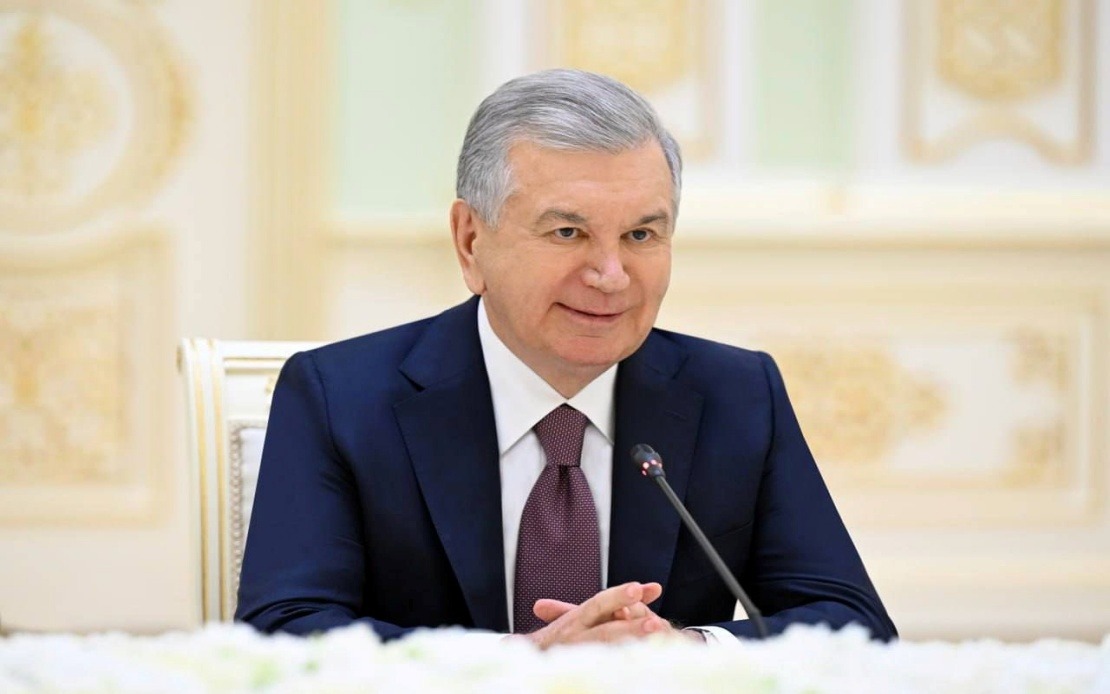
President Shavkat Mirziyoyev of Uzbekistan has put forth a vision of global cooperation grounded in Islamic heritage as a counterweight to rising international conflict and religious polarisation. Speaking at the First International Islamic Civilisation Forum in Tashkent, the Central Asian leader argued that the shared intellectual and spiritual legacy of Islamic civilisation offers enduring principles for fostering peace, mutual respect and human flourishing in an increasingly fractured world. The address, delivered on his behalf by presidential adviser Khayriddin Sultanov, positioned education, science and cultural understanding as essential tools for bridging divides among nations and religions.
Mirziyoyev's framing reflects a broader geopolitical strategy by Uzbekistan to position itself as a moderate Islamic nation committed to pluralism and international dialogue. In recent years, Tashkent has worked to rehabilitate its image, moving away from earlier associations with religious conservatism and isolation. The president's emphasis on enlightenment values and scientific progress signals an attempt to demonstrate that Islamic identity and modern development are compatible rather than contradictory, a message with potential resonance across Muslim-majority nations wrestling with questions of cultural identity and global integration.
The five-day forum, themed "The Path of Peace, Tolerance and Enlightenment" and held across Tashkent, Samarkand and Termez, brought together approximately 300 scholars, religious leaders, policymakers and cultural figures from more than 50 countries. This substantial gathering underscores the international appetite for dialogue on Islam's role in addressing contemporary challenges. The participation of diverse stakeholders from government, academia and religious institutions suggests serious efforts to move beyond rhetorical gestures toward substantive cooperation.
Central to Mirziyoyev's message was Uzbekistan's "Enlightenment Against Ignorance" initiative, originally introduced at the United Nations in 2017. This framework places science, education, culture and ethical values at the heart of societal development and conflict prevention. By framing these domains as interconnected and mutually reinforcing, Uzbekistan proposes a holistic approach to sustainable development that appeals to international development agencies and educational institutions seeking comprehensive solutions to poverty and instability.
The president drew particular attention to Central Asia's historical contributions to human knowledge, citing intellectual giants including Muhammad al-Khwarizmi, whose mathematical innovations shaped algebra; Abu Rayhan Biruni, renowned for astronomy and mathematics; Ibn Sina, whose medical works dominated European universities for centuries; and Mirzo Ulugh Beg, whose astronomical observations were groundbreaking. These references anchor Uzbekistan's contemporary agenda in genuine historical achievement, reminding the world that Islamic civilisation has made indelible marks on science, philosophy and medicine. For Malaysian audiences familiar with the region's Islamic heritage through trade routes and scholarly exchanges, this reminder of Central Asia's intellectual legacy carries particular cultural weight.
Mirziyoyev outlined an ambitious vision of a "Third Renaissance" for Uzbekistan, one rooted in scientific innovation, modern education and spiritual development. The invocation of renaissance imagery deliberately evokes Europe's transformative period of intellectual and cultural flowering, suggesting that Islamic societies can similarly experience renewal and progress. This aspirational framing attempts to reposition Islamic civilisation not as a historical relic but as a living force capable of driving contemporary innovation and human development.
The Islamic Civilisation Centre in Uzbekistan, which organised the forum alongside the Islamic World Educational, Scientific and Cultural Organisation (ICESCO), was described as an intellectual bridge connecting past and future, East and West. This metaphorical positioning suggests that institutional frameworks can facilitate dialogue and cooperation across geographical and cultural boundaries. For Southeast Asian nations, including Malaysia, such bridging institutions offer models for fostering regional understanding and cooperation on shared challenges.
The forum's substantive programming reflected the organisers' commitment to demonstrating Islam's ongoing relevance to contemporary concerns. Eleven plenary sessions examined various dimensions of Islamic civilisation, while four international scientific conferences hosted specialist scholars. Particularly significant were presentations on digital heritage preservation and artificial intelligence applications for maintaining Islamic manuscripts. These initiatives demonstrate efforts to integrate cutting-edge technology with cultural preservation, showing that Islamic heritage is not confined to museums but remains dynamically relevant to modern intellectual endeavours.
Exhibitions of rare manuscripts and cultural artefacts provided tangible evidence of Islamic civilisation's sophistication across multiple disciplines and centuries. For policymakers and academics in attendance, viewing these materials served as powerful reminders of the civilisation's historical grandeur and intellectual sophistication. Such visual and experiential elements often prove more persuasive than rhetoric alone in shifting perceptions and building coalitions for cooperation.
Mirziyoyev articulated a vision of science and education as "the greatest unifying forces of our time." This emphasis on shared intellectual endeavour as a foundation for peace represents an optimistic counternarrative to analyses emphasising civilisational conflict or religious incompatibility. By placing academicians, researchers and educators at the forefront of international cooperation, Uzbekistan proposes a model where intellectual exchange precedes and undergirds political agreements.
The forum's planned concluding outcomes underscore the ambition of its organisers. The anticipated Tashkent Declaration aims to establish commitments binding participants to specific cooperative actions. The Islamic Civilisation Centre's 2027-2030 development roadmap and planned cooperation agreements involving international organisations represent concrete institutional arrangements extending beyond the forum itself. These mechanisms attempt to translate rhetorical calls for unity into sustained, structured collaboration.
For Southeast Asia and Malaysia specifically, the forum's emphasis on preserving Islamic heritage while pursuing scientific modernisation carries relevance. Malaysia, as a Muslim-majority nation with significant engagement in Islamic education and thought, shares Uzbekistan's interest in demonstrating compatibility between Islamic identity and development. The forum's focus on educational cooperation and scholarly exchange offers potential templates for expanding academic partnerships within the Islamic world, particularly in fields where Central Asian expertise may complement Southeast Asian strengths.
The timing and scope of this initiative reflect growing recognition among Islamic nations that cooperative approaches to cultural preservation and intellectual advancement serve strategic interests. As geopolitical tensions rise globally, forums emphasising dialogue, mutual understanding and shared heritage offer alternatives to narratives of inevitable conflict. Whether such initiatives ultimately shift state behaviour or merely facilitate elite-level conversation remains an open question, but their proliferation suggests serious commitment by participating nations to maintaining space for dialogue and cooperation grounded in civilisational heritage.

