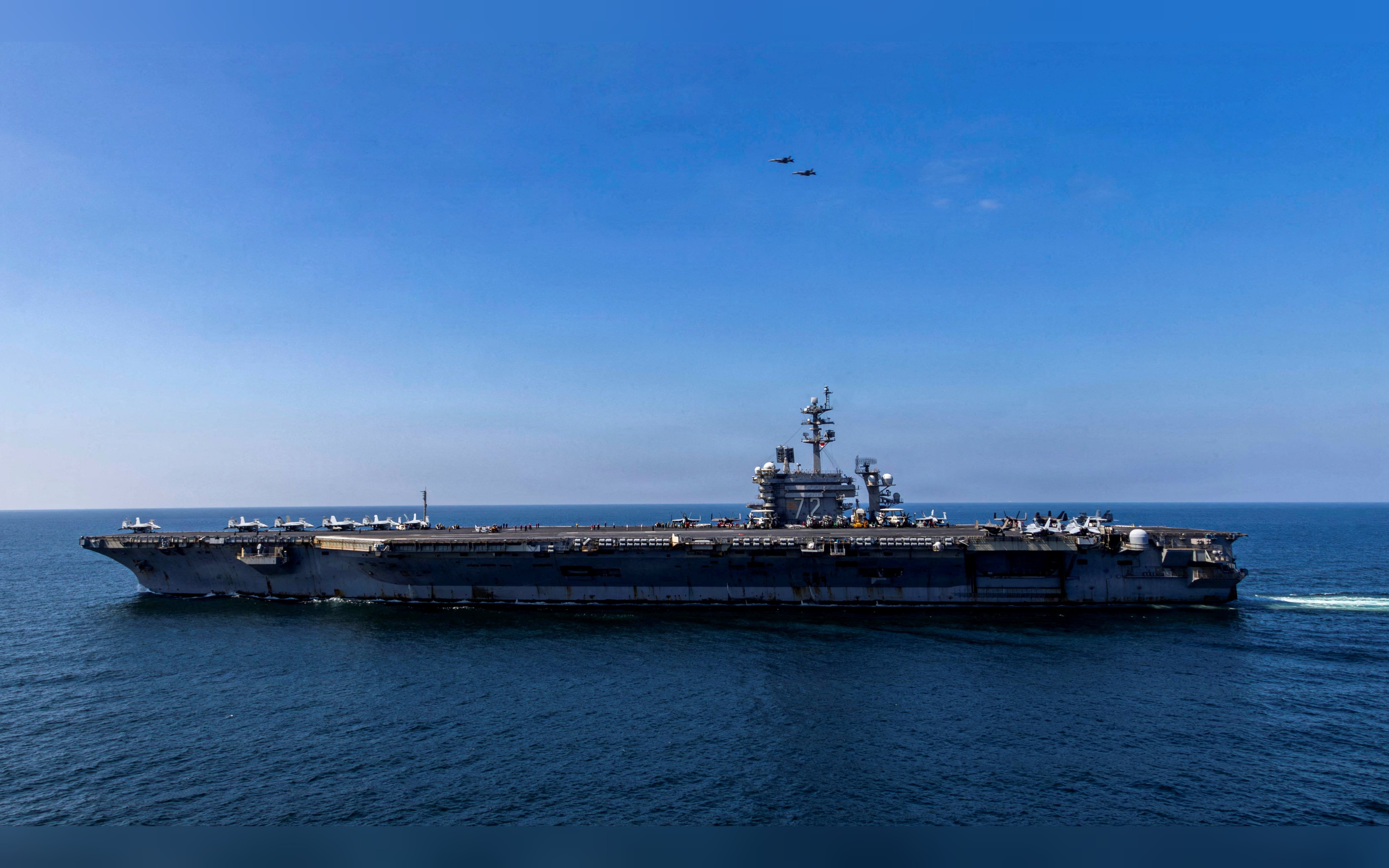
President Donald Trump confirmed on Friday that the USS Abraham Lincoln aircraft carrier will be relieved from its West Asia station and replaced by another carrier, responding to mounting concerns about the extended deployment conditions faced by American naval personnel aboard the vessel. The rotation marks the conclusion of one of the longest and most demanding deployments for the carrier strike group in recent years, though Trump's characterization of the deployment duration sparked debate about military readiness and personnel welfare.
When questioned about the necessity of relieving the carrier, Trump told reporters that the ship was already moving or would depart shortly. He noted that a comparable vessel would take its position, part of the United States Central Command's broader strategy to maintain continuous carrier presence in the region. Trump's terse response to whether the deployment had extended too long—stating "No. Not nearly long enough"—contrasted sharply with growing acknowledgment from military leadership that the crew had endured significant hardship during their extended assignment.
The USS George Washington has been selected to replace the Lincoln as part of previously scheduled rotation procedures within the Navy's operational deployment cycle. This transition represents standard protocol for maintaining American naval capabilities across global hotspots, though the particular circumstances surrounding the Lincoln's deployment have elevated its significance beyond routine carrier movement. The replacement carrier's arrival timeline and operational readiness remain subject to logistical planning and weather considerations typical of such large-scale naval movements.
The USS Abraham Lincoln began its deployment in November but was redirected to the Middle East in January amid escalating regional tensions. The carrier subsequently accumulated more than 250 consecutive days away from home port, with the vessel spending the last 200 days without making port calls—an unusually extended period that strained both the vessel's infrastructure and crew morale. This continuous operational tempo significantly exceeds typical deployment schedules and has prompted heightened scrutiny from military families, Congressional representatives, and naval command alike regarding sailor welfare and resource sustainability.
Senator Richard Blumenthal raised formal concerns through correspondence addressed to Defence Secretary Pete Hegseth and acting Navy Secretary Hung Cao, documenting multiple welfare issues reportedly plaguing the carrier. His letter detailed shortages affecting essential supplies, documented water contamination problems, persistent plumbing failures throughout the vessel, observable deterioration in sailors' mental health status, hazards related to flight deck operations, and critical mail disruptions that have prevented families from sending care packages to deployed personnel for months. These conditions underscore the human cost of extended military operations and reflect longstanding challenges in sustaining adequate resources during protracted deployments.
Acting Navy Secretary Hung Cao issued a formal statement acknowledging the Lincoln's return while emphasizing that the crew "crushed their deployment" and would return home soon following established rotation protocols. Cao prioritized reassurance regarding naval personnel safety, declaring that "the safety and security of our Sailors and Marines always comes first." His statement reflected institutional recognition that crew welfare cannot be indefinitely subordinated to operational demands, even during wartime conditions. The Naval leadership's public positioning balanced acknowledgment of mission accomplishment against implicit admission that deployment extensions exact genuine costs.
Cao attributed the extended deployment to mission requirements, explaining that combat operations inherently demand operational flexibility beyond standard peacetime schedules. He characterized wartime deployments as particularly taxing, noting that combat operations disrupt normal routines and introduce unavoidable uncertainty requiring constant adaptation. His remarks contextualized the hardships documented by Senator Blumenthal within the broader framework of wartime necessity, though they simultaneously validated concerns about the physical and psychological toll on service members. This tension between mission demands and personnel welfare remains central to contemporary military operations policy debates.
Official statistics released by Cao revealed that the Lincoln completed 266 days of total deployment, including 200 days operating in active combat zones. The carrier's aircraft squadrons executed more than 10,000 combat sorties, delivering over 1.5 million pounds of ordnance across multiple operational objectives. These figures quantify the operational intensity experienced by the carrier strike group and substantiate military claims regarding mission accomplishment. The sheer volume of flight operations and weapons deployment underscores why extended rotations strain vessel systems and personnel resilience to their limits.
Acknowledging the deployment's impact on crew wellbeing, Cao referenced that a small number of sailors and Marines received mental health treatment during their extended assignment. He emphasized that no deaths resulted from these mental health interventions, appearing to suggest that despite acknowledged psychological strain, naval medical personnel successfully prevented tragic outcomes. This statement tacitly confirms that mental health deterioration among deployed personnel represents an ongoing challenge requiring preventive intervention, even as it frames the Navy's response positively.
For Malaysian readers and the broader Southeast Asian strategic community, the USS Abraham Lincoln deployment cycle carries substantial implications regarding American military presence and commitment throughout crucial maritime regions. The carrier's extended positioning in West Asia reflects broader United States strategy to project power across critical sea lanes and reassure regional partners amid geopolitical competition. The eventual transition to the USS George Washington ensures continued American naval prominence despite periodic rotations, maintaining the kind of sustained military footprint that influences regional calculations regarding security alignments and strategic autonomy.
The deployment's challenges and resolution process illuminate persistent tensions within American military operations between sustaining continuous global presence and maintaining personnel welfare standards. Malaysia and other regional states benefit from American naval capabilities that ensure freedom of navigation through vital international waters, yet the human costs revealed through the Lincoln deployment raise questions about sustainability of extended military commitments. As regional tensions persist and military presence remains strategically crucial, the balance between operational necessity and personnel welfare will continue shaping American military policy and deployment decisions throughout Southeast Asia and beyond.

