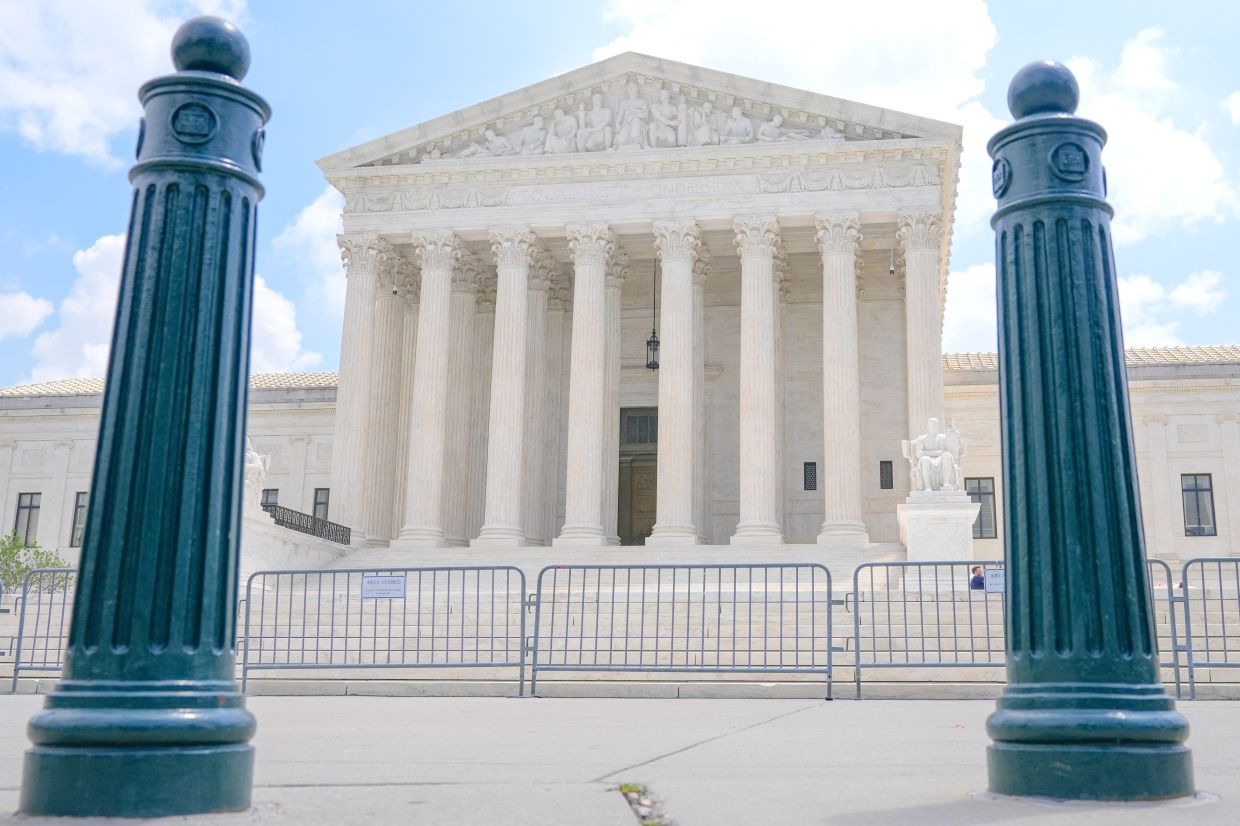
The United States Supreme Court has declined to intervene in a high-stakes dispute over Texas's App Store Accountability Act, effectively clearing the way for the state to enforce age verification requirements on digital application downloads. Justice Samuel Alito issued brief one-sentence orders rejecting emergency petitions filed by groups challenging the law on constitutional grounds, signalling that the nation's highest court sees insufficient legal basis to halt the measure at this stage.
The Texas law has become a flashpoint in the broader debate over protecting minors from unrestricted online content while preserving fundamental freedoms of expression and digital access. A three-judge panel from the 5th US Circuit Court of Appeals ruled in June that the law could proceed after suspending a previous district court decision that had found it unconstitutional. The Supreme Court's refusal to stay that decision essentially allows Texas to move forward with implementation, pending further legal challenges through the normal appellate process.
The primary challengers bringing constitutional claims against the statute include the Computer & Communications Industry Association, which represents major technology firms, and Students Engaged in Advancing Texas, a grassroots organization focused on digital rights. Both organisations argue that age verification mechanisms function as gatekeepers that unconstitutionally restrict access to protected speech, including legitimate news content, educational resources, and material designed for adolescent audiences. They contend that such restrictions violate First Amendment protections by preventing lawful distribution of non-harmful information to willing recipients.
The constitutional arguments centre on whether the state possesses adequate authority to mandate age verification without unduly burdening free speech rights. Attorneys representing the challengers emphasised that parental supervision should remain within the domain of family authority rather than government mandate, noting that the law imposes a blanket restriction rather than providing parents with tools and information to make informed decisions about their children's device usage. They framed the issue as one fundamentally about individual liberty and parental prerogatives against state control.
Texas Attorney General Ken Paxton's office has mounted a vigorous defence of the legislation, framing it as a reasonable protective measure for vulnerable youth in an increasingly complex digital landscape. State lawyers argue that the statute addresses genuine harms arising from uncontrolled app store access, including privacy invasions, unauthorised data sales, and exposure to age-inappropriate content without parental awareness or consent. From this perspective, age verification represents a proportionate response to documented risks associated with unrestricted digital downloads.
The dispute reflects deeper tensions within American constitutional jurisprudence regarding the balance between protecting minors and preserving open expression. Texas lawmakers drafted the legislation after observing how readily children could access applications without meaningful oversight, potentially exposing them to services that harvest personal information or deliver content unsuitable for their age group. The state characterises such access as inherently problematic, particularly when young users lack understanding of the implications of granting applications extensive permissions over their devices and data.
The 5th Circuit's decision in June represented a significant victory for state authority advocates, suggesting at least some federal judges believe such protective measures fall within permissible state regulatory power. By refusing to block the law, the Supreme Court has indicated it will not immediately intervene, though the justices have not yet ruled on the underlying constitutional merits. This procedural posture leaves open the possibility of future Supreme Court review should lower courts ultimately declare the law unconstitutional on full consideration.
For Malaysia and the broader Southeast Asian region, the Texas development carries broader implications. Several countries across Asia have been contemplating similar age verification and content protection measures, and US legal developments influence how regional governments approach digital regulation. The relative openness the American judiciary is showing toward such measures may embolden policymakers in countries already considering parental control frameworks and age-gated access systems.
The practical consequences of the law's implementation remain unclear, as the technology industry may face significant compliance challenges. App store operators, whether based in Texas or operating within the state, must now design systems capable of verifying user age at download points, raising questions about data collection, privacy safeguards for age verification information, and the technical feasibility of consistent implementation across diverse applications and platforms. These practical concerns underpin much industry opposition to the statute.
The Supreme Court's non-intervention should not be interpreted as a final judgment on constitutionality; rather, it reflects the justices' determination that the emergency circumstances did not warrant immediate review. The law may yet face additional constitutional challenges as it takes effect, potentially returning to the Supreme Court for full consideration after lower courts complete their analysis. For now, Texas remains positioned to enforce the age verification requirement, assuming no interim legal developments produce different results.

