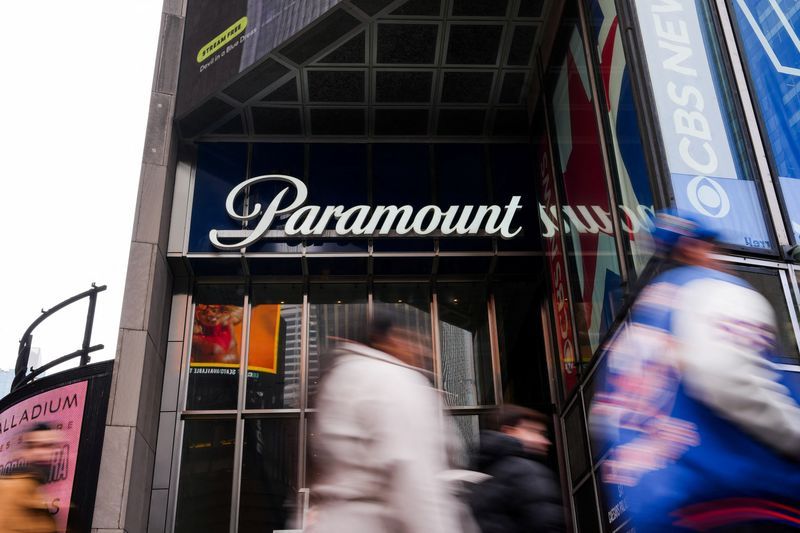
A coalition of twelve American states has launched a legal challenge against the proposed merger of Paramount and Warner Bros Discovery, contending that the combination will create dangerous market concentration in both theatrical film distribution and cable television networks. California Attorney General Rob Bonta articulated the states' concerns at a Monday news conference held symbolically in front of the Hollywood sign, warning that the consolidation would ultimately disadvantage consumers and independent cinema operators across the nation.
The lawsuit centres on how the merged entity would wield disproportionate power over two critical sectors of the entertainment economy. By combining two of America's five major film distributors, the transaction would allow the resulting corporation to dictate terms to theater owners with minimal competitive constraint. California and its partner states—including Oregon, New York, and Minnesota—contend that studios operating under a single Paramount-Warner banner could demand significantly higher percentages of box-office revenue, a practice already evident in negotiations over blockbuster releases where studios routinely capture up to 60 percent of ticket proceeds.
The concentration metrics cited in the complaint underscore the scale of the consolidation. The merged company would control more than 27 percent of the market in both theatrical film distribution and basic cable television networks. This level of vertical integration poses particular risks to theater operators, who would find themselves negotiating with a single entity controlling a vast library of content essential to their commercial viability. As independent theater chains already grapple with diminished box-office returns—still running 16.3 percent below 2019 pre-pandemic levels despite year-to-date 2026 receipts of $5.1 billion—any further pressure on their revenue splits threatens their ability to invest in facility upgrades and customer amenities.
Bonta articulated the consumer-facing consequences that would likely follow consolidation. Higher ticket prices are probable, he warned, but equally concerning is the likelihood that theaters would economize on capital investments that enhance the moviegoing experience—premium seating, expanded concession offerings, and advanced projection technologies. These enhancements have become essential competitive tools as cinemas attempt to differentiate themselves from streaming platforms. Faced with squeezed margins, proprietors would logically defer discretionary spending, creating a downward spiral in theatrical quality precisely when the industry needs to attract audiences back to physical venues.
The theater industry's own representatives have mobilized against the deal. Cinema United, a trade association representing independent and regional chains, issued a statement warning that further consolidation would have lasting ramifications extending beyond Hollywood to smaller communities where local cinemas function as cultural and economic anchors. Michael O'Leary, the group's president and chief executive, emphasized that Main Street theaters serve functions beyond entertainment, providing gathering spaces that strengthen community cohesion. An unnamed executive with an independent chain expressed particular anxiety about the combined studio's capacity to impose punitive licensing terms, noting that resistance might prove commercially dangerous when a single distributor controls the content essential to profitability.
Paramount has mounted an aggressive counterargument to these contentions. Under the leadership of CEO David Ellison, the company issued a statement characterizing the lawsuit as a misapplication of antitrust doctrine and a mischaracterization of competitive dynamics within the contemporary entertainment landscape. The company further argued that delaying the transaction would inflict harm on entertainment workers already diminished by technological disruption and reduced employment opportunities in California. This positioning—framing the merger as necessary for industrial stability rather than harmful—reflects Paramount's determination to move forward despite regulatory headwinds.
Financial pressures reinforce Paramount's urgency to complete the transaction. Ellison has committed to paying Warner Bros Discovery shareholders a quarterly "ticking fee" of approximately 650 million dollars if the merger does not close by October. This escalating cost structure creates mounting pressure to resolve the regulatory challenge, potentially incentivizing settlement or creative restructuring of deal terms. The financial commitment signals Paramount's seriousness while simultaneously underscoring the stakes: each month of regulatory delay depletes resources that could otherwise support operational investments.
The states' complaint draws historical parallels to strengthen their competitive analysis. They cite the 2019 Walt Disney acquisition of Fox entertainment assets as a cautionary precedent, demonstrating how consolidation reduces content diversity. Between 2015 and 2018, Disney and Fox together distributed 112 wide-release films annually; after consolidation, that figure collapsed to 54 films across 2022 to 2025. This precedent suggests that a Paramount-Warner merger would likely reduce the overall volume of theatrical releases, further limiting the content available to independent theaters and reducing consumer choice.
The implications for cable television distribution extend the competitive concerns beyond theatrical exhibition. Warner and Paramount collectively control networks including CNN, TNT, Food Network, and HBO—a portfolio that would grant the merged entity substantial leverage over cable and satellite providers. Currently, these distributors compete to market their networks and negotiate favorable carriage terms. Post-merger, they would eliminate internal competition, presenting cable operators with a take-it-or-leave-it proposition. Television providers would possess minimal negotiating leverage, likely resulting in higher carriage fees that ultimately flow through to consumer cable bills—a concern Bonta specifically emphasized in his remarks.
What the regulatory challenge notably does not contest is Paramount's planned integration of its Paramount+ streaming service with Warner Bros' HBO Max. This omission suggests that regulators have accepted the companies' argument that streaming competition sufficiently constrains market power in the digital realm, even as they worry about concentration in traditional theatrical and cable television segments. This selective objection reveals a nuanced regulatory theory: that streaming's emergence has eroded studios' power over home entertainment while paradoxically making theatrical and cable assets more valuable as the remaining scarce resources within an increasingly fragmented media ecosystem.
The lawsuit unfolds against a backdrop of industry-wide fragmentation and consumer behavior shifts that have fundamentally restructured entertainment economics. The pandemic accelerated streaming adoption, theatrical attendance remains depressed, and independent cinemas face existential pressure from both macro trends and negotiating disadvantages. In this context, the state attorneys general are essentially arguing that further consolidation among already-powerful studios would tip an already-precarious balance decisively against smaller exhibitors and toward corporate giants. Whether courts will accept this reasoning—that antitrust law requires maintaining competitive distribution channels even as the overall theatrical market shrinks—remains uncertain, but the legal challenge signals that regulators continue viewing theatrical competition as a public interest worthy of protection.

