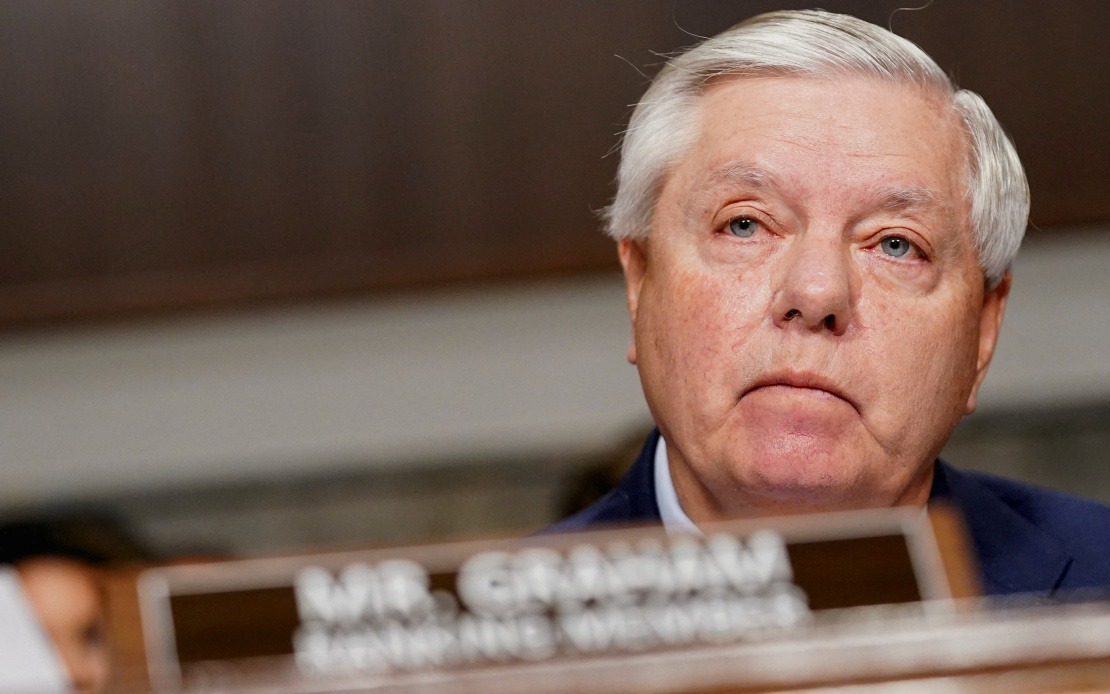
US Senator Lindsey Graham, a prominent Republican figure from South Carolina, has died at the age of 71 following a brief and unexpected illness, according to an announcement from his office on Sunday. The senator passed away on Saturday evening, July 11, with his family requesting prayers and privacy during what they described as an incredibly difficult period.
Graham's death marks a significant loss in American politics, particularly within Republican circles where he maintained considerable influence and visibility. The South Carolina senator had established himself as a central figure in the party's leadership structure, commanding respect across the chamber despite his occasional departures from strict party orthodoxy on certain policy matters.
A staunch supporter of former President Donald Trump, Graham had developed a particularly close working relationship with the Republican leader in recent years. This alliance shaped much of his political agenda and public profile during Trump's presidency and beyond. His loyalty to Trump positioned him as an influential voice within the Republican Party establishment during a period of significant internal party dynamics and realignment.
Graham's legislative portfolio was substantial and diverse. He chaired the Senate Budget Committee, a position that granted him considerable authority over fiscal matters and budgetary allocations at the federal level. His committee responsibilities reflected his seniority and standing within the Senate hierarchy, allowing him to influence the direction of major appropriations and spending decisions that affect the entire nation.
Throughout his 22 years in the Senate, Graham built a legislative record spanning multiple decades of American foreign and domestic policy. First elected in 2002, he secured reelection in 2008, 2014, and 2020, demonstrating sustained support from South Carolina voters across varied political climates. At the time of his death, Graham was actively campaigning for a fifth consecutive six-year Senate term, with the November election approaching. This campaign would have extended his tenure into yet another congressional cycle, allowing him to continue shaping legislative priorities for years to come.
Graham's foreign policy engagements remained active even in recent weeks. He had recently traveled to Kyiv, Ukraine, where he met with President Volodymyr Zelenskyy on Friday—just one day before his passing. This visit reflected his continued involvement in international affairs and the ongoing conflict in Ukraine, demonstrating his commitment to maintaining high-level diplomatic contacts on critical geopolitical matters affecting the broader Western alliance.
The sudden nature of Graham's illness underscores the unpredictability of health crises and their capacity to alter the political landscape swiftly. His unexpected death will likely trigger significant changes in Senate dynamics, committee assignments, and political calculations for the upcoming election cycle. The vacuum left by his departure will be felt across multiple legislative areas where he wielded considerable influence and expertise.
Graham's political career reflected both consistency and evolution in his positions. He served as a bridge figure in many respects, maintaining relationships across different Republican factions while remaining a reliable conservative voice on most policy matters. His approach to politics, characterized by pragmatism mixed with principled stands on selected issues, distinguished him from some of his more ideologically rigid colleagues.
The implications of his death extend beyond the immediate loss to the Senate and Republican Party. South Carolina will need to navigate succession procedures and special election processes to fill the vacant seat, adding another layer of complexity to the state's political calendar. The timing, occurring during an election year, adds urgency to the process of determining how his seat will be filled and who will complete his term.
For regional observers, particularly in Southeast Asia, Graham's passing removes a significant voice in American foreign policy, especially regarding alliance management and military commitments in the Indo-Pacific region. His positions on international affairs, military strategy, and alliance relationships had shaped discussions about America's global posture and its engagement with partners like South Korea, Japan, and Australia. His absence from these ongoing deliberations may create shifts in how the United States approaches complex geopolitical questions in the years ahead.

