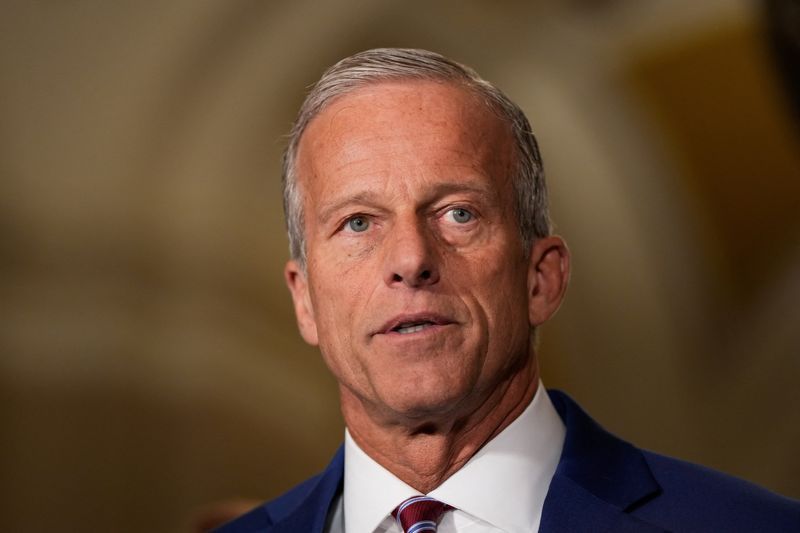
The United States Senate is pushing forward with sweeping cryptocurrency legislation that could reshape how digital assets are regulated at the federal level. On Saturday, August 8, Senate Majority Leader John Thune filed procedural motions to advance the Clarity Act when lawmakers return from their August recess in mid-September, positioning the bill for a full floor vote. The move signals that Republican leaders believe they can assemble sufficient support despite significant Democratic opposition, though the path to passage remains uncertain and contentious.
The Clarity Act represents the crypto industry's most significant opportunity yet to establish a comprehensive national regulatory framework. Currently, digital asset regulation in the United States is fragmented across multiple federal agencies with overlapping and sometimes contradictory authority. This legislation would clarify which regulators oversee different categories of digital tokens, define the legal status of cryptocurrencies as either securities or commodities, and establish uniform standards across states. For an industry that has long complained about regulatory ambiguity, such clarity could accelerate mainstream adoption and encourage institutional investment.
Passage requires navigating a narrow political path. With Republicans controlling the Senate, the bill needs support from all voting Republicans plus at least eight Democrats to reach the 60-vote threshold necessary to overcome a filibuster. This arithmetic means that the outcome depends entirely on Democratic votes, giving that caucus significant leverage in negotiations. Some Democrats have expressed openness to cryptocurrency regulation, particularly legislators representing states with significant crypto industry presence, but many remain skeptical about the bill's provisions and what they perceive as excessive deference to industry interests.
The cryptocurrency industry invested substantially in the 2024 election to create conditions favourable for passing this legislation. Trade associations, company executives, and crypto-focused political action committees collectively spent more than $119 million supporting pro-crypto political candidates. This represents one of the largest coordinated industry spending campaigns in recent election cycles, underscoring how much is at stake for major cryptocurrency companies. The investment reflects industry confidence that sympathetic lawmakers could deliver regulatory reform that would accelerate market growth and reduce legal uncertainty.
President Donald Trump has positioned cryptocurrency regulation as a priority for his second administration, providing significant White House support for the bill's passage. Trump's administration has publicly advocated for the legislation and coordinated with Senate Republicans on legislative strategy. This executive backing carries particular weight given Trump's personal financial interests in the crypto sector. Trump reported more than $1.4 billion in income derived from his family's crypto ventures during the previous year, raising concerns among critics about potential conflicts of interest influencing his policy advocacy.
The Clarity Act would represent Trump's second major legislative victory in the crypto policy arena. He previously signed legislation supporting stablecoins—cryptocurrencies designed to maintain stable values tied to the US dollar—into law last year. Stablecoins are increasingly important for the functioning of cryptocurrency markets and have applications beyond speculation, including potentially serving as faster payment systems. Together, these two legislative achievements would constitute a dramatic shift toward a more crypto-friendly regulatory environment compared to the prior administration's approach.
Banking industry opposition presents another complicating factor. Major financial institutions have actively lobbied against the Clarity Act, particularly objecting to provisions that would allow cryptocurrency companies to offer rewards on customer stablecoin holdings. Banks view these provisions as unfairly enabling crypto firms to compete for deposits without being subject to the same regulatory requirements that constrain traditional banking. This banking sector opposition could influence some moderate Republican senators concerned about financial system stability and the health of their regional banking constituencies.
Democratic concerns extend beyond industry-specific disputes about competitive fairness. Many Democrats are pushing for stronger restrictions on government officials' cryptocurrency ventures, citing concerns about corruption and conflicts of interest. Negotiations on these governance provisions remain fluid and could ultimately determine whether Democrats provide the crucial votes needed for passage. Some Democratic senators may be willing to support the bill if additional safeguards prevent federal officials from profiting excessively from cryptocurrency holdings or investments.
The timing of the procedural filing is strategically significant. By moving forward before the August recess, Senate leadership indicates serious intent to prioritize the legislation when the chamber reconvenes. The scheduling allows both supporters and opponents time during the recess to mobilize constituents, negotiate among themselves, and prepare arguments for the September floor debate. This parliamentary tactic also prevents the bill from languishing indefinitely, forcing a resolution one way or another relatively soon.
For Malaysian and Southeast Asian observers, the Clarity Act's potential passage carries broader implications. Many regional economies are developing their own cryptocurrency policies while watching American regulatory approaches carefully. A comprehensive federal framework in the United States would likely influence how other countries structure their own digital asset regulations. Additionally, passage would signal that major democratic nations are moving toward accommodating rather than restricting cryptocurrency development, potentially encouraging more aggressive crypto adoption strategies across Asia.
The bill's fate remains genuinely uncertain despite Republican procedural moves. While controlling the Senate gives Republicans procedural advantages, they cannot force passage without Democratic participation. The eight to ten Democratic votes required to reach 60 are not guaranteed and will depend on complex internal party negotiations, constituent pressures, and the final language of any amendments addressing conflict-of-interest concerns. The coming weeks of recess negotiations will determine whether the cryptocurrency industry's substantial electoral investment and the Trump administration's policy priority ultimately translate into legislative success.

