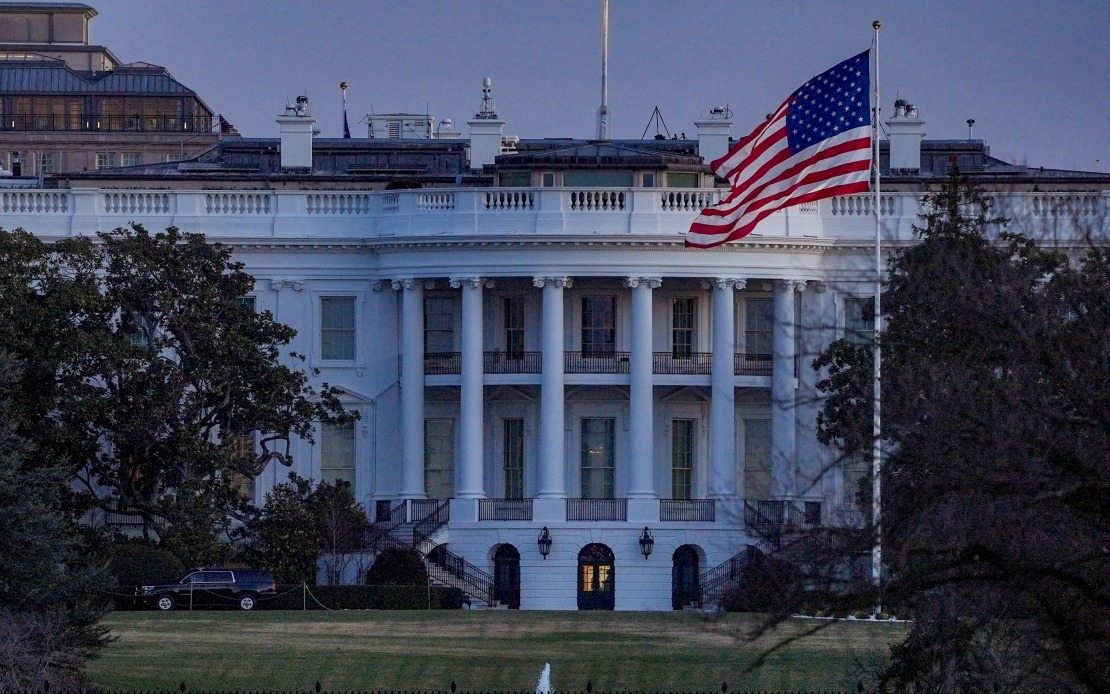
The United States Secret Service is grappling with what its Director Sean Curran characterizes as a substantially heightened and unprecedented threat environment, a frank acknowledgment delivered during a Wednesday briefing as the agency prepares security arrangements for the White House Correspondents' Association dinner. Curran's candid remarks underscore the mounting complexity of protecting the presidency in what appears to be an unusually volatile security landscape, with concerns extending beyond the sitting president to encompass former presidents, vice presidents, and other senior officials requiring protective details.
The backdrop to Curran's statement reflects a troubling pattern of violence and alleged plots that have emerged over the past two years. In July 2024, during a campaign rally in Pennsylvania, Trump sustained a gunshot wound to the ear—the first in what would become a series of attempts on his life. That incident marked a dramatic escalation in American political violence, occurring in full public view and capturing international attention. The incident demonstrated significant lapses in coordination between local law enforcement and federal protective agencies, prompting subsequent reviews of security protocols and coordination mechanisms.
A second assassination attempt occurred in September 2024 at Trump's private golf club in Florida, further illustrating the vulnerability of the former and now sitting president despite protective measures. These consecutive incidents within months raised serious questions about the adequacy of threat assessment protocols and the ability of security services to anticipate and prevent such attacks. Each incident prompted internal reviews and adjustments to protective procedures, yet the threats continued to materialize.
Most recently, in April 2026, a shooting erupted during the White House Correspondents' Association dinner itself, an event attended by Trump and numerous senior government officials, journalists, and dignitaries. The intrusion of violence into one of Washington's most high-profile ceremonial events represented a particularly alarming breach, occurring within the symbolic heart of American political and media establishments. The dinner was subsequently rescheduled from its original April date to July 24, with enhanced security measures implemented for the relocated event. The suspect apprehended in connection with the April shooting has been charged with multiple counts, including attempted assassination of the US president, underscoring the gravity with which prosecutors view the incident.
Complicating this domestic threat picture are allegations of state-sponsored plots. Trump has publicly claimed to be the number-one target for assassination by Iran, assertions that gain weight from an FBI disclosure in June 2026 regarding an uncovered plot connected to a UFC event at the White House. The Department of Justice subsequently classified this plot as a distinct assassination attempt against the president, suggesting coordinated foreign intelligence activity rather than isolated domestic incidents. In a striking statistic highlighted by Trump, he noted that the historical probability of a sitting US president not surviving their full term stands at 5.2 per cent—a statistical reminder of the perennial risks attendant to the office.
Despite the litany of threats and actual attempts on his life, Trump has downplayed personal security concerns, stating on Tuesday that he saw no particular reason to feel unsafe. This apparent equanimity contrasts sharply with the palpable anxiety evident in Curran's acknowledgment of the heightened threat environment. The disconnect between the protectee's public insouciance and the protector's formal recognition of danger illustrates the tension inherent in presidential security arrangements, where elected officials must project confidence while security professionals operate from threat assessments grounded in concrete evidence of persistent danger.
For Malaysian and Southeast Asian observers, the cascade of security breaches and assassination attempts in the world's largest democracy carries implications for regional stability and international norms. The United States has historically served as an anchor of regional security architecture in East and Southeast Asia, and internal political violence of this magnitude raises questions about American institutional resilience and the continuity of foreign policy commitments. Further, the apparent involvement of state actors such as Iran in plots against American leadership introduces dimensions of international tension that reverberate across global security frameworks and bilateral relationships.
The Secret Service's operational response to this environment remains largely confidential, though Curran's public acknowledgment suggests a significant reallocation of resources, personnel, and intelligence-gathering capacity. The agency faces the complex challenge of protecting an unusually large protective detail—including not only the sitting president but also his predecessor and other former presidents—while simultaneously responding to specific, credible threats from both domestic actors and foreign intelligence services. This requirement to maintain protection across multiple threat vectors simultaneously has likely strained the organization's already substantial budget and personnel resources.
The rescheduling and re-execution of the White House Correspondents' Association dinner itself symbolizes the extent to which security considerations now shape even symbolic civic rituals in Washington. The delay from April to July and the implementation of enhanced screening and protective measures represent practical acknowledgments that the traditional vulnerability of such events—their open, accessible nature—can no longer be taken for granted. Media organizations and government officials attending such events now operate within frameworks fundamentally altered by the threat environment that Curran has formally recognized.
Looking forward, the heightened threat environment identified by Curran is likely to persist through 2026 and potentially beyond, given the combination of domestic political polarization, the emergence of assassination attempts as recurring rather than anomalous phenomena, and the sustained interest reportedly demonstrated by hostile foreign actors. The Secret Service must simultaneously prepare for the possibility of additional attempts while maintaining the public visibility and accessibility that democratic governance demands. This balancing act between security imperatives and democratic openness will likely define the agency's operational posture for the foreseeable future.

