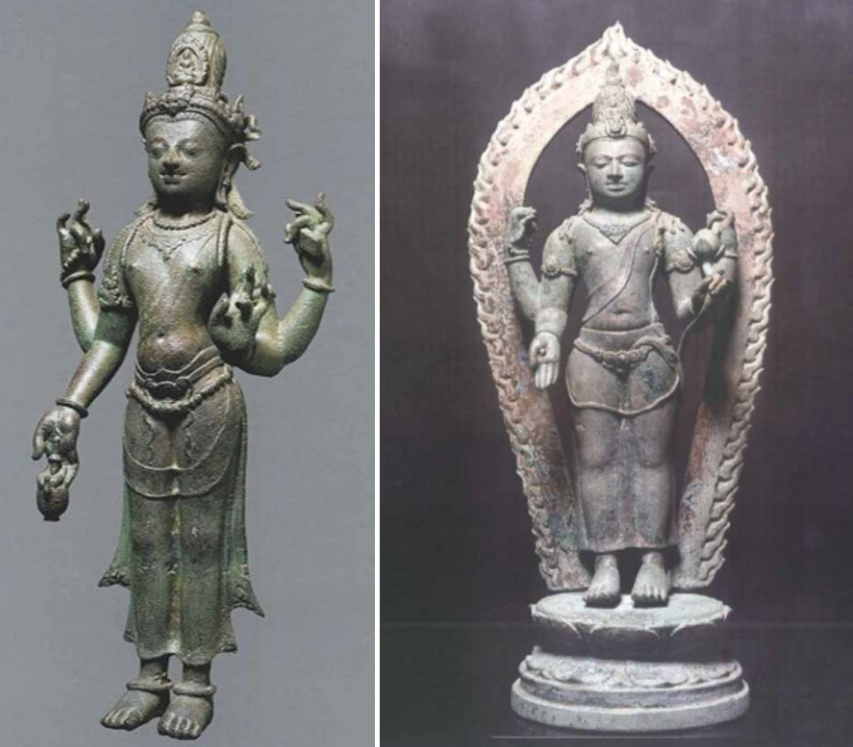
Two eighth-century bronze statues of the four-armed Avalokiteshvara have been formally returned to Indonesia by the United States, concluding a decades-long odyssey that began when the sacred sculptures were looted from Indonesian archaeological sites and trafficked through the international black market. The repatriation ceremony took place at the Indonesian Consulate in New York last week, representing a watershed moment in the ongoing battle against the unlawful removal and sale of Southeast Asian cultural treasures. These artefacts emerged as key evidence in investigations targeting Douglas Latchford, a notorious British antiquities dealer whose clandestine operations facilitated the plundering of ancient temples and archaeological sites across the region for more than four decades.
The statues' recovery exemplifies how modern investigative techniques and international cooperation can unwind complex trafficking networks that once seemed impervious to law enforcement. Latchford, who operated primarily from Bangkok and held Thai citizenship since the 1960s, had systematically sourced looted antiquities from Cambodia and other Southeast Asian nations, obscuring their true origins through false documentation and selective withholding of provenance information. Between 2003 and 2007, he sold the two Indonesian bronze sculptures along with numerous other artefacts to an American private collector, deliberately concealing their illicit extraction from archaeological contexts. This deception allowed stolen cultural property to penetrate mainstream art markets and private collections, where such objects often remained hidden from authorities for years.
When US prosecutors filed charges against Latchford in 2019, they detailed an enterprise spanning multiple decades that had channelled priceless Khmer and broader Southeast Asian antiquities to wealthy collectors and prestigious museums worldwide. Latchford contested the allegations, but his death the following year removed the possibility of trial. However, the investigation's momentum proved unstoppable. In 2021, the American collector who had purchased the Indonesian statues and other pieces voluntarily surrendered thirty-four Cambodian and Southeast Asian antiquities recovered from Latchford's network, setting in motion the bureaucratic and diplomatic processes that culminated in the formal repatriation. This voluntary surrender by the collector demonstrates an increasingly widespread recognition among art purchasers of the moral and legal imperative to cooperate with authorities investigating stolen cultural property.
The Avalokiteshvara sculptures themselves carry profound spiritual and historical significance. These standing bronze representations depict a bodhisattva central to Buddhist theology, embodying compassion and mercy across multiple Asian traditions. The sculptures represent eighth-century craftsmanship from a period when Indonesian kingdoms possessed sophisticated artistic capabilities and maintained dynamic cultural exchanges across the region. By looting these statues and dispersing them into private Western collections, traffickers severed these works from their historical and religious contexts, diminishing their scholarly value and denying Indonesian people access to tangible expressions of their cultural heritage. The precise archaeological sites from which the statues originated remain unknown, complicating efforts to restore them to their original locations and limiting what researchers can learn about their provenance and significance within ancient Indonesian societies.
US Attorney Jay Clayton, addressing attendees at the repatriation ceremony, underscored the American government's commitment to combating antiquities trafficking and praised the voluntary cooperation of the collector involved. Clayton's remarks reflected a broader institutional shift within US law enforcement, which increasingly recognises cultural heritage protection as integral to international relations and rule of law. The Office of the US Attorney for the Southern District of New York has developed specialised expertise in prosecuting trafficking networks, working closely with Homeland Security Investigations to trace illicit antiquities through complex international supply chains. This coordinated approach has proven far more effective than traditional customs enforcement alone, enabling authorities to identify buyers, sellers, intermediaries, and documentation fraudsters operating within loosely-connected criminal enterprises.
The Indonesian repatriation represents only the latest in a series of successful recoveries involving looted Southeast Asian cultural property. In 2024, American authorities returned three Indonesian artefacts to their homeland, including a stone relief from the Majapahit period, a seated bronze Buddha statue, and a standing bronze Vishnu sculpture, collectively valued at approximately Rp6.5 billion. Those objects had been recovered during investigations into the trafficking network operated by Indian-American dealer Subhash Kapoor and American antiquities dealer Nancy Wiener, who distributed looted antiquities through their Manhattan-based Art of the Past gallery. The Kapoor investigation alone has resulted in the recovery of more than 2,500 antiquities with an estimated combined value exceeding $143 million, demonstrating the staggering scale of illicit trafficking operations that continue to flourish in the absence of rigorous enforcement.
Latchford's legacy extends beyond the Indonesian statues now returned. Following his death, his daughter agreed to repatriate his entire collection, valued at more than $50 million, to Cambodia. This transfer has catalysed a broader reckoning within the international art world, as museums and private collectors across the United States, Europe, and Australia have voluntarily returned dozens of Khmer artefacts subsequently identified as connected to Latchford's network. Each repatriation reinforces the principle that stolen cultural property belongs in the nations from which it was taken, and that institutional possession of such objects carries reputational and legal risks. The cumulative effect of these recoveries has fundamentally altered the landscape of Khmer antiquities trading, making it substantially riskier for dealers and collectors to acquire objects without ironclad provenance documentation.
For Southeast Asian nations grappling with the systematic looting of their cultural heritage, these American repatriations offer both concrete victories and sobering reminders of ongoing vulnerabilities. Indonesia and Cambodia have suffered disproportionate losses of archaeological materials, particularly from temple sites and burial grounds vulnerable to organised looting expeditions. The trafficking networks targeting these regions have evolved in sophistication, employing forged documentation, deliberate fragmentation of artefact batches to obscure their origins, and laundering through reputable auction houses and galleries. Dealers like Latchford leveraged their expertise and regional connections to convince buyers that questionable acquisition narratives reflected legitimate collecting practices, not systematic plundering. Combating these operations requires sustained investment in archaeological site protection, border enforcement capabilities, and capacity-building within regional law enforcement agencies.
The successful prosecution and investigation of trafficking networks also depends upon international legal frameworks that treat looted antiquities as stolen property rather than merely questionable acquisitions. The United States has strengthened its enforcement posture through mechanisms including import restrictions on antiquities from countries experiencing widespread looting, seizure authorities at ports of entry, and criminal penalties for dealers knowingly trafficking stolen cultural property. However, enforcement remains inconsistent globally, with some nations maintaining more permissive legal regimes regarding antiquities acquisition and export. For Malaysian and other Southeast Asian observers, these American recoveries underscore the importance of strengthening regional cooperation on cultural heritage protection, including harmonised legal standards, information-sharing protocols, and mutual legal assistance treaties that facilitate prosecution of transnational trafficking networks.
The return of the two Indonesian Avalokiteshvara statues carries implications extending beyond cultural restoration, touching upon questions of national identity, historical memory, and economic sovereignty. When looted antiquities circulate in international art markets, they generate profits for traffickers and dealers while enriching private collections divorced from the societies from which the objects originated. These artefacts possess immeasurable value to the nations and communities whose ancestors created them, value that transcends monetary calculation. The statues' repatriation enables Indonesian scholars, religious practitioners, and citizens to engage with authentic expressions of their heritage, informing contemporary understanding of medieval kingdoms and Buddhist traditions within the archipelago. Museums in Jakarta and other Indonesian cities can now incorporate these works into exhibitions contextualising them within broader historical narratives, educating future generations about both the artistic achievements of their ancestors and the predatory mechanisms through which global trafficking networks have historically targeted Southeast Asian cultural property.
Moving forward, the cases involving Latchford, Kapoor, and other major dealers suggest that momentum is building within the international community to fundamentally alter the economics of antiquities trafficking. As prosecution risks increase and reputational consequences accumulate, certain collectors and institutions are opting to undertake provenance research and voluntarily repatriate questionable acquisitions rather than face legal exposure. This shift in incentive structures, combined with enhanced border enforcement and inter-agency cooperation, is gradually making it more difficult for traffickers to convert looted antiquities into legitimate market goods. For Malaysia and its Southeast Asian neighbours, sustaining this progress will require continued diplomatic engagement with enforcement authorities in major art market jurisdictions, capacity investments within regional heritage protection agencies, and public education campaigns that cultivate consumer awareness about the human and historical costs associated with acquiring antiquities of dubious provenance.

