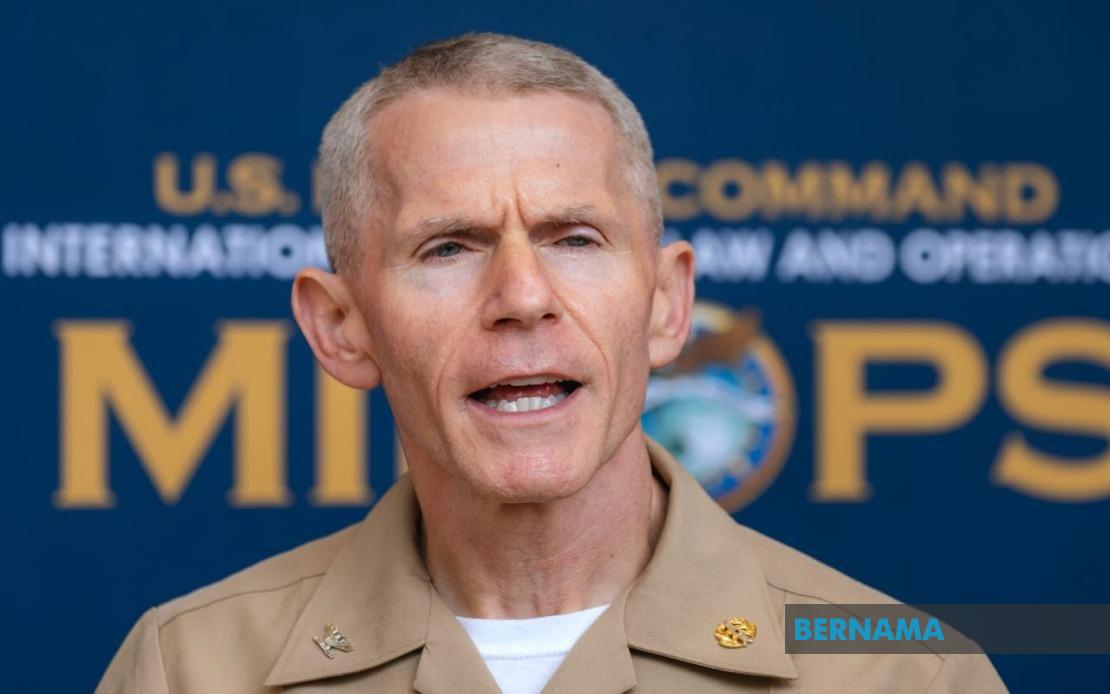
The United States Pacific Command has signalled its unwavering dedication to preserving peace and stability across the South China Sea and broader Indo-Pacific region, with senior military officials emphasizing the strategic importance of this contested waterway to American interests and regional partners alike. Speaking at the 37th International Military Law and Operations Conference in Kuala Lumpur on Monday, USPACOM Staff Judge Advocate Navy Captain Dustin Wallace outlined the command's multifaceted approach to regional security, stressing that deterrence of aggression and destabilising activities form the cornerstone of its mission in one of the world's most strategically significant maritime zones.
Wallace's statements come as tensions in the South China Sea remain elevated, with various claimants asserting overlapping territorial and maritime rights. The waters represent crucial global trade routes and contain significant natural resources, making their security a matter of international concern rather than merely a regional issue. For Southeast Asian nations, including Malaysia, the presence of external powers willing to uphold established maritime principles offers a counterbalance to unilateral assertions of control, though such involvement remains politically delicate given the region's diplomatic sensitivities. USPACOM's explicit commitment to maintaining a continuous presence underscores Washington's strategic calculation that regional stability depends on freedom of movement and adherence to international norms.
A cornerstone of USPACOM's stated approach centres on the defence of internationally recognised principles including freedom of navigation and freedom of commerce. Wallace emphasised that these principles, rooted in international law, form the bedrock of regional security architecture and are endorsed by the United States and its partners as essential safeguards for the sovereign equality and rights of all nations. This framing proves significant for smaller maritime states concerned about being sidelined in great power competitions, as it anchors American involvement to legal frameworks rather than purely strategic or military considerations. The emphasis on shared principles also reflects efforts to build consensus among diverse regional players who may otherwise harbour conflicting interests.
Crucially, Wallace articulated USPACOM's strategic philosophy regarding ASEAN, describing the ten-member grouping as indispensable to regional peace and security architecture. The command's stated intention to work with each member nation according to its particular sovereign interests and priorities signals a departure from one-size-fits-all approaches, acknowledging that ASEAN states maintain varying threat perceptions, economic dependencies, and security partnerships. Vietnam and the Philippines, for instance, face more acute maritime disputes with China compared to some other member states, necessitating tailored engagement strategies. This nuanced approach seeks to preserve ASEAN centrality—a principle critical to Southeast Asian diplomacy—rather than attempting to forge bloc-based alignments that could fracture the organisation.
Wallace's recognition that "not every country has the exact same focus" reflects sophisticated understanding of ASEAN's internal heterogeneity and consensus-based decision-making processes. This statement holds particular relevance for Malaysia, which maintains a more cautious stance toward great power competition while simultaneously asserting maritime claims in the South China Sea. By committing to individualised engagement, USPACOM attempts to support Malaysian interests without imposing demands for explicit alignment against other powers, a balancing act that mirrors Malaysia's own foreign policy positioning. The willingness to meet nations where their sovereign interests lie, rather than prescribing a uniform strategic path, enhances the credibility of American commitments among nations wary of neo-colonial pressure.
The 37th International Military Law and Operations Conference, which runs through August 6, serves as a venue for crystallising these commitments within a broader framework of legal and institutional cooperation. Hosted jointly by USPACOM, Malaysia's Defence Ministry, and the Malaysian Armed Forces, the conference brings together over 300 participants from more than 30 countries alongside representatives from international organisations. The gathering's theme—"From the Seabed to Space: Advancing Security, Freedom, and Prosperity for All Across the Indo-Pacific"—captures the expansive scope of contemporary security challenges, encompassing underwater resources and surveillance, maritime security, and space-based capabilities essential to modern military operations and commerce.
The conference's focus on legal and operational issues reflects a deliberate strategy to embed security arrangements within institutional and normative frameworks. By bringing together military leaders, national security lawyers, policymakers and scholars, the forum aims to develop shared understandings of how international law applies to contemporary challenges while strengthening the rule of law as a foundation for regional relations. For Malaysian policymakers and military officials, such gatherings provide opportunities to influence discussions on maritime law, freedom of navigation standards, and dispute resolution mechanisms that directly affect national interests. The emphasis on sovereign equality and rule of law also counters narratives portraying the region as inherently hierarchical or destined for domination by hegemonic powers.
From a Malaysian perspective, USPACOM's reaffirmation of commitment to the South China Sea carries both reassuring and complicated implications. The undertaking to maintain security and prevent destabilising activities aligns with Malaysia's interest in preventing unilateral actions that could alter the status quo in maritime zones where the country maintains claims. Simultaneously, Malaysia must navigate relationships with China, its largest trading partner and a key investor, making explicit alignment with American security operations diplomatically fraught. The framework of working with individual nations according to sovereign interests provides Malaysia negotiating space to support principle-based approaches to maritime security without appearing to join anti-China coalitions, a critical consideration for domestic political consensus.
Wallace's emphasis on freedom of commerce alongside freedom of navigation addresses concerns extending beyond military security to the economic dimensions of regional stability. Malaysian trade, like that of many Southeast Asian nations, depends critically on secure and unimpeded access to maritime routes. Disruptions to commercial shipping or assertions of control over sea lanes threaten prosperity across the region, making economic security inseparable from military security in strategic calculations. American commitment to defending commercial freedom thus serves interests broader than American firms alone, benefiting the entire regional trading system upon which Malaysian economic growth depends.
The command's articulation of partnership with ASEAN and individual member states also reflects lessons learned from previous American interventions and military postures that alienated regional partners through perceived disrespect for sovereignty and autonomy. By explicitly framing engagement in terms of supporting national interests rather than imposing external designs, USPACOM attempts to rebuild trust and credibility after periods when American policy appeared dismissive of Southeast Asian agency. This approach recognises that effective regional security architecture must enjoy genuine buy-in from member states rather than being imposed through military dominance, a lesson particularly relevant given historical grievances across Southeast Asia regarding great power interventionism.
Looking forward, the sustainability of USPACOM's regional engagement depends significantly on consistency between stated commitments and operational conduct. For Malaysia and other ASEAN nations, monitoring whether American actions genuinely respect the principle of working with individual countries according to their interests, rather than pressuring alignment on contentious issues like China policy or technology choices, will determine credibility. The conference and related diplomatic engagements represent efforts to institutionalise commitments and build shared understanding that transcends individual administrations or military commanders, creating durable frameworks for cooperation even as broader geopolitical tensions fluctuate.
Ultimately, USPACOM's reaffirmed commitment to South China Sea security reflects recognition that regional stability serves American interests while remaining achievable only through inclusive approaches that respect the autonomy and diverse interests of Southeast Asian partners. For Malaysia, the challenge lies in leveraging this American commitment to support national interests in maritime security and freedom of commerce without becoming entangled in zero-sum competition dynamics that could damage essential relationships with other major powers. The success of this balancing act will significantly shape the region's trajectory over the coming years.

