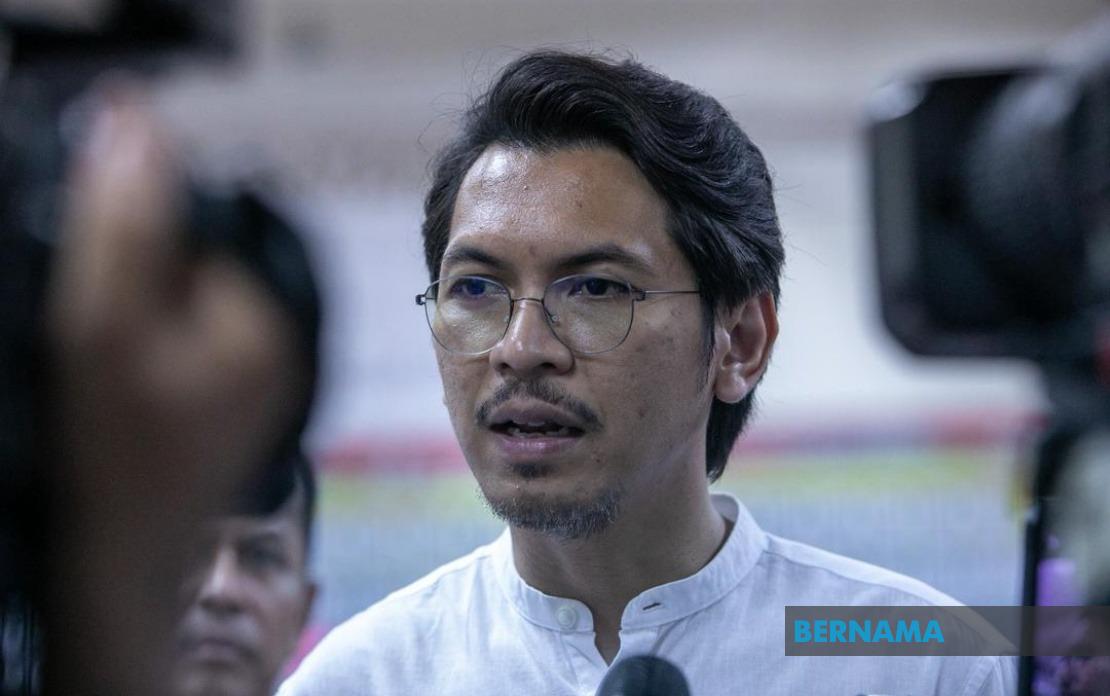
A memorandum of understanding between the United States and Iran on Middle East peace offers Malaysia genuine prospects for more stable oil markets, according to Muhammad Kamil Abdul Munim, Political Secretary to the Minister of Finance. Speaking in Kuala Kangsar this week, he acknowledged that while the diplomatic breakthrough is welcome news for nations dependent on energy security, the actual stabilisation of global oil prices will unfold gradually rather than immediately.
The significance of this development for Malaysia stems from the country's exposure to Strait of Hormuz shipping lanes, through which roughly a third of global seaborne oil trade normally passes. When regional tensions escalate, maritime transport becomes riskier and more expensive, pushing up the cost of energy imports for Southeast Asian economies. Muhammad Kamil's comments suggest the government views the emerging agreement as a potential circuit-breaker for this pattern, reopening critical shipping corridors for both oil tankers and general cargo vessels that have faced increased operational hazards.
However, the political secretary cautioned against expectations of rapid price relief. Even if the US-Iran agreement progresses smoothly toward a final accord within the stipulated 60-day window, the oil market faces structural challenges that cannot be resolved through diplomacy alone. The elevated costs accumulated during the crisis period—including insurance premiums, fuel surcharges for longer routing, and logistics network disruptions—remain embedded in supply chains. These expenses will need to work their way through global markets before consumers experience genuine relief at the pump.
Prime Minister Datuk Seri Anwar Ibrahim has already signalled confidence in the peace process, expressing optimism that successful negotiations could establish the foundation for broader Middle East stability. Yet his caveat about the 60-day timeline underscores the fragility of ongoing diplomatic efforts. For Malaysia and other energy-importing nations, the coming weeks represent a critical observation period where geopolitical developments will directly translate into commodity price movements and inflation pressures.
The Malaysian government has positioned itself defensively during the crisis through targeted subsidies rather than waiting for external conditions to improve. The decision to maintain RON95 petrol at RM1.99 per litre—a rate Muhammad Kamil noted stands in contrast to pricing elsewhere—reflects a deliberate policy choice to insulate consumers from volatile international markets. This subsidy represents a significant fiscal commitment, illustrating both the government's priority on household affordability and the economic burden that prolonged energy insecurity imposes on public finances.
Looking ahead four to six months, the Finance Ministry is signalling through the Economic Action Council that policy adjustments may be necessary, depending on how global oil markets actually respond to the peace agreement implementation. This cautious, wait-and-see approach recognises that Malaysian fiscal space has limits and that premature scaling back of support could leave households vulnerable if international conditions deteriorate. The government appears to be signalling that subsidy reviews will be pegged to observable market data rather than making assumptions about the agreement's ultimate success.
The BUDI MADANI RON95 initiative, which currently caps petrol purchases at 200 litres monthly for eligible recipients, faces similar recalibration discussions. Muhammad Kamil indicated that the government will reassess this targeted subsidy programme before deciding whether to expand, maintain, or modify the quota. This flexibility suggests policymakers recognise that crude oil market dynamics remain uncertain even with diplomatic progress, and that one-size-fits-all subsidy levels may prove inappropriate if price trajectories diverge from baseline assumptions.
Beyond immediate energy pricing concerns, the government's broader strategic posture towards energy diversification adds another dimension to these developments. Prime Minister Anwar's simultaneous focus on strengthening bilateral ties with Russia reflects Malaysia's effort to reduce dependency on any single energy source or geopolitical sphere. Muhammad Kamil characterised this approach as essential for a small trading nation seeking to leverage relationships across major economic powers. Russia's considerable oil and gas resources and energy-related infrastructure expertise make it a natural counterweight to Middle Eastern supply chains, particularly as supply chain resilience becomes increasingly valued in post-crisis planning.
The intersection of these factors—the pending US-Iran agreement, Malaysia's subsidy commitments, and diplomatic outreach toward Russia—suggests a government simultaneously preparing for multiple scenarios. Should the peace agreement translate into actual price stabilisation, Malaysia's carefully calibrated subsidies could be gradually recalibrated without causing inflation shocks to consumers. Conversely, if regional tensions resurface or the diplomatic process stalls, existing relationships with Russia and other suppliers provide alternative channels for securing energy supplies or moderating price exposure.
For Malaysian businesses and households, the coming months will determine whether optimism about the peace agreement proves warranted. Manufacturing sectors dependent on predictable energy costs, transport operators facing fuel surcharge volatility, and middle-income consumers already stretched by living cost pressures all have substantial stakes in how these developments unfold. The government's cautious messaging, while avoiding triumphalism about the agreement's prospects, reflects a realistic understanding that geopolitical breakthroughs rarely translate instantly into economic relief.
The broader lesson for Southeast Asia is that energy security requires both diplomatic engagement and diversified supply relationships. While welcoming the US-Iran agreement as a step toward regional stability, Malaysia's simultaneous cultivation of Russian partnerships and targeted domestic subsidies demonstrate that nations cannot afford to rely solely on external actors to resolve their energy vulnerabilities. As global oil markets process the implications of Middle East détente, Malaysian policymakers appear positioned to navigate the transition period thoughtfully, protecting citizens from sharp price movements while avoiding the fiscal burden of excessive long-term subsidies.
%22%2F%3E%3C%2Fpattern%3E%3C%2Fdefs%3E%3Crect%20width%3D%22100%25%22%20height%3D%22100%25%22%20fill%3D%22url(%23ph454chg)%22%2F%3E%3Crect%20width%3D%22100%25%22%20height%3D%22100%25%22%20fill%3D%22url(%23ph454chp)%22%2F%3E%3Ctext%20x%3D%2250%25%22%20y%3D%2250%25%22%20text-anchor%3D%22middle%22%20dominant-baseline%3D%22central%22%20fill%3D%22rgba(255%2C255%2C255%2C0.95)%22%20font-family%3D%22Georgia%2C%20'Times%20New%20Roman'%2C%20serif%22%20font-weight%3D%22700%22%20font-size%3D%22170%22%20letter-spacing%3D%22-0.02em%22%3EMalaysia%3C%2Ftext%3E%3C%2Fsvg%3E)
%22%2F%3E%3C%2Fpattern%3E%3C%2Fdefs%3E%3Crect%20width%3D%22100%25%22%20height%3D%22100%25%22%20fill%3D%22url(%23ph2a9atg)%22%2F%3E%3Crect%20width%3D%22100%25%22%20height%3D%22100%25%22%20fill%3D%22url(%23ph2a9atp)%22%2F%3E%3Ctext%20x%3D%2250%25%22%20y%3D%2250%25%22%20text-anchor%3D%22middle%22%20dominant-baseline%3D%22central%22%20fill%3D%22rgba(255%2C255%2C255%2C0.95)%22%20font-family%3D%22Georgia%2C%20'Times%20New%20Roman'%2C%20serif%22%20font-weight%3D%22700%22%20font-size%3D%22320%22%20letter-spacing%3D%22-0.02em%22%3EPKR%3C%2Ftext%3E%3C%2Fsvg%3E)