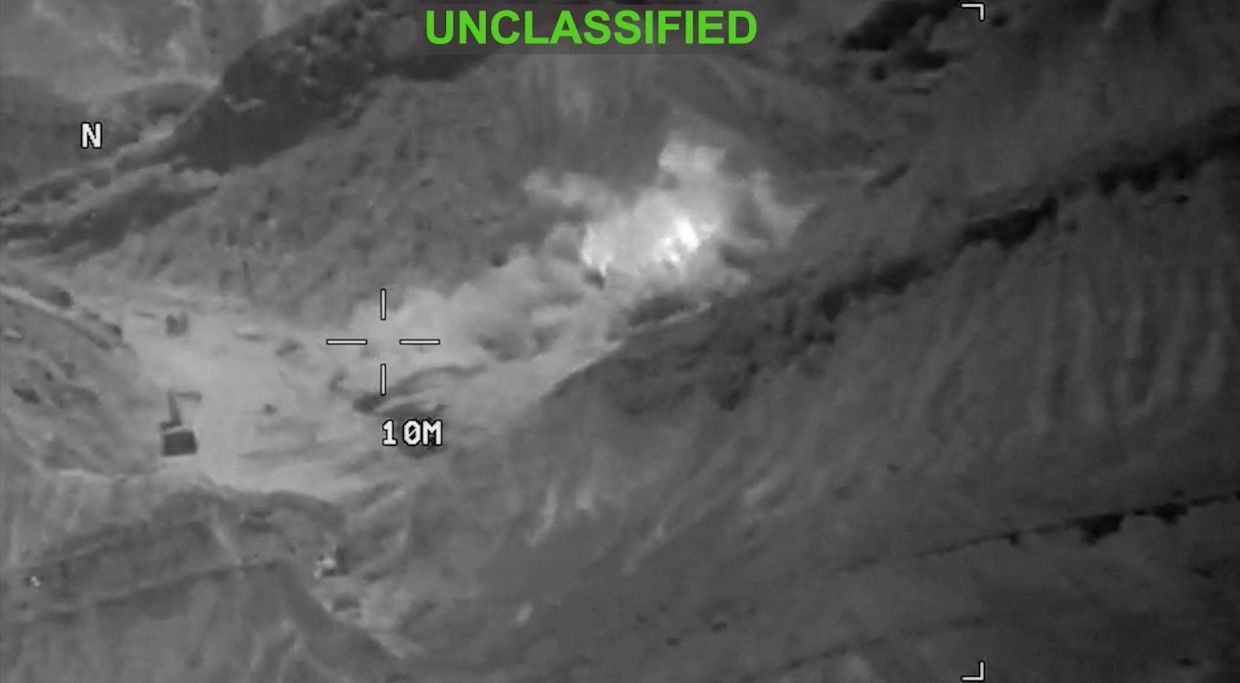
The United States has resumed intensive military operations against Iran, completing an eighth consecutive night of airstrikes after two American service members were killed and another went missing in a coordinated Iranian attack on a Jordanian military base. The escalation marks a dramatic breakdown of fragile diplomatic efforts that had held for approximately one month, signalling a return to large-scale regional conflict that threatens global energy markets and maritime security in one of the world's most strategically important waterways.
President Donald Trump authorized the latest wave of strikes, which commenced at 6 p.m. Eastern Time on Saturday according to US Central Command. The American military operation deliberately targeted Iranian military capabilities, specifically coastal surveillance systems and air defence infrastructure, with explicit intent to degrade Tehran's capacity to threaten international shipping routes through the Strait of Hormuz. Beyond degrading military infrastructure, the campaign aims to impose swift consequences on Islamic Revolutionary Guard Corps units responsible for the previous night's assault on American service members stationed in Jordan.
Iranian state media reports documented American strikes in multiple locations, including areas near Sirik in southern Iran and Shadegan close to the Iraqi border. Most controversially, Iran's Atomic Energy Organization condemned what it characterized as a direct strike against the Darkhovin nuclear power plant facility under construction, though the timing and full details remain unclear. Initial Iranian reports claimed no casualties or significant infrastructure damage from these operations, though independent verification of such claims remains difficult given the ongoing information war accompanying the conflict.
The tit-for-tat nature of the hostilities became apparent when Iran responded to American strikes with drone and missile attacks targeting American military assets at Kuwait's Al-Adiri camp and Ali Al Salem Air Base early Sunday morning. Kuwait faced renewed Iranian missile and drone barrages and successfully intercepted multiple incoming weapons, whilst Bahrain's air defence systems similarly repelled Iranian attack drones. Despite the intensity of these exchanges, regional air defence systems functioned effectively, preventing reported casualties or infrastructure damage in Kuwait and Bahrain.
The deterioration into full-scale military operations reflects the fundamental breakdown of whatever diplomatic arrangement had previously constrained both sides. The conflict originated when American and Israeli forces launched coordinated strikes on 28 February targeting Iran's nuclear facilities, missile programmes, and regional proxy networks. This initial campaign triggered the collapse of the subsequent ceasefire, unleashing a cycle of escalating retaliation that has now produced tragic consequences for American military personnel and raised the spectre of unrestricted regional warfare.
Casualty figures underscore the severity of ongoing operations. Two American service members died on Friday following the Iranian attack on a Jordanian base, with a third reported missing in action. The deaths bring total American military losses since conflict initiation to sixteen personnel, whilst more than 420 have sustained wounds. Iranian health ministry figures, conversely, claim that American strikes over the previous three weeks alone killed fifty people and wounded more than five hundred, though such casualty figures from official Iranian sources warrant cautious interpretation.
The conflict has extended beyond direct military confrontation to encompass maritime disruption. Both superpowers have taken aggressive positions regarding commercial shipping in the Strait of Hormuz, which ordinarily facilitates approximately one-fifth of global petroleum supplies. The United States asserts it maintains a naval blockade on Iranian commerce, whilst Tehran claims it enforces navigation standards and targets vessels violating established protocols. Iranian Revolutionary Guard statements alleged that four vessels attempted transiting the strait via unsafe routes with American backing; two subsequently abandoned attempts whilst the others reportedly experienced unspecified accidents.
Diplomatic communications reflected hardened positions on both sides. Iran's Supreme Leader Ayatollah Mojtaba Khamenei issued a statement declaring that American commitments possessed no credibility, referencing President Trump's signature as valueless. Khamenei warned of escalating costs and humiliation for the United States, signalling no willingness toward de-escalation. Notably, Khamenei's current whereabouts remain publicly unknown, as he has not appeared in public since his father and predecessor, Ali Khamenei, was killed during the initial American-Israeli strikes on 28 February.
The strategic implications for Southeast Asia warrant serious attention. The Strait of Hormuz represents a critical chokepoint for regional energy security; disruptions directly threaten petroleum supplies and pricing for Malaysia, Singapore, Indonesia, and neighbouring economies. Global inflation fears mount as oil markets react to sustained uncertainty. For Malaysian policymakers, the necessity of maintaining stable energy supplies competes with principles of regional neutrality, whilst Singapore and other maritime trading nations face practical navigation hazards and insurance complications from heightened Middle Eastern tensions.
The timing of these events creates particular complications for broader Middle Eastern architecture. Regional states hosting American military infrastructure face difficult calculations regarding alliance commitments versus domestic security considerations. Jordan's position becomes increasingly precarious as ongoing strikes draw Iranian retaliation directly onto Jordanian territory. Kuwait and Bahrain navigate similarly treacherous terrain, hosting American military facilities whilst facing direct Iranian military pressure. The diplomatic collapse removes whatever constraints previously applied to Iranian decision-making regarding regional operations.
Military assessments of current capabilities remain contested. American claims regarding degraded Iranian coastal and air defence capacity require verification beyond official statements. Iranian assertions of aircraft destruction during Friday's operations cannot be independently confirmed. This information environment characterizes contemporary regional conflict, where competing narratives from both sides complicate external policy formulation and military planning. For observers in Southeast Asia monitoring developments, distinguishing credible assessments from propaganda becomes increasingly difficult.
The humanitarian consequences extend beyond immediate military casualties. Civilian populations throughout the region face ongoing risk from escalating operations. Critical infrastructure, particularly energy facilities, becomes increasingly vulnerable to targeting. The Darkhovin nuclear facility incident illustrates risks extending beyond conventional military concerns toward potential nuclear safety implications. These factors compound regional instability and create cascading risks for global security beyond Middle Eastern boundaries.
Looking forward, the trajectory suggests continued escalation absent diplomatic intervention. The apparent absence of American willingness to negotiate, combined with Iranian refusals to acknowledge reduced credibility of American commitments, creates a dangerous impasse. For Malaysia and regional neighbours, monitoring developments becomes essential for contingency planning regarding energy supplies, maritime navigation, and potential refugee consequences. The structural factors driving conflict—contested regional influence, nuclear programme disputes, proxy warfare networks—remain unresolved, suggesting prolonged confrontation rather than imminent resolution.

