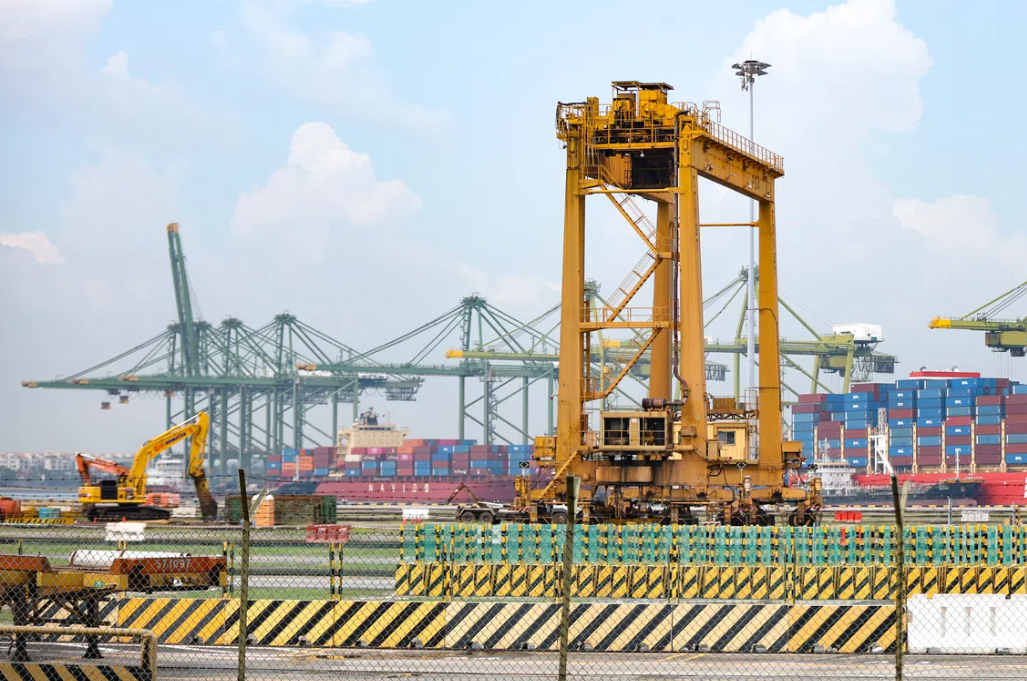
The Trump administration has placed Singapore and 39 other economies on a list of nations vulnerable to being exploited by Chinese exporters seeking to dodge American tariffs, according to a White House report released in mid-August. Titled "The Great Transshipment Scam", the document describes a sophisticated scheme in which Chinese-made goods are routed through intermediate countries with lower tariff rates, with their true origin deliberately obscured before entering the United States market. This coordinated effort represents what officials characterize as a systematic attempt to undermine the tariff regime that the administration has progressively tightened since 2018.
The transshipment strategy involves what the White House describes as "products made largely in China, lightly touched abroad and exported to America under new identities." Rather than shipping directly from China where goods face elevated duties, exporters can route shipments through strategically chosen third countries where minimal processing occurs, allowing the merchandise to be relabeled with a new country of origin. The sophistication of this operation suggests considerable planning and infrastructure development across multiple jurisdictions. The administration has announced plans to deploy artificial intelligence technology, dubbed "Detective Border", alongside other enforcement mechanisms to identify and intercept these illegitimate transshipments.
Financial estimates underscore the scale of the problem facing US customs authorities. Drawing on data compiled by government agencies and private sector analysts, the White House calculates that tariff-evasion transshipments may have deprived the federal government of between US$40 billion and US$303 billion in customs revenue. These figures, while broad, indicate that the challenge extends far beyond marginal trade flows and represents a substantial erosion of tariff effectiveness. The wide range reflects genuine uncertainty about the true volume of illegal transshipments, as many cases likely remain undetected by existing border enforcement mechanisms.
Evidence of this evasion strategy becomes apparent when examining trade patterns following the administration's 2018 tariff implementation. As China's direct share of US imports declined following those tariffs, the combined proportion supplied by identified transshipment countries increased correspondingly. This temporal and directional alignment suggests deliberate rerouting rather than coincidental market shifts, though the White House acknowledges that legitimate business investment and production relocation may account for some portion of the change. The timing and magnitude of these flows warrant investigation into the extent to which tariffed goods were deliberately rerouted through intermediary nations.
The White House has categorized the 40 flagged economies into three distinct tiers based on their role and characteristics within this informal network. Tier 1 comprises major trading partners including Canada, Japan, Taiwan, India, Israel, and the European Union, where transshipment risks are embedded within broader legitimate commercial relationships. These advanced economies represent major export platforms for goods destined for American markets, making it difficult to isolate illicit activity from genuine trade. Tier 2 includes economies with significant economic integration with China, encompassing Brazil, Indonesia, Malaysia, Thailand, Turkey, and Vietnam, which collectively represent substantial manufacturing and logistics capabilities.
Singapore occupies a distinctive position in Tier 3, grouped alongside Cambodia, Laos, Myanmar, and the Philippines as what the report characterizes as "small, opportunistic Chinese targets." The White House argues that these smaller economies possess particular vulnerabilities that make them attractive to Chinese-linked exporters seeking alternate routes. These weaknesses include abundant low-cost labour, established free trade zones, strategic port and border infrastructure, bonded warehousing facilities, specialized assembly capabilities, preferential access arrangements with the United States, and comparatively limited customs enforcement capacity. Singapore's sophisticated port facilities, advanced logistics networks, and trading reputation make it particularly valuable for laundering the origin of goods destined for American consumers.
The strategic implications extend beyond immediate tariff concerns. The White House warns that as these 40 economies become increasingly dependent on Chinese inputs, logistics services, and capital investment, Beijing may acquire additional commercial and geopolitical leverage. This dependency could potentially provide China with indirect market access to the United States even as official tariffs restrict direct sales. For Southeast Asian nations particularly, this dynamic creates a challenging balancing act between maintaining beneficial economic relationships with China and avoiding entanglement in schemes that antagonize the Trump administration.
Singapore's authorities have consistently maintained that the nation takes trade compliance seriously and operates according to international standards. Singapore Customs responded to the allegations by emphasizing that its legislative and regulatory framework aligns with World Customs Organization guidelines and seeks to facilitate legitimate commerce through enhanced transparency. Importantly, Customs clarified that transshipped goods retain their country of origin and cannot be relabelled as Singaporean products, meaning goods passing through the island's ports should not be misrepresented to US authorities. The agency stressed that companies using Singapore for transshipment must fully comply with Republic laws and that Singapore Customs collaborates extensively with international counterparts to detect and prevent illicit activity.
The timing of this report reflects the Trump administration's broader effort to reconstruct and reinforce its tariff strategy after facing legal obstacles. Earlier in 2026, a court decision undermined aspects of the tariff regime, prompting the administration to pursue alternative enforcement approaches. In July, the administration imposed a new 12.5 percent levy affecting approximately one-third of Singapore's domestic exports to the United States, following allegations that Singapore and other nations failed to adequately prohibit trade in goods produced using forced labour. These successive tariff actions suggest the administration intends to maintain sustained pressure on global trading partners.
For Malaysia and other Southeast Asian economies mentioned in Tier 2, the designation carries particular weight given the region's manufacturing significance. Malaysia's role as a regional production hub and its extensive trade relationships with China mean the nation faces scrutiny over whether its regulatory frameworks adequately prevent goods transshipment. The trade tensions between Washington and Beijing inevitably affect ASEAN members caught in the middle, creating pressure to tighten enforcement while maintaining economically important relationships with China. This pressure will likely force Southeast Asian governments to undertake more rigorous customs inspections and documentation requirements.
The US report's framing of the issue as a coordinated "scam" rather than isolated infractions suggests the administration views this as a systematic problem requiring comprehensive solutions. Beyond the Detective Border technology initiative, observers expect more aggressive customs enforcement, potential penalties for countries deemed insufficiently cooperative, and possibly direct pressure on companies identified as participating in transshipment schemes. Regional trading partners must anticipate increased scrutiny of shipment documentation, origin verification procedures, and the involvement of Chinese-linked entities in logistics and transshipment activities.
For Malaysian and other ASEAN policymakers, the challenge involves demonstrating adequate compliance with international trade rules while avoiding actions that might damage economic relationships with China. This report signals that the Trump administration intends to aggressively pursue what it characterizes as tariff evasion, and nations identified in the three tiers should expect enhanced customs cooperation requests, potential trade investigations, and continued tariff pressure. The broader geopolitical implications extend beyond tariff policy, as the administration uses trade enforcement as a tool to constrain China's economic influence and maintain America's competitive position in key markets.

