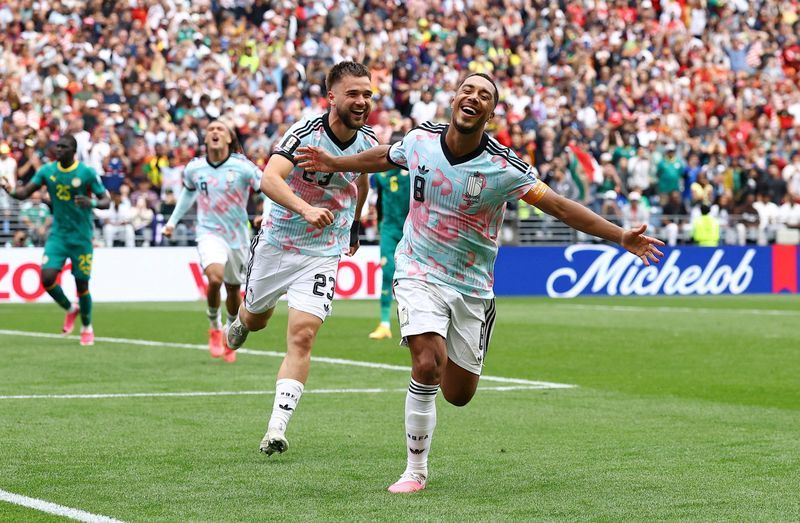
The United States and Belgium meet in a World Cup knockout match at Seattle's Seahawks stadium on July 4, with the American side entering the encounter riding momentum and heightened expectations that have grown substantially since the tournament's opening matches. The contest represents a significant elevation from the modest pre-competition targets many American supporters held, when simply reaching the final 16 qualified as success. Instead, the host nation has captured public imagination through a sequence of convincing displays that suggest deeper tournament ambitions are now within reach.
The American trajectory through the group stage has been notably strong. Following victories over Paraguay and Australia, the U.S. produced a particularly impressive defensive performance against Bosnia, triumphing 2-0 despite being reduced to ten men for the final 36 minutes of the match. This ability to maintain composure and control whilst severely undermanned demonstrated the tactical maturity Mauricio Pochettino has instilled in the squad. Each successive result has gradually shifted the narrative from cautious optimism to genuine belief that the tournament host could make a meaningful impact on the global stage.
Belgium presents a markedly different challenge, arriving in Seattle without the same sense of momentum or conviction that has defined the American campaign. The European side has advanced through its knockout pathway with less comfort, notably requiring a dramatic late revival against Senegal. For substantial portions of that match, Belgium trailed, only securing progression through a pair of second-half goals and a VAR-assisted penalty decision in extra time that left their opponents aggrieved. The manner of that escape suggests potential fragility beneath the surface of a squad boasting world-class personnel.
At the heart of Belgium's challenge sits what may represent the final World Cup opportunity for their much-discussed "Golden Generation." Kevin De Bruyne, Romelu Lukaku, and Thibaut Courtois have collectively defined Belgian football's most successful recent period, and the sense prevails that this tournament could mark their last genuine chance to leave a lasting championship legacy. For these established stars, the pressure carries additional weight beyond conventional knockout football, as career retrospectives increasingly hinge upon whether this generation can transform their individual brilliance into collective silverware.
The American defensive unit, previously regarded as the squad's most vulnerable component heading into the tournament, has emerged as an unexpected strength. The display against Bosnia showcased both technical organisation and psychological resilience, silencing pre-competition doubts about whether the backline could withstand elite attacking talent. However, the squad faces a particular assignment in containing Jeremy Doku, Belgium's winger who has operated below expectations during the group stage and appears primed for a performance of consequence. The American defensive organisation will require careful calibration to prevent Doku from finally delivering on his acknowledged potential at precisely the moment it matters most.
The contemporary matchup carries significant historical resonance with a previous encounter between these nations. In 2014, Belgium eliminated the United States from the World Cup in the last 16, prevailing after extra time in Brazil through a result that remained agonisingly narrow. That match is remembered through multiple lenses: Belgium's progression and Belgium's collective quality, certainly, but equally through Tim Howard's goalkeeping heroics, when he produced a record-setting 16 saves that nearly single-handedly forced a result the Americans could celebrate. Despite that extraordinary performance, the match slipped away, leaving American supporters with both pride in the effort and frustration about what might have been.
The current American squad cannot draw upon that 2014 roster's experience, yet the institutional memory of that defeat likely influences contemporary preparation and mindset. Pochettino's team enters with different expectations, different pressure, and different circumstances. The home advantage is genuine; the Seahawks stadium ranks among the most intimidating venues in professional sports, with crowd noise regularly exceeding 130 decibels. For an American side seeking to advance, that environmental factor represents an intangible but measurable asset.
Complicating the American selection equation is the absence of forward Folarin Balogun, suspended following his dismissal against Bosnia. Balogun had provided an opening-half goal before his red card in the second period, and his suspension forces Pochettino into a consequential tactical decision about how to configure the attacking approach. The loss of a goal-scorer at such a critical juncture introduces uncertainty into planning that the coaching staff must navigate carefully, balancing the desire to maintain recent successful patterns against the reality of available personnel.
The broader significance extends beyond the immediate tactical and personal dimensions. American football, despite its substantial domestic infrastructure and recent international competitiveness, remains secondary to other sports within the national consciousness. A deep World Cup run, particularly advancing through elimination rounds on home soil, possesses potential to fundamentally alter how the sport is perceived and consumed domestically. Each match now operates simultaneously as immediate sporting contest and as long-term investment in the sport's American future.
Midfielder Tyler Adams articulated this wider perspective, noting that the team aspires to transcend immediate results and establish a lasting legacy that extends beyond individual matches. His comments reflect awareness that this American generation carries responsibility not merely to themselves or current supporters, but to the sport's long-term trajectory within the United States. The Belgium encounter, therefore, carries implications that ripple across multiple dimensions simultaneously: immediate sporting success, historical redemption against a previous conqueror, and the intangible task of fundamentally repositioning how Americans regard their national football team.

