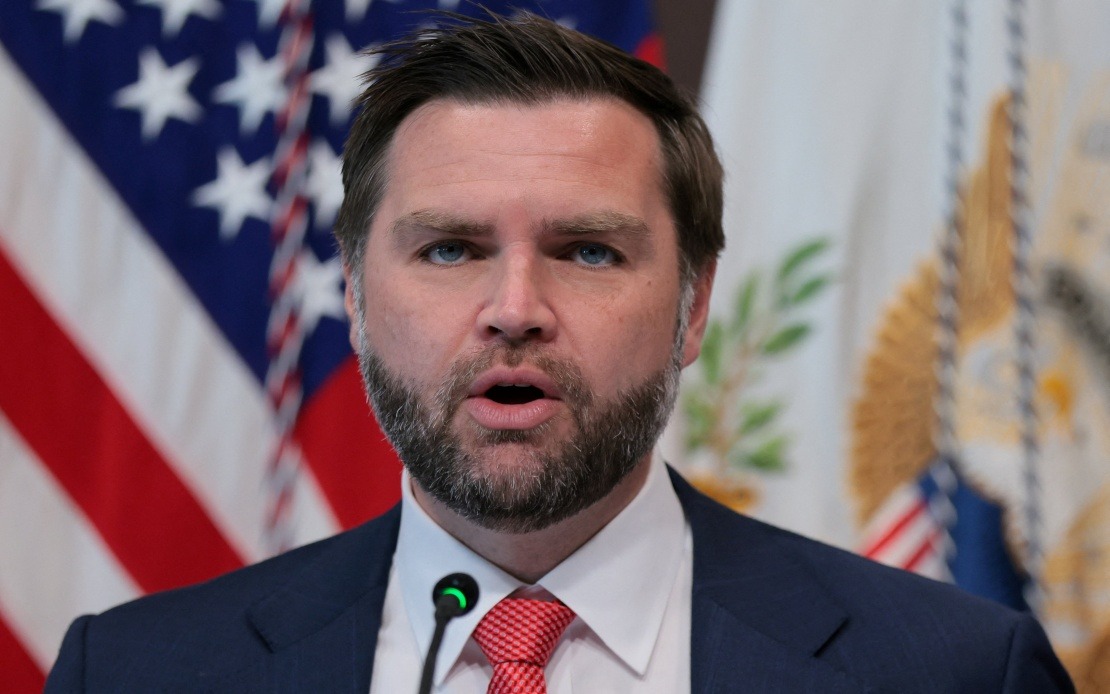
Vice President JD Vance made clear on Saturday that Washington expects Iran to fully restore energy shipments through the Strait of Hormuz while guaranteeing the security of merchant vessels transiting the critical waterway. Speaking to Fox News, Vance indicated that Tehran has already signalled its willingness to maintain oil and gas exports at levels seen before the broader regional conflict erupted, though he stressed that American officials would assess Iranian compliance through observable actions rather than diplomatic assurances alone.
The comments underscore the centrality of maritime stability in the Gulf to broader American strategic calculations in the Middle East. The Strait of Hormuz remains one of the world's most vital chokepoints for energy supplies, with roughly a fifth of global oil passing through its narrow passages annually. Any sustained disruption to traffic flows or threats against commercial shipping would reverberate across international energy markets and inflate costs for economies worldwide, including energy-importing nations in Southeast Asia and across the Indo-Pacific region.
Vance's emphasis on verification over rhetoric reflects lingering American scepticism about Iranian intentions, particularly given the complex history of regional confrontation. While acknowledging Iranian statements that they harbour no intentions to impose transit tolls on vessels—a potential revenue-raising measure that would fundamentally alter the economics of Gulf shipping—the Vice President indicated Washington would treat such assurances as provisional pending concrete evidence of restraint. This measured approach contrasts with earlier rhetoric from other American officials and suggests a pragmatic calculation that sustainable outcomes depend on mutual understanding rather than coercive pressure alone.
Demining operations have emerged as a practical priority in reopening safe shipping corridors. Iranian forces placed extensive mine fields at the outbreak of hostilities, creating significant hazards for commercial navigation. Establishing effective demining protocols and developing a formal traffic separation scheme represents the immediate mechanical challenge facing all parties. Vance noted that Iran and regional partners, particularly Oman, have initiated discussions around these operational frameworks, indicating a degree of functional cooperation on maritime security despite broader political tensions.
The United States has also demanded explicit Iranian commitments to refrain from attacking commercial vessels operating in Gulf waters. Such incidents, while historically sporadic, carry disproportionate risk by creating insurance complications and deterring shipping companies from utilising the route. The distinction between military targets and civilian commerce has long been a contested grey area in regional conflicts, making formal undertakings particularly important for restoring confidence among international shipping operators and the maritime insurance industry.
Vance characterised Iran's current economic and military situation as deteriorated to the point where Tehran has genuine incentive to seek conflict resolution. The Vice President contended that American military operations have significantly degraded Iranian nuclear capabilities, conventional armed forces, and asymmetric warfare potential. This assessment, if accurate, suggests that Iran's bargaining position has weakened considerably, potentially making it more amenable to accepting American conditions for normalising Gulf operations.
However, the Vice President's framing also reveals American priorities extending beyond maritime security per se. Vance explicitly linked securing stable Gulf oil supplies to reducing American energy costs and prices for domestic consumers. This connection between regional stability and domestic economic benefits illustrates how Middle Eastern conflicts have ripple effects reaching far beyond the immediate theatre, influencing inflation, consumer purchasing power, and political sentiment in Washington itself.
From a Southeast Asian perspective, the restoration of reliable Gulf oil flows carries particular significance. The region's energy-intensive economies, including those of Malaysia, Indonesia, Singapore, and Thailand, depend substantially on reliable hydrocarbon supplies from the Middle East. Any prolonged disruption to Strait of Hormuz traffic would drive energy import costs upward, increasing manufacturing expenses, electricity generation costs, and ultimately consumer prices across the region. Regional governments and businesses therefore have a vested interest in American-Iranian negotiations producing a durable framework for maritime safety.
The broader context of this exchange involves fundamental questions about the post-conflict order in the Middle East. Vance's comments suggest that Washington sees the current configuration as potentially offering opportunities to reshape Iran's regional behaviour through a combination of demonstrated military superiority and conditional incentives for restraint. Whether Tehran's leadership ultimately accepts such terms, or whether deeper structural conflicts preclude lasting accommodation, remains unclear and will likely determine the stability trajectory of Gulf shipping for years ahead.
The involvement of Oman in negotiations reflects that country's traditional role as a neutral broker and maritime security partner in the region. Oman's geographical position at the mouth of the Persian Gulf and its long-standing pragmatic engagement with all regional actors make it a natural venue for multilateral discussions on traffic schemes and demining protocols. Other regional states, particularly the UAE and Saudi Arabia, presumably also have input into these discussions given their substantial commercial interests in secure Gulf shipping.
Vance's statement that American officials will continue applying pressure while simultaneously extracting maximum energy supplies suggests a hedging strategy in which Washington preserves leverage regardless of Iranian compliance outcomes. This approach acknowledges uncertainty about Iran's actual willingness to abide by maritime agreements while ensuring that American energy security interests are protected through diversified sourcing and extraction maximisation. For regional observers and Southeast Asian energy importers, this stance implies that American-Iranian tensions may persist even amid pragmatic cooperation on specific maritime issues.
The path forward for Gulf maritime stability thus hinges on whether Iran's demonstrated economic vulnerabilities and military constraints will prove sufficient to encourage acceptance of American demands, and whether formal agreements, once negotiated, will be implemented consistently by Iranian security forces and proxy groups operating in the region. The stakes extend well beyond Washington and Tehran to encompass global energy markets, international shipping operations, and the prosperity of energy-dependent economies throughout Asia and beyond.

