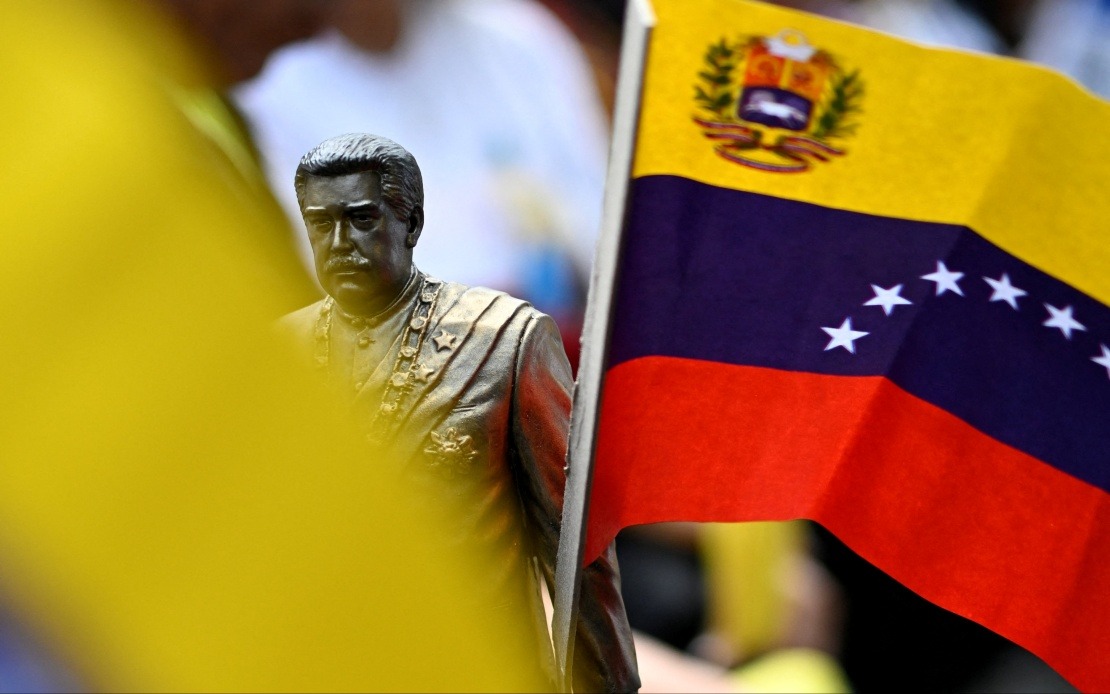
A United States federal judge has set June 1, 2027 as the trial date for Venezuelan President Nicolas Maduro and his wife Cilia Flores, marking a significant milestone in what has become one of the most contentious international legal proceedings in recent years. Judge Alvin Hellerstein made the determination during a brief 15-minute hearing in Manhattan on Wednesday, establishing a timeline that will extend well into the next decade. The couple, both of whom maintain their not guilty pleas to charges of drug trafficking and unlawful firearms trafficking, appeared for their third court appearance in New York since their controversial apprehension.
The case stems from a dramatic military operation conducted on January 3, when armed United States forces descended upon Caracas and forcibly captured Maduro and Flores, subsequently transporting them to detention facilities in New York. Since their seizure, the pair have been held at the Metropolitan Detention Centre in Brooklyn, remaining in custody throughout preliminary legal proceedings. The circumstances surrounding their capture have fundamentally reshaped international discourse on the limits of unilateral state action and the sanctity of national sovereignty in the modern geopolitical landscape.
Maduro's defence counsel, Barry Pollack, has signalled his intention to challenge the foundational basis of the entire prosecution by invoking sovereign immunity doctrine. This legal strategy represents a critical juncture in the case, as a successful immunity challenge would effectively terminate all further litigation without requiring Maduro to mount a substantive defence against the underlying charges. Such motions, grounded in international law principles that protect sitting or former heads of state from prosecution in foreign jurisdictions, may prove decisive long before the scheduled 2027 trial date arrives.
For Malaysian observers and Southeast Asian policymakers, this case carries profound implications regarding the norms that govern international relations and military conduct. The seizure of a sitting head of state by foreign military forces, regardless of the accusations levelled against that individual, challenges fundamental principles enshrined in the United Nations Charter and customary international law. The incident has prompted serious reassessment across the region regarding the reliability of international legal frameworks and the potential consequences when powerful nations pursue unilateral enforcement actions beyond their borders.
The international response to Maduro's capture has been decidedly negative, with governments and civil society organisations worldwide expressing alarm at the precedent established. Wednesday's court hearing witnessed substantial protest activity outside the Manhattan courthouse, where demonstrators demanded Maduro's immediate release and condemned what they characterised as unlawful abduction masquerading as lawful extradition. The gathering reflected broader global anxiety about American exceptionalism and the perceived abandonment of multilateral governance mechanisms in favour of direct military intervention.
Protest organisers, including representatives from the Anti-War Action Network and other civil rights coalitions, articulated concerns that transcended the specific circumstances of Maduro's case. Tom Burke, a steering committee member of the Anti-War Action Network, framed the episode as symptomatic of a larger pattern whereby the United States unilaterally appropriates the prerogatives traditionally reserved for international institutions. He characterised the entire sequence—abduction, detention, and prosecution—as fundamentally incompatible with international legal norms, likening the operation to armed robbery executed at the state level.
Sara Flounders, an American political analyst, drew explicit connections between the Maduro operation and longstanding US interventionist practices targeting Venezuela, Iran, and Cuba. Her invocation of the 200-day milestone since Maduro's capture underscored the temporal significance of the detention and reinforced activist messaging around historical patterns of American foreign policy. These rhetorical framings, while reflecting particular ideological perspectives, nonetheless articulate substantive concerns about consistency in the application of international legal principles and the visibility of power asymmetries within the global order.
For Malaysian readers and Southeast Asian governments, the Maduro case presents a cautionary narrative about the vulnerability of smaller nations to unilateral enforcement actions by militarily superior powers. The region has watched with particular interest given its own historical experiences with foreign military intervention and its current positioning within great power competition dynamics. The willingness of the United States to conduct a military operation capturing a sitting president within the territory of another sovereign state—without consultation with regional organisations or the United Nations Security Council—suggests that traditional protections afforded by sovereignty may be increasingly provisional for nations viewed as adversarial by Washington.
The extended timeline until the 2027 trial affords multiple opportunities for legal challenges, diplomatic interventions, and shifts in the political landscape that could fundamentally alter the case's trajectory. Maduro's defence strategy, centred on sovereign immunity arguments, represents the most direct challenge to the jurisdiction of American courts over the proceedings. Should such motions succeed, the entire prosecution would collapse, vindication for those arguing that the operation violated fundamental international legal principles and establishing a powerful precedent against similar future actions.
The case also illuminates tensions within the American legal system itself, with a federal judge now presiding over proceedings that implicate core questions of executive power, foreign policy, and the proper role of domestic courts in adjudicating disputes with international dimensions. Judge Hellerstein's role involves navigating unprecedented jurisdictional waters, balancing competing interests in rule of law, separation of powers, and the legitimacy of American judicial authority in the international sphere. His eventual rulings will likely generate significant commentary within international legal circles and influence how courts elsewhere approach comparable situations involving foreign nationals brought into their jurisdictions under contested circumstances.
The gathering of protesters outside the Manhattan courthouse on Wednesday demonstrated that public concern about the legality and wisdom of Maduro's capture extends well beyond Latin America and reaches constituencies within the United States itself. This domestic opposition reflects deeper anxieties about American military overreach and the long-term consequences of abandoning multilateral approaches to international disputes. Whether these concerns will influence judicial decision-making, legislative oversight, or executive policy remains uncertain, but the legal contestation surrounding Maduro's trial will undoubtedly reverberate through international relations discourse for years to come.

