The United States has taken a formal step to support its ambitious Middle East peace initiative by notifying Congress of funding arrangements for an International Stabilisation Force intended for Gaza. The announcement, made through the State Department on July 30, marks the opening phase of Washington's financial backing for what the Trump administration describes as a historic diplomatic undertaking aimed at resolving the protracted Israeli-Palestinian conflict.
State Department officials characterised the funding notification as an essential preliminary move, though they declined to disclose specific monetary figures at this stage. A spokesperson explained that the commitment would expand progressively as diplomatic efforts continue through the multilateral Board of Peace, a coordinating body assembled to shepherd the implementation of Trump's comprehensive 21-point proposal. This measured approach suggests Washington intends to scale its investment based on tangible progress in negotiations and on-ground developments.
The core architecture of the Trump plan envisions Hamas and other armed Palestinian groups laying down weapons in a carefully managed process, concurrent with a staged Israeli military withdrawal from Gaza. Crucially, an International Stabilisation Force would operate alongside a reconstituted Palestinian police apparatus, theoretically creating conditions for civilian governance to replace military control. Trump announced on July 31 that the Board of Peace had secured Hamas agreement to what officials termed "complete disarmament," positioning the framework as a breakthrough after months of deadlock.
Yet the plan has encountered significant headwinds from Israel's government, particularly from Prime Minister Benjamin Netanyahu, who publicly rejected central provisions this month. Netanyahu informed his Cabinet that Israeli Defence Forces will not commence any phased withdrawal until Hamas demonstrates concrete evidence of genuine disarmament—a position that effectively places Israeli verification ahead of the concurrent implementation envisioned by the American proposal. This sequential demand differs markedly from the synchronised approach Washington and the Board of Peace are advocating, introducing a fundamental point of contention.
For Southeast Asian observers monitoring Middle East stability, this friction between Israel and the United States carries broader implications. The region's substantial Muslim-majority populations, combined with significant diaspora communities with ties to the Levant, mean that perceived American partiality or ineffectiveness in Israeli-Palestinian affairs influences regional geopolitical sentiment. Malaysia, Indonesia, and other nations have historically positioned themselves as advocates for Palestinian rights within international forums, and the success or failure of American-led peace initiatives affects their diplomatic calculations and domestic political discourse.
Hamas, meanwhile, has publicly maintained its commitment to the roadmap, positioning itself as responsive to diplomatic overtures. This contrasts with Netanyahu's recalcitrance, potentially reshaping narratives about which parties bear responsibility for negotiation failure—a distinction that ripples through international opinion and United Nations deliberations. The Board of Peace, led by envoy Nikolay Mladenov, has assembled a coalition of nations to underwrite both the diplomatic process and anticipated stabilisation operations, though funding alone cannot bridge fundamental disagreements over implementation sequencing.
White House adviser Jared Kushner's recent regional mission underscores Washington's determination to maintain momentum. His meetings with Hamas representatives in Egypt and subsequent discussions with Netanyahu in Israel, conducted alongside Mladenov, yielded limited visible progress. Accounts suggest Kushner objected to Netanyahu's insistence on continuing military strikes throughout negotiations, highlighting a tactical divide: the Israeli Premier views ongoing security operations as essential leverage, whilst American mediators argue such actions undermine the trust-building necessary for stabilisation.
The humanitarian toll of the conflict continues mounting despite ceasefire arrangements ostensibly in effect since October 10, 2025. Gaza's Health Ministry reports 1,283 Palestinians killed and 4,248 wounded in the period following the ceasefire's nominal commencement, demonstrating that even nominally agreed cessations remain fragile constructs in practice. These figures, though smaller than casualty rates during active escalation, reveal the precariousness of de-escalation without robust international verification mechanisms—a reality that the proposed International Stabilisation Force is meant to address.
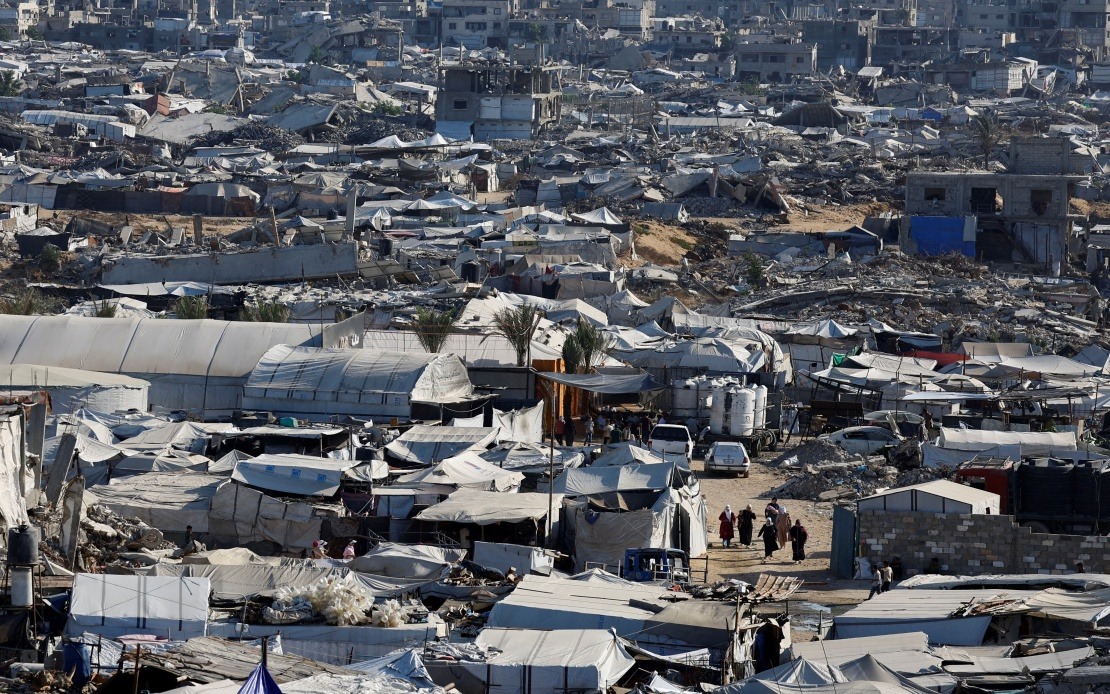
The broader devastation inflicted during the conflict that commenced on October 8, 2023, underscores the urgency animating American diplomatic initiatives. Over 73,000 Palestinians have been killed and more than 174,000 wounded across the entire conflict period, whilst approximately 90 percent of Gaza's critical infrastructure lies in ruins. Reconstruction alone requires sustained international commitment and capital; any peacekeeping arrangement must therefore encompass not merely military oversight but economic rehabilitation frameworks.
For Malaysia and regional partners, the American funding notification signals that Washington perceives the stabilisation force as central to a durable resolution rather than a temporary palliative. The question of how extensively ASEAN nations might participate in such an operation remains unresolved, though their involvement could enhance legitimacy and demonstrate international ownership beyond Western or Middle Eastern stakeholders. The Board of Peace's multinational composition reflects this aspiration, yet tensions over implementation philosophy suggest that assembling troops or observers may prove easier than achieving consensus on operational mandates and rules of engagement.
The divergence between Netanyahu's security-first approach and the sequenced disarmament-alongside-withdrawal model preferred by Washington encapsulates a deeper problem: the absence of mutual trust between principals. Israeli scepticism regarding Hamas's willingness to genuinely disarm, married with Palestinian and American concerns about Israeli good faith, creates a prisoners' dilemma in which neither party can credibly move first without risking existential disadvantage. The International Stabilisation Force is intended to solve this problem by introducing neutral verification, yet Netanyahu's rejection suggests Israel questions whether any third-party mechanism can provide the certainty it demands.
Looking ahead, the sustainability of American funding and diplomatic investment depends on observable progress within months rather than years. Should Netanyahu continue refusing staged withdrawal or Hamas prove unwilling to surrender significant weaponry, the entire framework risks collapse. For Southeast Asian governments, such an outcome would complicate efforts to maintain balanced regional diplomacy and might necessitate difficult choices regarding international solidarity versus strategic neutrality. The Trump administration's commitment is noteworthy, yet commitment alone cannot overcome the fundamental political obstacles that have resisted resolution for decades.

