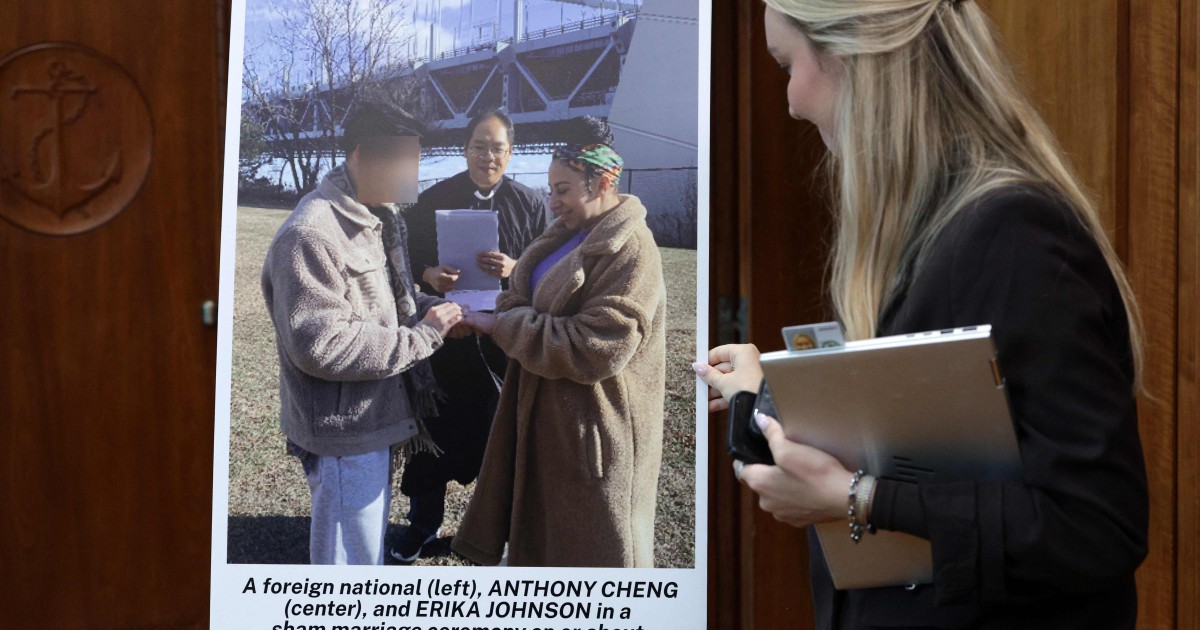
Federal prosecutors in the United States have brought charges against 11 people implicated in what authorities describe as an elaborate immigration fraud operation spanning more than a decade. The scheme centred on arranging marriages of convenience between foreign nationals—predominantly Chinese citizens—and willing participants in the United States, enabling the foreign nationals to obtain permanent residency status through the spousal immigration pathway. Court filings indicate that approximately 1,000 fraudulent marriages were orchestrated through this network, representing a significant breach of America's immigration procedures.
The investigation and subsequent prosecution come amid heightened scrutiny of US immigration loopholes under the new presidential administration. Earlier directives have specifically targeted what some officials term "birth tourism," a practice where foreigners travel to the United States to give birth and secure citizenship for their children. While that particular phenomenon differs from marriage fraud, both represent concerns within policymaking circles about circumventing standard immigration protocols, and the timing of these charges reflects broader enforcement priorities currently dominating federal immigration policy.
The defendants operated what amounted to a professional immigration facilitation network, according to authorities. Their operation did not depend on coercion or deception of US citizens unaware of their participation in illegal activity. Instead, the scheme involved recruiting American citizens who willingly entered into bogus marriages in exchange for compensation. Court documents suggest a systematic approach, with organisers handling paperwork preparation, coordination of ceremonies, and navigation of immigration bureaucracy to ensure the fraudulent marriages passed official scrutiny.
For Chinese nationals seeking US immigration status, pursuing marriage to an American citizen has historically represented one of the more accessible pathways to permanent residency. Spousal sponsorship visas are processed relatively quickly compared to employment-based or diversity visa categories, and they bypass annual numerical limitations that restrict other immigration channels. This structural advantage within the American immigration system has made spousal sponsorship an attractive target for fraud networks seeking to capitalise on demand from foreign nationals willing to pay substantial fees.
The economics of the scheme reveal the financial incentives driving both suppliers and consumers of fraudulent services. Organisers profited handsomely from arranging each fictitious marriage, while Chinese nationals paid thousands of dollars for what they regarded as a faster, more reliable route to American permanent residency than through conventional channels. The scale of the operation—approximately 1,000 marriages over a ten-year period—suggests consistent demand and a well-established customer base willing to engage in immigration fraud.
For Malaysian readers, this case carries particular relevance given Malaysia's own experience with irregular immigration patterns and cross-border movement dynamics. While Malaysia has primarily grappled with irregular arrivals and overstaying rather than immigration fraud schemes on this scale, the underlying phenomena reflect broader Southeast Asian patterns. Many skilled and semi-skilled workers from the region have sought pathways to developed economies, and marriage-based immigration remains a common mechanism for international mobility in the Asia-Pacific region.
The prosecution also underscores the enforcement capabilities American authorities continue to deploy against immigration violations, even amid political focus on border enforcement and exclusionary policies. Federal agents conducted extensive investigations, analysed documentary evidence, and coordinated across jurisdictions to unravel this network. The charges carry potential penalties including immigration fraud convictions, conspiracy charges, and associated financial penalties, with some defendants potentially facing substantial prison sentences.
From an immigration policy perspective, the case illuminates vulnerabilities in verification procedures that the system relies upon. Determining the genuineness of marriages for immigration purposes has long posed administrative challenges. US Citizenship and Immigration Services typically interview prospective spouses separately to assess relationship authenticity, request documentation, and examine financial and residential connections. Yet determined fraudsters with resources can coach participants, fabricate documents, and present persuasive false narratives that pass initial screening.
The broader context suggests escalating tension between immigration aspirations among foreign nationals and restrictive American policies designed to limit newcomers. When conventional immigration pathways become narrower, more expensive, or subject to lengthy backlogs, the financial incentive structure supporting underground immigration services expands accordingly. This prosecution represents one enforcement response, but structural solutions would address whether American immigration policy continues narrowing access routes and inadvertently encouraging fraud networks seeking to profit from the resulting gaps.
For transnational communities, particularly those with relatives or business connections spanning multiple countries, this case serves as a cautionary reminder about immigration law's serious consequences. Participants in such schemes risk criminal conviction, deportation, fines, and permanent disqualification from future legal immigration pathways. Even seemingly victimless white-collar immigration fraud carries life-altering penalties in the American legal system.
The Justice Department's announcement comes as enforcement agencies receive renewed mandate and resources to pursue immigration-related prosecutions. This prosecution likely represents just one of several ongoing investigations into similar schemes, and future charges against additional perpetrators remain probable. For foreign nationals considering irregular pathways into the United States, the message is unequivocal: federal authorities possess the investigative tools and legal authority to pursue complex immigration fraud schemes regardless of how sophisticated or long-established they may appear.

