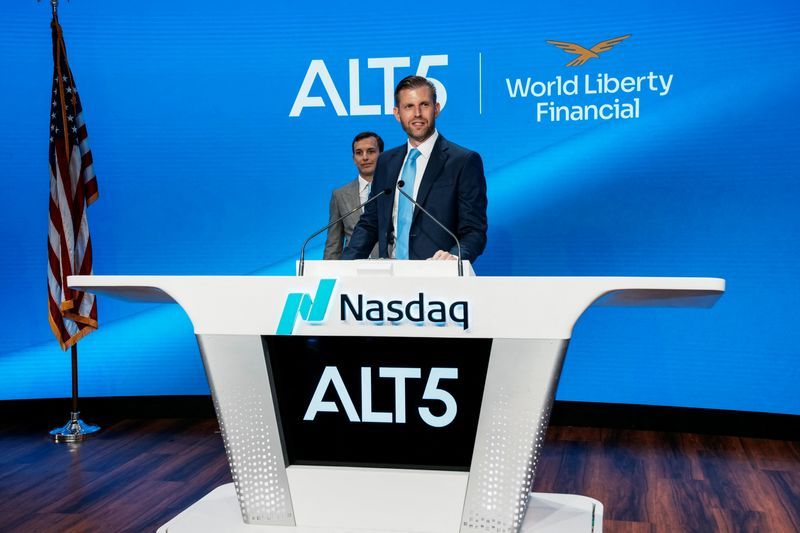
The United States Office of the Comptroller of the Currency has taken a significant step in the crypto sector's regulatory journey, granting conditional preliminary approval to World Liberty Trust Company's application for a national trust charter. The decision, announced on Friday, represents a milestone for World Liberty Financial, a digital assets platform closely aligned with President Donald Trump and his immediate family, and reflects the current administration's receptive stance towards cryptocurrency innovation.
The conditional charter approval, which World Liberty Trust applied for in January, does not immediately grant full banking powers to the firm. Rather, it establishes a framework through which the company can operate as a federally regulated entity, managing and holding customer assets while facilitating faster payment settlements. Importantly, the trust charter structure distinguishes itself from traditional banking by generally prohibiting deposit-taking and lending activities, limiting the institution's scope to asset servicing and custody functions. This regulatory approach has become an increasingly popular pathway for cryptocurrency companies seeking institutional legitimacy without assuming conventional banking risks.
Under Comptroller Jonathan Gould, appointed to the role by Trump last year, the OCC has demonstrated a markedly more welcoming stance towards crypto sector applications. World Liberty Financial joins other cryptocurrency enterprises such as Ripple and Circle in securing preliminary approval for similar charters, signalling a broader regulatory shift within the Trump administration. The chartering framework allows firms to operate under a single federal license across state lines, substantially reducing compliance fragmentation and making it considerably easier for these companies to attract and serve institutional clients who demand robust regulatory oversight.
The charter carries particular significance for World Liberty's flagship product, USD1, a dollar-backed stablecoin that would transition from relying on third-party custodian BitGo to direct issuance and management under World Liberty's own auspices. This shift consolidates multiple functions—stablecoin generation, reserve custody, and asset management—within a single regulated institution, theoretically enhancing operational efficiency and reducing counterparty risks. Since its announcement in March 2025, USD1 has demonstrated remarkable market traction, ascending to the fourth-largest stablecoin by market capitalisation with approximately USD4 billion in circulation. The Trump family's financial gains from USD1 alone have reached approximately USD50 million through June 2026, whilst the broader World Liberty Financial ecosystem has channelled over USD1.6 billion to Trump and his family members as of April 2026.
The OCC's approval letter underscores that the charter remains conditional, contingent upon several administrative and operational requirements. World Liberty must maintain minimum capital reserves of at least USD20 million and notify regulators of any material business plan modifications. Additionally, the firm must appoint a qualified employee dedicated to internal audit functions, ensuring governance structures meet federal standards. These conditions reflect standard regulatory practice, though they also demonstrate the OCC's intent to maintain ongoing supervisory authority over the entity's operations and strategic direction.
International investment complications have emerged as a notable regulatory consideration. The approval letter specifically addresses concerns raised during the public comment period regarding non-U.S. investors in World Liberty Financial. The OCC determined that such investors would not constitute principal shareholders, thereby limiting their governance influence over the institution. Furthermore, multiple international investors, including those with connections to the United Arab Emirates, executed formal passivity agreements committing themselves to refrain from seeking operational control or strategic influence. Eric Trump, the president's son, signed such an agreement in his capacity as president of a Trump family investment vehicle, demonstrating the family's acknowledgement of these regulatory constraints.
The February revelation that World Liberty Financial had undertaken a reported USD500 million investment transaction linked to the UAE's national security adviser prompted scrutiny from Democratic members of the Senate Banking Committee, who questioned the potential national security implications of such foreign capital involvement. This incident underscored the intersection of cryptocurrency innovation, family business interests, and geopolitical considerations that characterises World Liberty's regulatory pathway. The OCC's treatment of these concerns by imposing investor passivity requirements suggests an attempt to balance regulatory acceptance of the charter with safeguards against potential foreign influence over a crypto institution with direct governmental ties.
World Liberty Financial's leadership structure reveals deep interconnections with Trump's established political and business networks. Zach Witkoff, who serves as CEO and president of World Liberty Trust, is the son of Steve Witkoff, Trump's special diplomatic envoy. The Witkoff family, alongside Trump and his three sons, co-founded World Liberty Financial in late 2024. Robert Witkoff, Steve's brother and a former insurance executive, will serve as a director of the trust bank, whilst Scott Alper, president of the Witkoff family real estate enterprise, has been proposed as another board director. This interlocking web of familial and professional relationships illustrates how Trump's business ventures and diplomatic appointments have become substantially integrated.
The regulatory approval process itself has become a point of partisan contention. Unlike many other American financial regulators, the OCC lacks a bipartisan board structure, with the comptroller wielding substantial independent authority. Democratic senators have publicly contended that granting a charter to a Trump family cryptocurrency venture represents a profound conflict of interest, particularly given the president's direct personal and financial stake in the enterprise's success. During a February congressional hearing, Democrats pressured Comptroller Gould to disclose the company's unredacted application, noting that the publicly available version omitted significant details regarding capital structure and detailed business plans. The OCC's defence—asserting that Gould and his team adhered to statutory duties and ethical obligations whilst relying upon career staff for technical review—has not fully assuaged Democratic concerns about the decision's propriety.
World Liberty Financial's articulated mission centres on democratising financial access by offering an alternative to what the Trump family has characterised as an unnecessarily restrictive and inequitable traditional banking system. This narrative resonates with broader libertarian cryptocurrency ideology whilst simultaneously leveraging the administration's policy sympathies towards digital asset innovation. The USD1 stablecoin represents the vehicle through which World Liberty intends to provide blockchain-based financial services, positioning itself as a bridge between traditional dollar-denominated reserves and decentralised finance applications. The remarkable velocity of USD1's market adoption suggests considerable investor appetite for Trump-aligned cryptocurrency products, though critics question whether the charter approval prioritises family business advancement over prudent regulatory gatekeeping.
The approval signals a watershed moment for cryptocurrency's regulatory legitimacy within the American financial system, though its broader implications remain contested. For Malaysian and Southeast Asian observers, the decision demonstrates how developed-market crypto regulation continues to evolve, potentially establishing precedents that regional regulators may eventually confront as similar applications emerge. The intersection of family political power, cryptocurrency innovation, and banking regulation exemplified by World Liberty Financial raises questions about governance standards and conflict management that transcend borders and jurisdictional boundaries.

