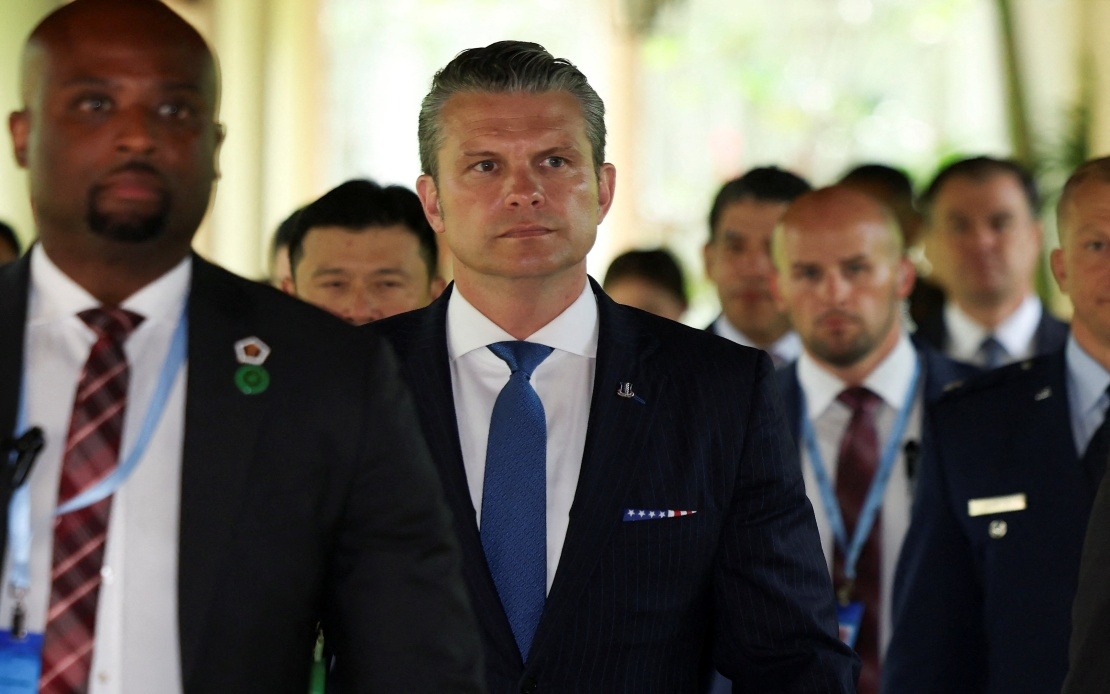
The United States and Jamaica have formalized a comprehensive defence agreement designed to intensify their joint response to drug trafficking and related criminal networks destabilizing the Western Hemisphere. The partnership, announced by US Southern Command, represents a significant commitment from both nations to leverage decades of security cooperation in addressing the escalating threat posed by transnational cartels. The accord follows earlier discussions at Panama's anti-cartel forum in August, where Defence Secretary Pete Hegseth and Jamaica's Deputy Prime Minister and Minister of National Security Horace Chang outlined shared strategic objectives.
The timing of this agreement reflects broader US policy shifts toward hemispheric security challenges. In November 2025, the Pentagon formally launched Operation Southern Spear, a coordinated military initiative specifically targeting drug cartel operations throughout Latin America and the Caribbean. This operation represents an intensification of US engagement in countering what officials characterize as a fundamental threat to regional stability and security architecture. Jamaica's geographical position as a maritime crossroads between major trafficking routes makes it a crucial partner in implementing these strategies.
General Francis L. Donovan, SOUTHCOM's commander, framed the agreement as essential to maintaining pressure on criminal networks that exploit maritime routes and exploit weaknesses in regional defence capabilities. The partnership aims to expand intelligence sharing, coordinate maritime interdiction operations, and strengthen Jamaica's institutional capacity to combat organised trafficking. By formalising cooperation mechanisms, both nations seek to create a more cohesive security response that denies cartels operational space throughout the region.
The scale of current operations underscores the intensity of US engagement in the theatre. Since September 2025, American military forces have conducted at least 67 separate strikes against suspected drug smuggling vessels operating across the Caribbean and Pacific waters. These operations, according to SOUTHCOM, have resulted in 221 deaths among suspected traffickers and operatives. The casualty figures illustrate the forceful nature of current counter-narcotics strategies and suggest a deliberate escalation in direct military engagement with trafficking infrastructure.
For Caribbean nations like Jamaica, this security arrangement carries significant implications for national sovereignty, institutional development, and regional stability. The partnership provides access to advanced surveillance capabilities, military training, and intelligence resources that Jamaica's defence establishment could not independently acquire. However, such arrangements also raise questions about the extent of external military involvement in domestic security matters and the potential long-term dependencies created through deepened defence integration.
The bilateral accord reflects recognition that traditional law enforcement approaches have proven insufficient against increasingly sophisticated criminal organisations. Modern drug networks operate as transnational enterprises with military-grade weaponry, encrypted communication systems, and substantial financial resources. Countering these threats requires integrated military responses, intelligence coordination across borders, and sustained operational pressure on multiple fronts simultaneously. Jamaica's participation in this framework positions the nation as a key ally in US hemispheric strategy.
Southeast Asian observers should note the strategic dimensions of this agreement beyond its immediate narcotics-focused objectives. The US emphasis on hemispheric security cooperation through military partnerships mirrors similar initiatives developing in the Indo-Pacific region. The framework of deepened defence ties, intelligence sharing, and coordinated operations represents a model being replicated globally as Washington pursues geopolitical competition and regional influence consolidation. Understanding these patterns provides insight into broader patterns of US security engagement globally.
Jamaica's integration into US-led counter-narcotics operations carries economic dimensions often overlooked in security discourse. The illicit drug trade, though criminal in nature, represents significant economic activity within Caribbean economies, creating perverse incentives for corruption and institutional capture. By strengthening enforcement capacity and military pressure on trafficking networks, the agreement aims to disrupt this shadow economy, though success requires complementary strategies addressing poverty, institutional development, and legitimate economic opportunity creation.
The agreement's success will ultimately depend on sustained political commitment from both governments and effective implementation of intelligence-sharing protocols and operational coordination mechanisms. Previous regional security partnerships have achieved mixed results, constrained by resource limitations, bureaucratic coordination challenges, and varying levels of institutional capacity. Jamaica's ability to operationalise new defence capabilities and maintain interagency coordination will prove critical to transforming strategic agreements into tangible operational outcomes.
Looking forward, the US-Jamaica partnership likely foreshadows expanded military engagement throughout the Caribbean and Central American regions. As criminal organisations adapt to increased enforcement pressure, they increasingly transit through multiple jurisdictions, requiring unprecedented levels of international cooperation. The formalisation of security frameworks between Washington and regional partners represents an institutional evolution designed to sustain pressure on trafficking networks operating across maritime and terrestrial domains. For Jamaica and the broader Caribbean, this represents both enhanced security capacity and deepened entanglement with US hemispheric strategic priorities.

