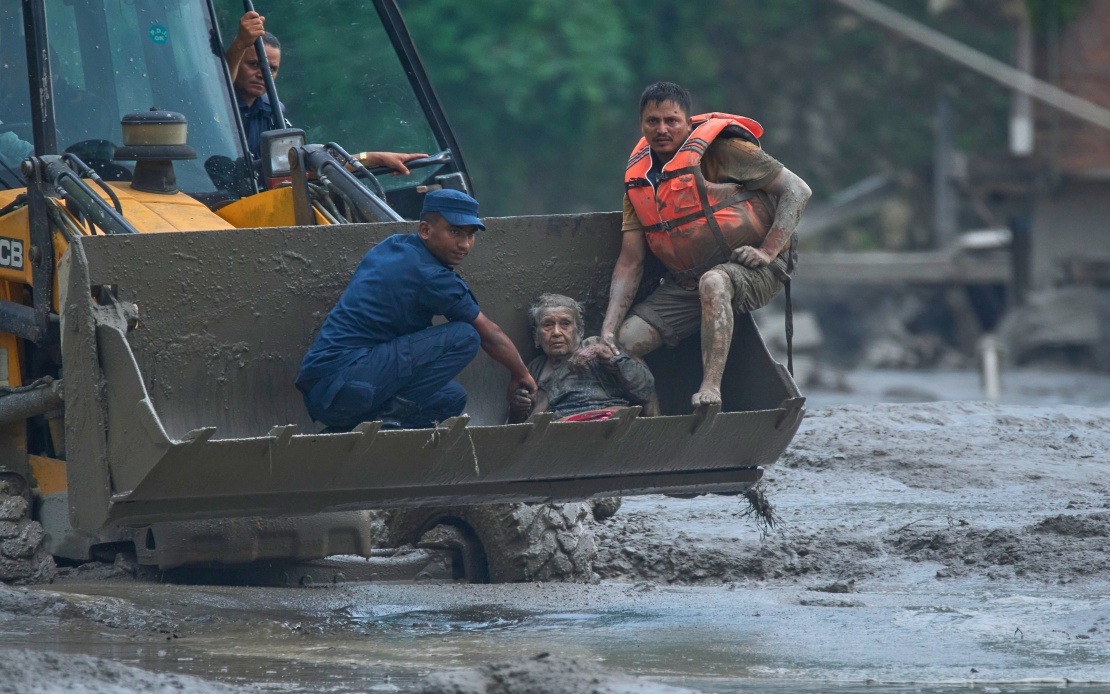
The governments of the United States and Canada have signalled their commitment to providing emergency assistance to Nepal in the wake of devastating flash floods and mudslides that struck a mountainous region near the Chinese border on Wednesday. The disaster has emerged as one of the most severe natural catastrophes to hit the Himalayan nation in recent years, prompting swift diplomatic responses from both North American nations as they grapple with the scale of the crisis and the fate of their missing citizens.
US Secretary of State Marco Rubio articulated Washington's position through social media, stating that the State Department remains prepared to extend necessary humanitarian support to Nepal's government in addressing the immediate aftermath of the calamity. His statement reflected a broader commitment to stand alongside the Nepali population during a moment of acute vulnerability, with Rubio emphasising that Americans remain united in their thoughts for those affected by the catastrophe. This expression of solidarity carries particular significance given the substantial number of US citizens currently unaccounted for in the affected regions.
Canada's Prime Minister Mark Carney similarly characterised the situation as catastrophic in scope, conveying empathy for the diverse categories of those suffering in the immediate aftermath—including survivors grappling with loss, families separated from loved ones, and communities awaiting news of missing persons. Carney's message on social media platforms underscored Ottawa's readiness to mobilise whatever support mechanisms prove necessary, reflecting the deep concern felt in Canada regarding the welfare of its nationals caught in the disaster zone. The tone of both governmental responses indicates recognition that this represents a critical humanitarian emergency requiring coordinated international action.
Nepalese authorities have reported that approximately 47 American citizens remain missing following the floods and associated mudslides, whilst Canadian officials have documented at least 24 unaccounted nationals. These figures, which originate from Nepalese government sources, have not yet received independent verification from either Washington or Ottawa. The discrepancy between official reporting and pending confirmation highlights the confusion and logistical challenges that characterise the immediate response phase to major disasters in remote mountainous terrain, where communication infrastructure often sustains damage alongside roads and settlements.
The scale of the natural disaster extends far beyond the human toll, encompassing severe damage to critical infrastructure across the affected region. Nepalese government assessments indicate that at least 160 individuals have perished in the floods and associated secondary hazards, with over 680 remaining missing across the affected areas. The destruction has compromised 13 separate hydroelectric power generation facilities that provide essential electricity to communities across Nepal and potentially the broader South Asian region. Additionally, approximately 40 kilometres of road networks have been rendered impassable or destroyed entirely, severely hampering rescue and relief operations.
The cascading infrastructure failures reveal the interconnected vulnerabilities of development in challenging topography. Approximately 200 commercial and transport vehicles have been swept away by the torrential flows, whilst 19 bridges connecting communities and enabling economic activity have been destroyed or rendered unstable. These losses disrupt not merely immediate movement but also the supply chains and economic connections that keep rural Nepal connected to urban markets and essential services. The damage to hydropower infrastructure carries particular significance for Nepal's energy security and its capacity to export electricity to neighbouring India, representing potential economic ramifications extending well beyond the immediate disaster zone.
For Malaysia and the broader Southeast Asian region, this disaster underscores the mounting climate-related risks affecting mountain and foothill communities across Asia. Nepal's experience with catastrophic flooding shares patterns observed elsewhere in the region, from northern Thailand to the Philippines, where monsoon intensification and glacial melt in high-altitude regions create compounding hazards. Malaysian development planners and environmental authorities may draw relevant lessons regarding infrastructure resilience in topographically challenging terrain and the necessity of integrating climate adaptation into hydropower project design and maintenance protocols.
The international response mobilisation also demonstrates the growing coordination mechanisms among democratic nations in responding to humanitarian emergencies. Both the United States and Canada have activated diplomatic channels to assess on-the-ground conditions and determine the most effective mechanisms for providing support. This coordination typically involves liaison with Nepal's government, intelligence gathering regarding the situation of their respective nationals, and deployment of specialised rescue and assessment teams if circumstances permit. The speed of the official response reflects established protocols for managing citizens abroad during emergencies.
The immediate priority for all three governments centres on locating and assisting missing persons whilst simultaneously addressing the pressing humanitarian needs of displaced and injured survivors. Search and rescue operations in mountainous terrain affected by floods and mudslides present extraordinary technical challenges, requiring specialist equipment, trained personnel, and coordination across weather-dependent logistical constraints. International assistance in these domains can prove decisive in expanding capacity beyond what Nepal's domestic resources alone could mobilise during the critical early phase of response operations.
Beyond the immediate emergency phase, the reconstruction challenges confronting Nepal will likely extend across multiple years and require substantial financial resources. The destruction of energy infrastructure, transportation networks, and housing stock represents not merely immediate humanitarian crisis but also medium-term development setbacks. Both the United States and Canada have historically participated in post-disaster reconstruction assistance in Nepal and across South Asia, suggesting that their commitments announced this week may foreshadow longer-term engagement in helping Nepal rebuild critical systems and restore community resilience. The international dimension of this response reinforces Nepal's integration into global humanitarian assistance networks whilst highlighting the transnational dimensions of contemporary disaster management.

