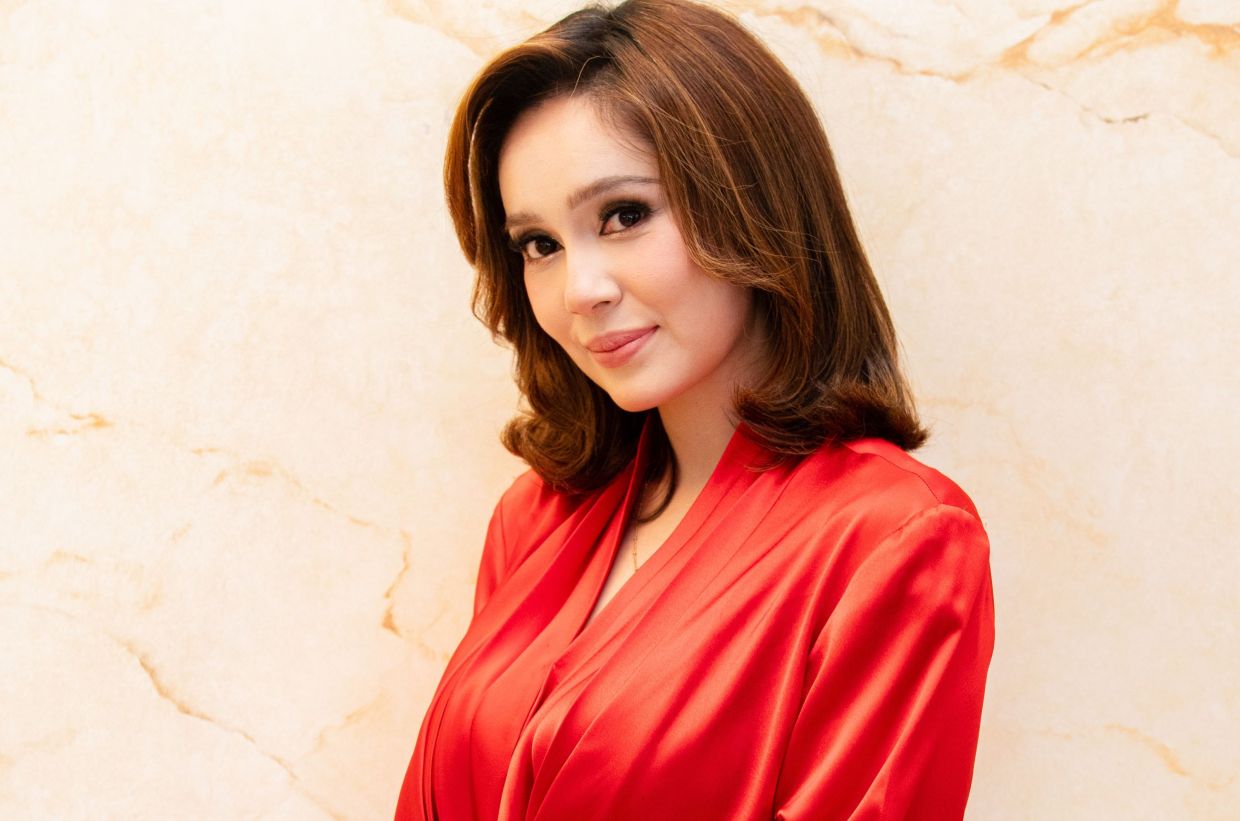
Malaysian actress Uqasha Senrose has spoken candidly about collaborating with her co-star Aliff Aziz on a 12-episode drama centred around polygamous marriage, brushing aside concerns about their working relationship in the wake of the actor's highly publicized personal turmoil. The series, which features Aliff in the role of Adli opposite Uqasha's character Azura and Elisya Sandha as Nikita, marks a significant project for both performers despite the cloud of controversy that has surrounded Aliff since early 2024.
Aliff Aziz became the subject of intense public scrutiny in March 2024 after he was detained in connection with khalwat allegations, the Islamic legal term for close proximity between unrelated individuals. The incident triggered a cascade of personal upheaval, culminating in a dramatic and widely-publicized split from Malaysian singer-actress Bella Astillah, with whom he shares two children. The breakdown of their marriage dominated entertainment headlines throughout the middle of last year, making Aliff's return to acting a notably delicate matter that could easily have derailed the production.
When asked about the decision to work alongside Aliff during such contentious circumstances, Uqasha adopted a measured and compassionate stance that reveals the pragmatic realities of Malaysia's entertainment industry. She articulated a philosophy of non-judgment, acknowledging that everyone carries personal failings and has navigated mistakes. Her comments suggest a mature understanding that professional relationships operate in a separate sphere from the personal scandals that occasionally engulf public figures, and that condemning someone categorically may do more harm than good to the broader ecosystem of Malaysian drama production.
During the filming process itself, Uqasha reported that no friction emerged between the two actors and that Aliff maintained consistently professional conduct on set. She characterized his approach as straightforward and focused: he arrived, completed his assigned scenes, and delivered the required performances without any behaviour that might have created discomfort or tension. From her perspective, this professional demeanour was the metric that truly mattered, suggesting that an individual's capacity to compartmentalize personal difficulties and execute their professional responsibilities deserves recognition and respect.
Crucially, Uqasha articulated a perspective centred on livelihood and economic necessity. She emphasized her reluctance to deny anyone their source of income, recognizing that both acting work and hers represent essential means of supporting themselves and their families. This reflection carries particular resonance in Malaysian society, where the concept of rezeki—divine provision—carries deep spiritual and cultural significance. Her framing transforms the decision to work together from a moral judgement into a practical acknowledgment that professional opportunities should not be withdrawn solely on the basis of personal scandals.
Interestingly, Uqasha herself emerged from her own marital crisis during roughly the same timeframe. She initiated divorce proceedings against actor and ex-husband Kamal Adli in October 2025, with the dissolution becoming officially finalized in January 2026. The couple shares a daughter, and during the proceedings Uqasha publicly alleged that Kamal had perpetrated domestic abuse—allegations he categorically rejected. This parallel experience positions Uqasha as someone uniquely positioned to understand the complexities of public relationship breakdown and the necessity of moving forward professionally.
The drama series itself carries thematic weight that intersects provocatively with the personal experiences of its lead actors. Centred on a polygamous marriage arrangement and the emotional turbulence it generates, the narrative explores moral ambiguity and the devastating consequences of relationship complexity. Rather than drawing directly from her own painful divorce experience to inform her portrayal of Azura, Uqasha made a deliberate artistic choice to maintain separation between herself and her character. She recognized that importing her authentic pain into the role risked compromising her ability to embody Azura authentically, as the character's journey follows its own distinct arc.
Uqasha described Azura as a woman navigating intense emotional experiences and multiple trials throughout the series. Her character endures physical and psychological torment, including scenes depicting violence where she is struck and forcibly dragged. The actress conveyed that inhabiting such a character demands emotional authenticity that paradoxically requires distance from one's own trauma. She articulated the challenge of portraying a character who experiences seeming recovery and the promise of redemption, only to encounter fresh adversity that tests her resilience anew.
What emerges from the drama's narrative structure is a deliberate rejection of moral simplicity. Uqasha noted that the series deliberately avoids populating itself with purely virtuous or thoroughly villainous characters. Instead, individuals who present themselves as inherently kind may conceal less honourable motivations, whilst those who manifest cruelty often harbour comprehensible justifications for their behaviour. This nuanced approach to character construction mirrors the real-world complexity that Uqasha herself has navigated—where personal catastrophe rarely permits easy categorization of heroes and villains.
Regarding her current personal circumstances, Uqasha indicated that she has consciously redirected her focus toward her own wellbeing and that of her daughter. She emphasized prioritizing her professional endeavours and maternal responsibilities over other concerns, suggesting a deliberate reorientation of her life priorities following her divorce. The actress reflected that her accumulated difficult experiences have functioned as educational moments, fostering greater emotional maturity and self-awareness.
Maternity, she suggested, has fundamentally altered her perspective on responsibility and purpose. Becoming a mother crystallized her recognition that her obligations extend beyond herself toward another human being who depends upon her guidance, stability, and example. This shift in consciousness appears to have facilitated her ability to compartmentalize professional challenges and maintain perspective regarding the personal difficulties that colleagues might face.

