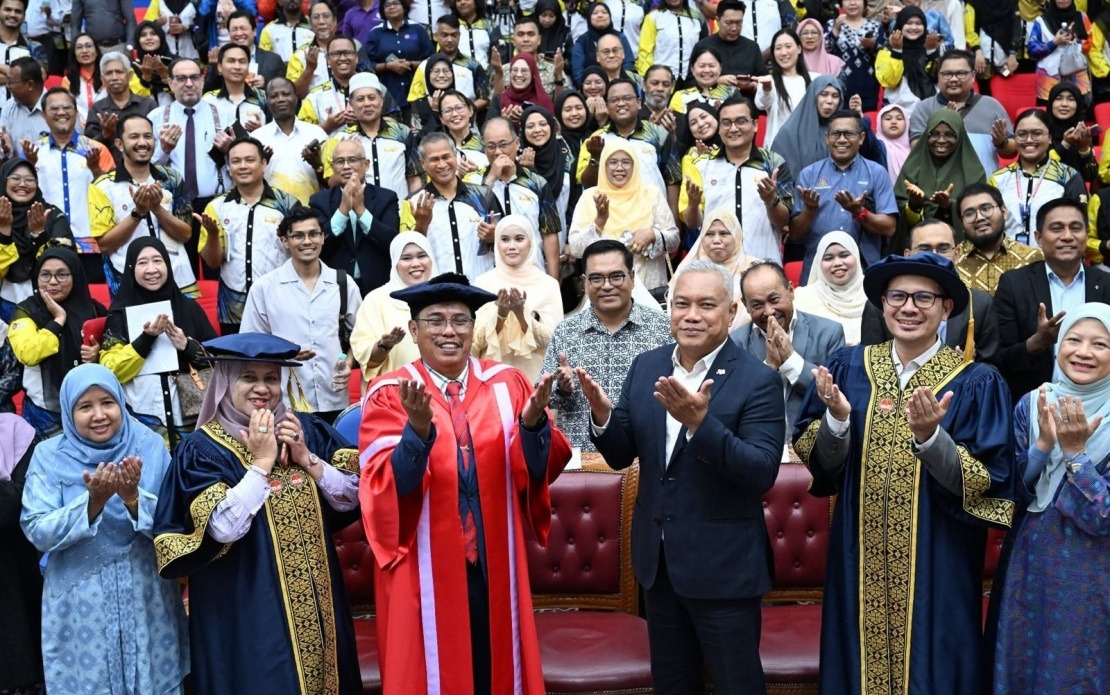
Universiti Pendidikan Sultan Idris (UPSI) is pursuing plans to establish a private specialist hospital in Tanjong Malim as part of an ambitious strategy to enhance healthcare infrastructure and catalyse the region's transformation into a thriving knowledge ecosystem. The initiative, disclosed by university vice-chancellor Prof Datuk Dr Md Amin Md Taff, represents a calculated expansion beyond UPSI's traditional educational mandate into the broader wellness and livelihood support systems needed to sustain a growing international academic community.
The motivation for the hospital project stems from pressing practical needs within UPSI's expanding student body and workforce. The institution's international enrolment has grown substantially, bringing with it expectations for world-class medical services comparable to those available at major academic centres elsewhere. By developing specialist healthcare on or adjacent to campus, UPSI aims to eliminate gaps in service provision that currently require staff and students to travel beyond Tanjong Malim for complex medical interventions. This approach mirrors strategies adopted by leading universities globally, where integrated campus healthcare systems enhance institutional competitiveness and student retention.
What distinguishes UPSI's approach is its emphasis on partnership rather than proprietorship. Rather than establishing a university-owned hospital, UPSI is actively prospecting for private healthcare operators willing to establish or relocate specialist facilities to serve the Tanjong Malim corridor. This collaborative model distributes capital risk and operational burden while allowing the university to leverage private-sector expertise and efficiency. Prof Md Amin underscored that the university is simultaneously exploring multiple business structures, recognising that no single model will necessarily suit UPSI's financial capacity and strategic objectives.
The hospital development must be understood within a broader vision for Tanjong Malim's future. UPSI envisions the town evolving from a primarily educational enclave into a fully integrated knowledge city where residential, commercial, recreational, and healthcare functions create a self-contained community. This vision has deep roots in Malaysian economic policy, which has consistently promoted university towns as drivers of regional development and innovation clusters. By anchoring healthcare infrastructure in this vision, UPSI positions itself not merely as an institution but as a catalyst for comprehensive regional transformation that generates employment, attracts investment, and enhances quality of life for existing and future residents.
Parallel to healthcare expansion, UPSI is developing retirement facilities to create purposeful post-career pathways for its academic staff. The proposed retirement resort concept reflects international trends where universities maintain alumni engagement and institutional loyalty through curated residential communities. By enabling retired academics to remain geographically and intellectually connected to campus life, UPSI cultivates a community of emeritus scholars who can mentor younger colleagues, contribute to research initiatives, and participate in university governance. This approach simultaneously addresses Malaysia's demographic shift toward an ageing population, positioning UPSI as an exemplar for age-friendly institutional design.
The timing of these initiatives reflects UPSI's strategic recalibration in response to competitive pressures within Malaysian higher education. As universities worldwide compete intensely for international talent, the quality of peripheral services—healthcare, housing, cultural amenities—increasingly influences enrolment decisions. Institutions offering comprehensive lifestyle ecosystems rather than merely classroom instruction differentiate themselves in crowded markets. For UPSI specifically, anchoring development in Tanjong Malim's growth narrative allows the university to market itself not as an isolated campus but as the intellectual and social core of an emerging regional destination.
The healthcare initiative carries particular significance for Southeast Asian university systems generally. While institutions in Singapore and Thailand have established integrated medical facilities, Malaysian universities have historically outsourced healthcare to public or independent providers. UPSI's move signals a regional shift toward institutional self-sufficiency in critical support services. Should the Tanjong Malim hospital materialise, it would establish a template for peer institutions considering similar ventures, potentially reshaping expectations around what comprehensive university infrastructure encompasses.
Implementation challenges remain substantial. Specialist hospitals demand substantial capital investment, regulatory navigation, and sustained operational discipline. UPSI must secure private partners comfortable with the Tanjong Malim location and willing to serve a primarily university-affiliated patient population. Healthcare regulations governing hospital licensing, staff credentialing, and service standards impose compliance burdens unfamiliar to educational administrators. The university must also manage the risk that private operators prioritise commercial viability over institutional accessibility, potentially creating tension between profit maximisation and the university's welfare mission.
Financial sustainability represents a critical unknown. A private specialist hospital serving primarily UPSI constituents may struggle to achieve the patient volume necessary for profitability unless community engagement significantly expands the user base. This consideration requires careful market analysis and realistic projections about regional demand for specialist services. UPSI's role—whether as anchor tenant, capital contributor, or facilitating partner—will substantially influence financial outcomes and strategic returns.
Prof Md Amin's comments reveal sophisticated appreciation for the interconnections between educational excellence, campus infrastructure, and regional development. By positioning healthcare and retirement facilities as strategic necessities rather than peripheral amenities, UPSI signals its ambition to function as a comprehensive institutional ecosystem. This vision resonates with Malaysian government priorities emphasising university contributions to inclusive economic development and quality-of-life improvements. However, realising such aspirations demands institutional capacity for complex partnerships, sustained financial commitment, and patience through lengthy regulatory processes.
The initiative also underscores shifting assumptions about Malaysian higher education's social role. Traditional models conceived universities as primarily credentialing institutions where learning occurred in classrooms and libraries. Contemporary visions position universities as integrated communities where education interpenetrates residential life, healthcare access, and retirement planning. UPSI's trajectory reflects this broader reconceptualisation of what universities contribute to their surrounding societies and how institutional success should be measured beyond narrow academic metrics.
Looking forward, UPSI's exploration of private hospital collaboration will likely generate wider discussion within Malaysian university leadership about strategic options for infrastructure development. Whether pursued through formal partnerships or organic expansion, healthcare enhancement represents a logical frontier for ambitious institutions seeking to compete internationally while enriching their local communities. The Tanjong Malim initiative merits close observation as a potential exemplar for reimagining Malaysian university campuses as complete ecosystems supporting holistic human flourishing.

