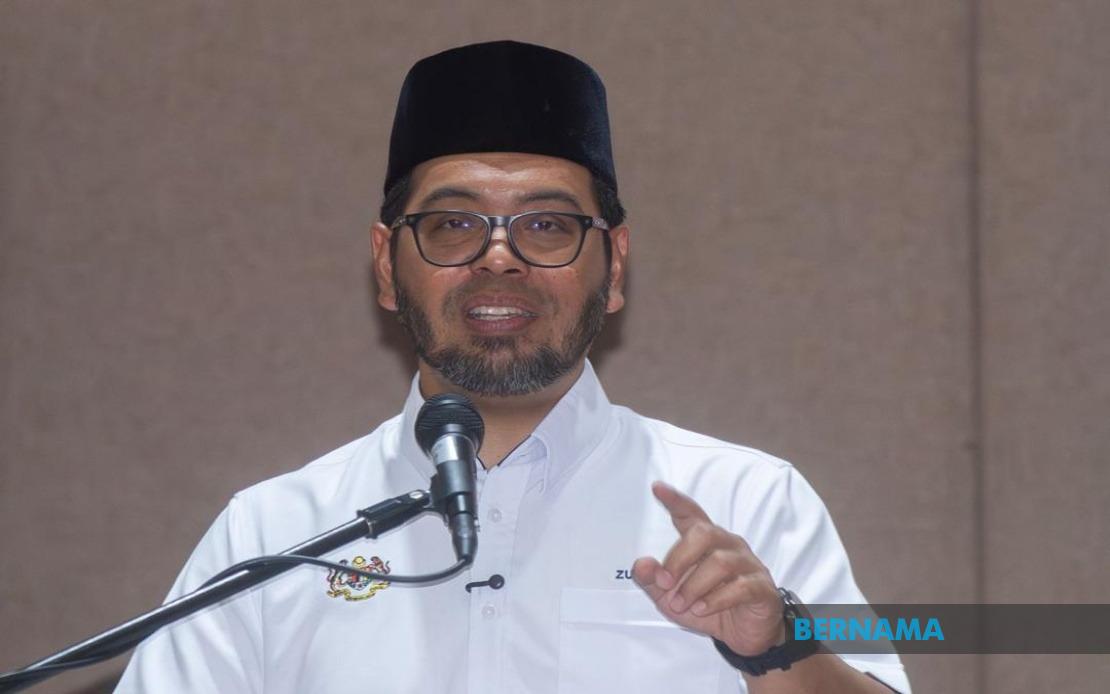
The consequences of unregistered marriages extend far beyond administrative inconvenience, according to Religious Affairs Minister Dr Zulkifli Hasan, who has raised alarm at the persistence of couples living in unrecognised unions across the Federal Territories. Speaking during the launch of the 2026 Federal Territories Syariah Law Literacy Programme in Labuan, Dr Zulkifli emphasised that the ramifications ripple through multiple dimensions of family life, affecting the most vulnerable members—children—in ways that can permanently constrain their life opportunities and legal standing.
The minister revealed that many couples have maintained relationships spanning decades without formal registration, while others have circumvented proper procedures by conducting ceremonies with unauthorised officiants or registering marriages outside their jurisdiction, thereby violating the requirements of the Islamic Family Law (Federal Territories) Act 1984 (Act 303). This pattern suggests a widespread disconnect between community practice and legal framework, reflecting either insufficient awareness or deliberate avoidance of registration requirements. Dr Zulkifli characterised this gap as a critical governance concern, warning that "the implications of failing or delaying marriage registration are not a small matter. The effects are significant and far-reaching."
Children born to unregistered couples face particularly acute vulnerabilities. Without official marriage documentation, establishing a child's legal identity becomes problematic, complicating the issuance of birth certificates—the foundational document required for nearly all subsequent administrative processes. This cascades into educational barriers, as institutions typically demand certified birth records during enrolment. Similarly, access to healthcare services becomes contingent upon documentary proof of identity and parental relationship. The consequences extend to questions of citizenship and nationality, as authorities may struggle to confirm the child's eligibility for such status when lineage cannot be formally established. These obstacles create a form of administrative marginalisation that disadvantages children before they reach school age.
The legal ambiguity surrounding unregistered marriages also undermines maternal and spousal protections. Wives lack formal recourse to claim maintenance (nafkah)—the husband's financial obligation—or severance payments (mutaah) upon dissolution of the relationship, leaving them economically vulnerable. The absence of registered marriage status effectively strips away contractual safeguards that Islamic family law intends to provide, leaving women dependent on informal arrangements that carry no legal weight if disputes arise. This asymmetry of risk disproportionately affects women, who may find themselves defending their interests without institutional backing.
Inheritance and succession present another layer of complication. Upon a spouse's death, the distribution of assets under Islamic inheritance law (faraid) becomes fraught with difficulty when the surviving spouse cannot establish their marital status through official records. Ambiguity about the legitimacy of the marriage invites competing claims from other family members, potentially resulting in protracted disputes and fractured family relations precisely when members are grieving. Children's inheritance entitlements similarly hinge on proving their legitimacy within a recognised family structure, making succession planning contingent on retroactive proof of paternity and marital validity.
Recognising the scale of these challenges, the Religious Affairs Department has adopted a forward-looking strategy emphasising facilitation rather than enforcement. Dr Zulkifli signalled that the department, working alongside religious authorities and strategic partners, seeks to resolve outstanding registration issues through supportive intervention rather than punitive measures. The 2026 Syariah Law Literacy Programme reflects this philosophy, offering interactive counters where residents can seek clarification on marriage registration requirements and address existing compliance gaps. The minister explicitly stated: "We are here not to find fault or punish anyone, but to help, facilitate and resolve these issues comprehensively for the future of families and children."
The programme represents a collaborative mobilisation across multiple government agencies and Islamic institutions. The Federal Territories Syariah Prosecution Department coordinates with JAWI (the Federal Territories Islamic Religious Department), MAIWP (the Federal Territories Islamic Religious Council), the Federal Territories Syariah Court, the Legal Aid Department, the Federal Territories Mufti Department, Tabung Haji, and YAPEIM (the Islamic Economic Development Foundation of Malaysia). This constellation of actors reflects recognition that marriage registration issues intersect with education, welfare, financial services, and legal assistance—domains that extend beyond purely religious administration.
For Malaysian readers, particularly those in the Federal Territories, this initiative carries direct relevance. Couples maintaining informal unions should understand that their hesitation to register carries material costs for their children's futures, not merely for themselves. The move toward legal certainty in marriage status represents a protective measure rather than an intrusive bureaucratic requirement. The emphasis on literacy programmes also signals that government recognises information gaps as an obstacle: residents may not fully appreciate what registration entails or how to navigate the process, suggesting that accessibility and clarity are deliberate focus areas.
More broadly, this issue illuminates tensions within Malaysia's plural legal framework. The Islamic Family Law (Federal Territories) Act 1984 establishes procedures intended to protect family members, yet enforcement appears inconsistent, and public awareness remains incomplete. The gap between law on paper and practice on the ground reflects broader challenges in civil administration across Malaysia's federal structure, particularly regarding coordination between religious and secular authorities. For policymakers, Dr Zulkifli's remarks suggest that compliance increases when citizens understand the protective intent behind regulations rather than perceiving them as arbitrary impositions.
The framing of marriage registration as a form of protection rather than a burden represents a significant reorientation in public communication. Dr Zulkifli stated: "Compliance with syariah law should not be viewed as a burden but as a form of protection that could prevent disputes and safeguard the future of families." This messaging strategy acknowledges that many Malaysians view religious legal requirements with ambivalence or scepticism, and repositions formal compliance as aligned with personal and family interests. Whether this reframing will translate into increased registration rates remains to be seen, but it indicates sophisticated thinking about behavioural change and public cooperation.
Looking forward, the success of initiatives like the 2026 literacy programme will depend on sustained outreach and genuine accessibility. One-off campaigns generate awareness but may not overcome structural obstacles—distance, cost, time constraints, or lingering distrust of authorities—that prevent actual registration. Southeast Asian readers should note that similar tensions between formal legal systems and informal practice characterise much of the region, making Malaysia's attempt to bridge this gap potentially instructive for other jurisdictions grappling with comparable issues. The recognition that children's welfare ultimately depends on institutional recognition of family relationships reflects a convergence between Islamic legal tradition and contemporary human rights concerns, offering a framework that transcends narrow religious or cultural boundaries.

