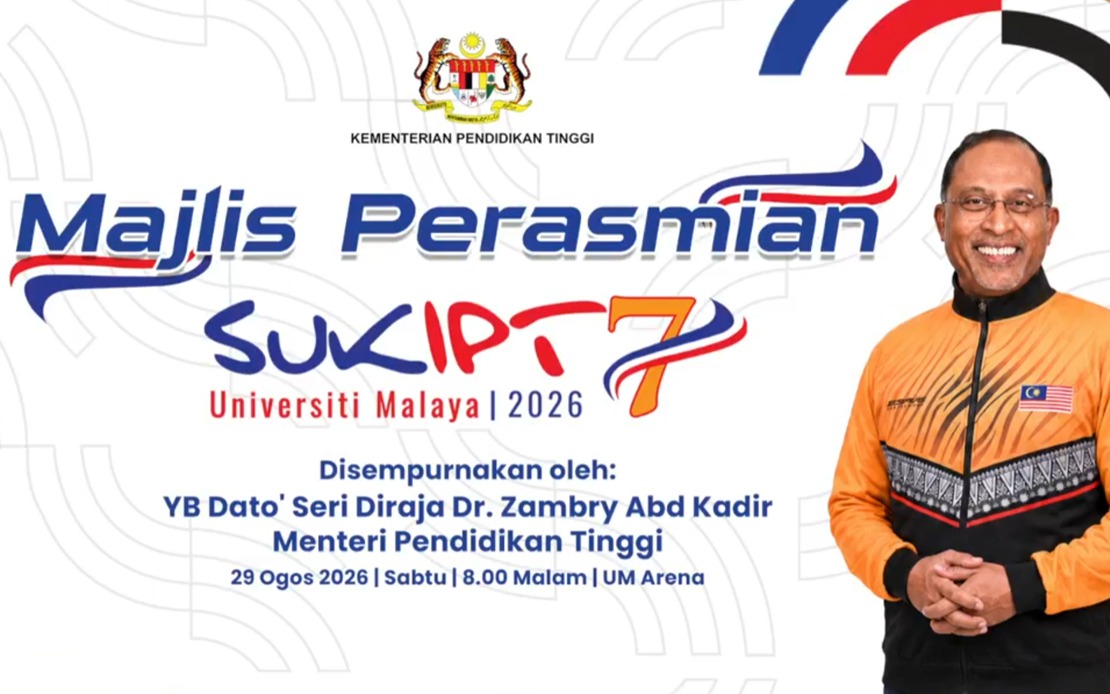
The achievements of athletes from Malaysia's higher education institutions on the international stage are demonstrating that universities can serve as effective platforms for developing elite sporting talent that contributes to national competitiveness. This was emphasised by Higher Education Minister Datuk Seri Dr Zambry Abdul Kadir, who highlighted how university-based athletes have been winning medals and setting records across multiple international championships, signalling a shift towards more professionalised university sports systems in the country.
Speaking at the opening ceremony of the Higher Education Institution Games (SUKIPT) 2026 held at Universiti Malaya Arena, Zambry pointed to recent success at the Glasgow 2026 Commonwealth Games as evidence that Malaysian university students possess the capability to compete effectively on the world stage. The minister characterised this as a departure from previous approaches, describing the current trajectory as one that reflects institutional ambition to challenge records and elevate Malaysia's profile in global sporting competitions.
Among the standout performances Zambry referenced was Muhammad Erry Hidayat from Universiti Putra Malaysia, who secured gold in the men's 79-kilogramme weightlifting event at the recent Commonwealth Games. This success was mirrored by Muhammad Aniq Kasdan from Universiti Teknologi MARA, who similarly captured gold in the men's 60kg weightlifting competition, suggesting that Malaysian universities are developing consistent strength in weight categories traditionally dominated by other nations in the Commonwealth.
Particularly significant was the breakthrough achievement of Amir Daniel Abdul Majid from Universiti Sains Malaysia in judo. His gold medal at the Commonwealth Games represented a historic milestone for Malaysia, marking the first time a Malaysian athlete has won Commonwealth Games gold in the sport. This accomplishment underscores how university sports programmes can serve as incubators for athletes competing in less traditional Malaysian sporting disciplines, potentially opening new pathways to international recognition.
The contributions extended beyond medal-winning performances, as evidenced by Amirul Daniel Abdul Rahim from Universiti Malaya, who brought home a bronze medal in lawn bowls. While positioned lower on the podium than some counterparts, this result still demonstrates the breadth of university participation across diverse sports and the capacity of higher education institutions to develop competitive athletes across multiple disciplines simultaneously.
Domestically, university-affiliated athletes have been equally impressive in their performances at national competitions. Omar Osman, a 400-metre runner from Politeknik Sultan Ibrahim, has contributed to the competitive landscape of track athletics. Meanwhile, sprinters Muhammad Fadwah from UiTM and Danish Iftikhar Muhammad Rosli from Universiti Pendidikan Sultan Idris have pushed the boundaries of Malaysian track and field records, with both athletes breaking Malaysia Games records in the 200-metre and 4x100-metre relay events respectively. These achievements suggest that investment in university sports infrastructure is generating measurable improvements in athletic performance across traditional and emerging disciplines.
The SUKIPT 2026 competition itself reflects the scale and ambition of Malaysia's higher education sports ecosystem. Running from August 28 to September 6 at Universiti Malaya, the event brings together 64 contingents representing a diverse range of institutions: 20 public universities, 42 private higher education institutions, one polytechnic, and one community college. This broad participation structure indicates that sports development is not confined to elite public universities but distributed across the entire higher education landscape, creating competitive opportunities for athletes across different institutional types.
The seventh edition of SUKIPT is structured to incentivise high performance, with 227 gold medals available across 30 sports. The Games attracts 8,244 athletes and officials, representing one of Malaysia's largest domestic multi-sport competitions. The prize structure includes cash incentives of RM3,000 for the Sportsman and Sportswoman of the Games, RM7,000 for the best male and female teams, and notably, RM20,000 for athletes who break national records. This financial incentivisation suggests a deliberate policy strategy to encourage athletes to pursue elite performance levels rather than merely participating for experience.
The theme of SUKIPT 2026, 'Creating a Legacy of Champions,' reflects broader governmental thinking about the role of university sports in building sustained athletic excellence. Rather than viewing university sports as a development phase before professional competition, this framing positions higher education institutions as primary sites for creating a pipeline of athletes capable of sustained international competitiveness. This represents an important recognition that institutional support, coaching infrastructure, and competitive opportunities within universities can be as significant as professional pathways in some cases.
For Malaysian sports policy, the success of university athletes at international competitions challenges conventional narratives about the limitations of domestic talent development systems. It suggests that with adequate institutional support, coaching expertise, and competitive opportunities, Malaysian universities can serve as credible breeding grounds for athletes capable of representing the nation on major international platforms. This has implications for resource allocation decisions, as demonstrating measurable international success from university sports programmes may justify continued or increased funding from both public and private sectors.
The broader regional context adds further significance to these achievements. Southeast Asia has increasingly emphasised university sports as a pathway to Olympic and Commonwealth Games success, with countries like Thailand and Vietnam investing substantially in higher education sports infrastructure. Malaysia's emerging track record suggests it is competitive within this regional dynamic, though sustained investment and systematic development of coaching and training facilities will be necessary to maintain momentum. The visible success of athletes like Amir Daniel Abdul Majid in breaking new ground for Malaysia demonstrates that championship-level performance is achievable, potentially inspiring increased participation and investment across the region's universities.

