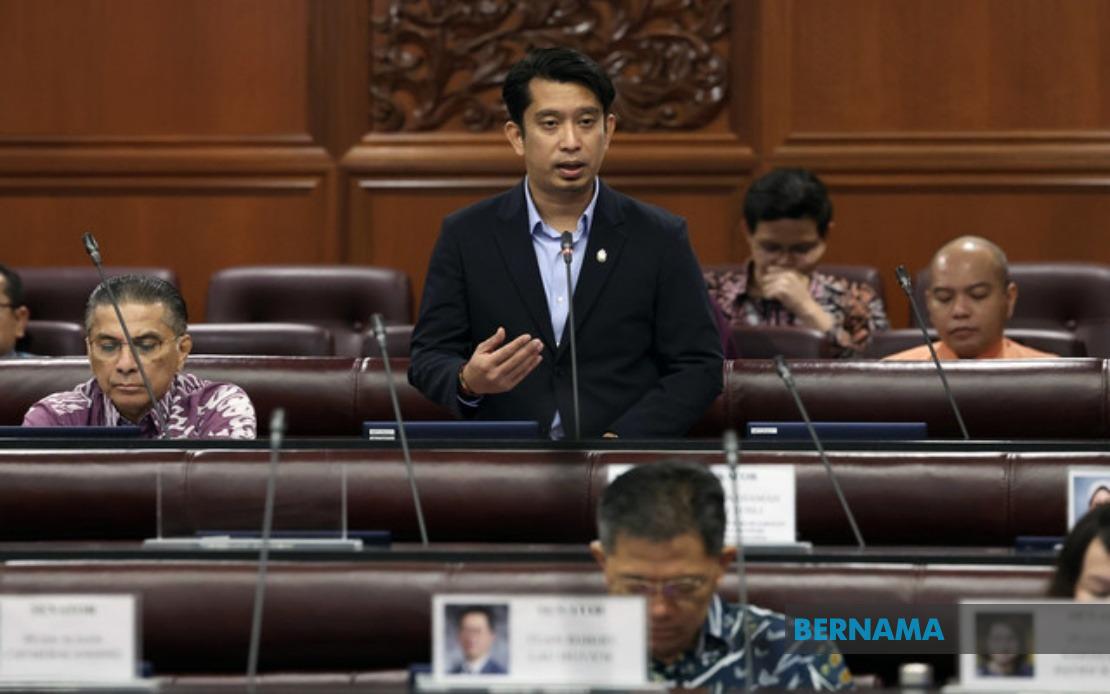
Higher education institutions in Malaysia possess the authority to withdraw student internship placements and bring students back if safety hazards become apparent, Deputy Higher Education Minister Adam Adli Abd Halim announced during parliamentary proceedings. The move represents a tightening of oversight mechanisms within the industrial training framework, allowing institutions to act decisively when circumstances warrant intervention. Such decisions can be triggered either through formal safety assessments conducted by universities themselves or through direct reports submitted by students that indicate an immediate need for protective action.
The announcement comes amid heightened scrutiny of workplace safety standards for student trainees following the death of a Universiti Putra Malaysia student on June 16 at a water treatment facility in Kuala Selangor. The trainee, who was engaged in maintenance operations at the Saujana 1 water tower, died while performing assigned duties, sparking broader questions about whether adequate safeguards exist to protect young workers in industrial settings. The incident prompted Senator Che Alias Hamid to raise concerns during parliamentary questioning about how effectively companies are monitored to ensure compliance with established safety protocols.
In response, Adam Adli emphasised that the ministry takes such tragedies seriously and is actively strengthening both the systems through which risks are identified and the channels by which incidents are documented. The sentiment of deep regret expressed reflects the gravity with which policymakers view workplace fatalities among student populations, whose vulnerability stems partly from their limited professional experience and familiarity with industrial environments. This acknowledgment underscores a shift towards more proactive institutional responsibility rather than reactive responses after incidents occur.
Moving forward, universities must execute substantially more rigorous evaluations before endorsing any organisational placement for their students. These assessments should examine an organisation's historical safety performance, documented reports of previous incidents or violations, and the reputation it holds within its industry sector. Rather than accepting placements based primarily on training availability or academic credit arrangements, institutions are now expected to conduct due diligence that treats safety as a non-negotiable prerequisite. This represents a significant departure from potentially more permissive historical practices where the primary concern may have been placement completion rates.
For sectors classified as inherently high-risk, the standards become even more exacting. Students will only be assigned to organisations that demonstrably meet established safety benchmarks and operate robust safety management systems. This tiered approach recognises that different industries present different hazard profiles, and therefore warrant calibrated responses. Students entering such environments must first complete mandatory safety training or earn relevant certifications before their placements commence. These preparatory requirements are designed to build foundational knowledge about hazard recognition, risk mitigation, and appropriate responses to workplace emergencies.
Before industrial training begins in earnest, all student trainees must undergo comprehensive briefing sessions and preparatory training sessions focused specifically on workplace safety and health protocols. These sessions should address risk management principles applicable to their specific work environment, proper use and maintenance of personal protective equipment, emergency procedures specific to the facility where they will work, and the mechanisms through which they should report incidents or near-misses. This structured pre-placement preparation ensures students enter their assignments with baseline knowledge rather than learning through potentially dangerous trial and error.
Throughout the duration of their training assignments, students remain under continuous monitoring orchestrated through collaboration between academic supervisors from their universities and industry supervisors at host organisations. This dual oversight operates through multiple channels including periodic physical site visits, virtual check-ins conducted remotely, systematic review of progress reports submitted by trainees, and consistent communication between all parties. The multi-modal approach ensures that safety issues do not languish undetected and that students have accessible channels to raise concerns with both their educational institution and their workplace supervisor.
Financial protection also forms a component of this safety architecture. All students participating in industrial training programmes benefit from coverage under the University Group Insurance Scheme, which provides financial compensation should they suffer accidents or other harmful incidents during their placements. While insurance cannot prevent injuries or eliminate trauma associated with workplace accidents, it does provide material support to affected students and families, reducing the financial devastation that might otherwise accompany such events. This safety net reflects institutional acknowledgment that despite precautions, residual risks inherent to industrial work environments persist.
The policy framework now emerging represents an evolution in how Malaysian higher education approaches the interface between academic instruction and workplace exposure. Rather than treating internships primarily as credit-generating requirements, they are increasingly understood as environments that must meet institutional safety standards equivalent to campus facilities themselves. For Malaysian students and their families, this shift offers greater assurance that universities maintain meaningful oversight of placement conditions. For Southeast Asian educational systems watching Malaysia's approach, these developments may inform discussions about whether similar protocols should be adopted regionally, particularly given the prevalence of informal sector placements where safety monitoring remains limited across the region.

